


Every quarter, mortgage rate forecasts change. Every quarter, buyers who delayed purchases based on those forecasts find themselves no closer to the conditions they were waiting for. Accordi...

Why Renting a House Near Houston May Beat Buying One Right Now

Written by:
Date:
14 Jul 2026
Share via Facebook

Share via Linkedin

Share via X

Copy to clipboard

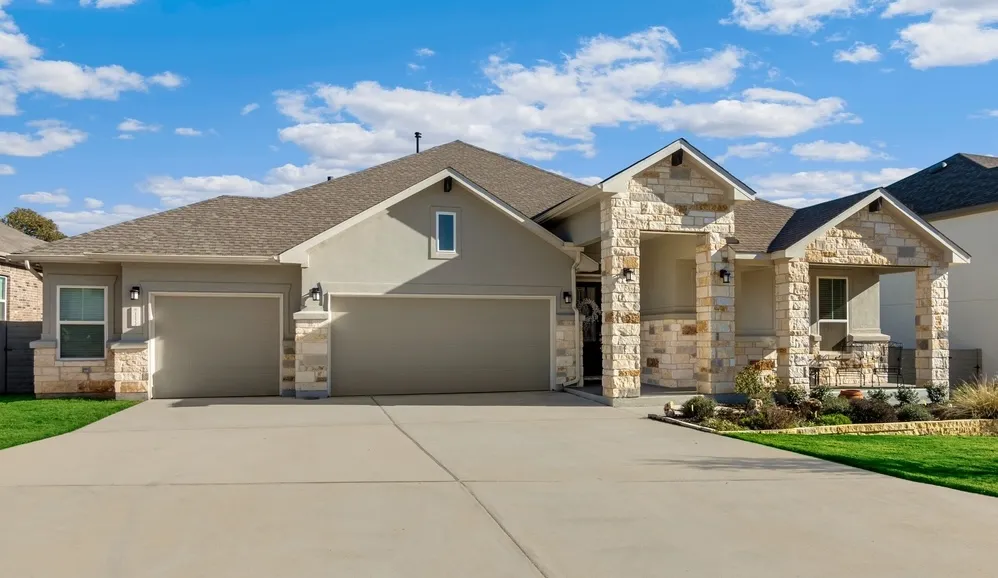
The conventional wisdom says buying a home is always better than renting. Build equity, get the tax break, plant roots. But in the Houston metro area, at least one real estate professional working in residential development is making a different case, one backed by straightforward math that many would-be buyers haven’t run for themselves.
The argument goes like this: if renting a brand-new three- or four-bedroom home costs the same as a luxury apartment, and buying a comparable house means driving 45 minutes each way and stretching your budget to the breaking point, then renting the house is the smarter financial position. Not forever. But right now.
The Widening Affordability Gap
With mortgage rates still elevated and home prices continuing to climb faster than wages, the gap between what buyers can afford and what the market demands has widened considerably over the past two years. That tension is sharpest for early-career workers and growing families in metro areas like Houston, where affordable inventory close to job centers has thinned out.
Charlie Kriegel, CEO and owner of WinHill Advisors in Kirby, Texas, a firm that develops build-to-rent communities across the Houston metro and broader Sun Belt, hears the counterargument constantly. Municipalities tell him he’s “stealing away the American dream” by building rental communities instead of for-sale subdivisions.
Running The Actual Numbers
His response is direct. The average national sales price has climbed so far beyond what a first-time buyer can afford that insisting on ownership pushes people into financial distress. “If you’re looking to purchase, you’re going to be house poor at that point,” he says.
The numbers he cites are striking. According to Kriegel, renting is now $1,500 cheaper per month nationwide than owning. The gap isn’t just about the mortgage payment. Maintenance costs have surged; he points to a 32 percent increase in home maintenance costs over the past year alone. That’s the kind of expense that doesn’t show up in a mortgage calculator but hits a homeowner’s budget every month.
The Commute Compounds The Math
For workers in and around Houston, the commute math compounds the problem. Someone working downtown on an early-career salary who wants to buy faces a stark trade-off: affordable homes sit 45 minutes to an hour from major employment centers. That’s not just inconvenient: it’s gas money, vehicle wear, and hours of lost time that erode whatever equity advantage homeownership theoretically provides.
The alternative Kriegel’s firm builds looks different from what many people picture when they hear “rental community.” These are gated, amenity-equipped neighborhoods of detached homes with garages and backyards, located in areas like Spring Cypress, within a 20- to 30-minute drive of major employment centers. The monthly cost – somewhere in the range of $1,650 to $2,250 depending on the unit – lands right where a luxury two-bedroom apartment would price out.
Space Over Equity, For Now
The difference is space. Instead of two bedrooms and no yard, a renter gets three or four bedrooms, a garage, and outdoor space. For a household with one child and another on the way, or for someone working remotely who needs a home office, that gap in livable square footage matters more than a line on a balance sheet about equity accumulation.
It’s worth noting that WinHill’s build-to-rent model is one of several approaches gaining traction across the Sun Belt, where firms ranging from national homebuilders to private equity-backed developers are constructing single-family rental communities. What distinguishes Kriegel’s pitch is the direct comparison to luxury apartment pricing, positioning the detached rental home not as a compromise, but as a better use of the same monthly dollar.
Not A Permanent Argument
None of this means buying is always wrong. Homeownership still builds wealth over long time horizons, still offers stability, and still makes sense for people whose income comfortably supports a purchase without hollowing out the rest of their budget.
The argument is that for a specific population, younger workers, early-career professionals, growing families who haven’t yet saved a large down payment, insisting on buying right now, in this rate environment and at these price points, may do more harm than good. The 32 percent jump in maintenance costs alone means the true cost of owning extends well beyond principal and interest.
Many of the tenants in Kriegel’s communities, he says, have credit scores and incomes that would qualify them to buy. They’re choosing not to, yet. They’re saving, stabilizing, and avoiding the financial strain that comes with overextending into a purchase before the timing is right.
For Houston-area renters currently paying over $2,000 a month for a luxury apartment, the practical question is whether that money could buy more space, a shorter commute, and a comparable lifestyle in a build-to-rent community, without the maintenance burden and financial risk of ownership. Whether the math continues to favor renting depends on where rates and home prices go over the next 24 months. But right now, the gap between renting a house and buying one has rarely been wider in this market.
About the Expert: Charlie Kriegel is CEO and Owner of WinHill Advisors, with 12 years of experience working at the intersection of land entitlement, institutional capital, and residential development across Texas and the broader Sun Belt. He is also the author of a book on build-to-rent through Forbes Publishing.
This article is intended for informational purposes only and does not constitute legal, financial, or investment advice. The views and opinions expressed herein reflect those of the individuals quoted and do not represent an endorsement of any company, product, or service mentioned. Readers should conduct their own due diligence and consult qualified professionals before making any investment decisions.
Similar Articles
Explore similar articles from Our Team of Experts.

Perspectives, Industry News, Commercial Real Estate, Market Analysis & Policy, Real Estate Investment
Major San Francisco office properties are trading at dramatic discounts to replacement cost, creating what one local expert calls an unprecedented opportunity for investors with ready capita...


Perspectives, Commercial Real Estate, Real Estate Investment, Market Analysis & Policy, Industry News
Las Vegas is experiencing a significant influx of California businesses driven by Nevada’s favorable tax environment, according to Jennifer Lehr, Senior Associate at Colliers Internati...

