

Manhattan’s residential real estate market is defying its usual seasonal slowdown, with activity surging since November and continuing through the typically quiet winter months. Ann Fergus...

Houston Home Prices Are Holding as Discretionary Buyers Step Back and Investors Move In

Written by:
Date:
03 Jul 2026
Share via Facebook

Share via Linkedin

Share via X

Copy to clipboard

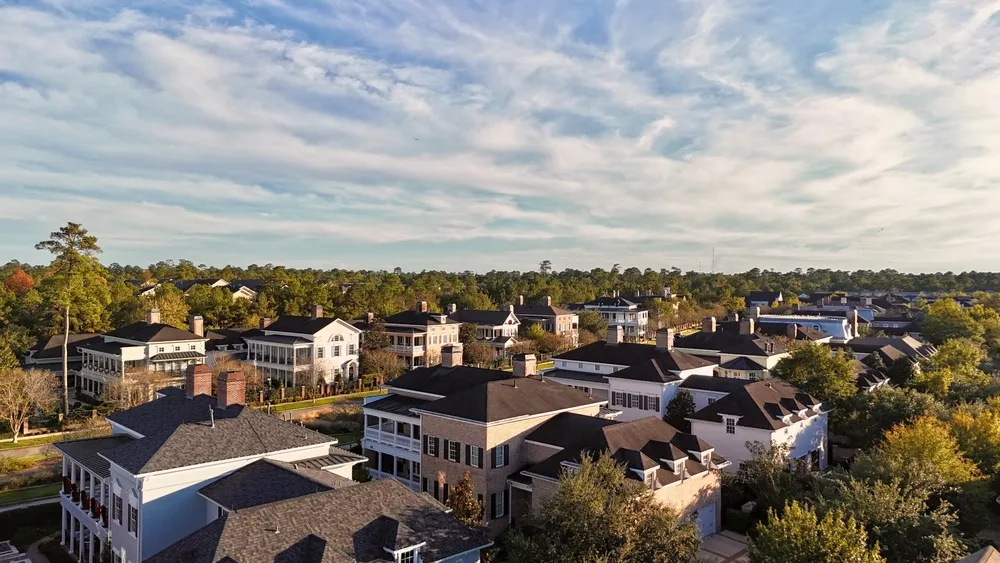
As uncertainty weighs on housing markets across the country, Houston is showing a familiar pattern: steady demand, selective buyers, and pockets of genuine competition in the right neighborhoods. For professionals working the market daily, the picture is more nuanced than national headlines suggest.
Mary Giovinale, team leader at The Giovinale Team at Compass RE Texas, has spent the better part of a decade helping clients navigate Houston’s distinct real estate landscape. Her team of four operates on a model she describes as mutual support rather than aggressive expansion, and her background as an engineer informs a methodical approach to pricing and market analysis.
A Market That Holds Its Value
Houston has long carried a reputation for resilience, and current conditions are reinforcing that view. While transaction volume has slowed, prices in most areas are holding firm. “Houses here don’t drop prices,” Giovinale notes. “It has to be a very unique situation where you overpay for a house to lose money.” That kind of floor on values is meaningful for investors evaluating downside risk.
The broader context helps explain why. Texas continues to attract corporate relocations from higher-cost states, with companies in technology, manufacturing, and energy choosing Houston for its land costs, tax environment, and labor availability. That steady inflow of businesses and workers creates underlying demand that cushions the market even when consumer sentiment softens.
Who Is Buying Now
The buyer pool has changed noticeably over the past six months. With inventory elevated and interest rates still a factor, discretionary buyers have largely stepped back. What remains is a more purposeful group.
Investors make up a significant share of current activity. Giovinale says the combination of negotiating leverage and long-term appreciation potential is drawing capital from buyers willing to look past short-term uncertainty. “People who are thinking ahead want to buy now, invest now, hold that property or rent it out, and keep it for medium to long term,” she says.
The second active segment is relocating professionals. Corporate assignments don’t pause for market cycles, and Houston is receiving a steady influx of workers relocating for energy, healthcare, and technology roles. Many are arriving from markets where their home equity stretches considerably further. Giovinale notes that buyers from California can often purchase two homes in Houston for what they sold one for, and that similar dynamics are playing out for buyers leaving Florida, where HOA costs have become a significant burden for condo owners.
Her own background as a relocating professional has shaped her practice. Giovinale specializes in relocation clients, both domestic and international, and notes that many foreign buyers are unaware they can qualify for financing in the United States. Walking clients through that process has become a meaningful part of her work.
Where Demand Concentrates
Not all of Houston is moving at the same pace. In established neighborhoods with strong public schools, particularly in the Memorial area, the slow-market narrative doesn’t apply. “As soon as you put a house on the market in those areas, they go away,” Giovinale says. “You can even see multiple offer situations.”
These neighborhoods function almost as a separate market within Houston, driven by families who prioritize school quality and proximity to amenities. Supply is tight because owners in these areas tend to stay put. When properties do come available, the response is immediate.
Contrast that with listings that carry specific drawbacks. A current listing of Giovinale’s in the Memorial area has drawn consistent interest in the home itself, but its location backing onto a main road has limited the buyer pool and required pricing adjustments. Location-specific friction, rather than broad market weakness, is often what keeps individual properties on the market longer than expected.
What Breaks Deals
When transactions fall apart today, inspections are the most common cause. Foundation issues and HVAC systems are the most concerning, particularly for first-time buyers who may not have a clear sense of repair costs. Giovinale acknowledges that buyers “can get a little scared,” though she notes most sellers are willing to negotiate once inspection findings are on the table.
On the listing side, pricing remains the primary reason homes linger. Sellers who price above market value, hoping a motivated buyer will close the gap, are finding that strategy less effective in a higher-inventory environment. Buyers have enough options to move on simply. “The value is not set by you, by me, by anybody, but the market,” Giovinale tells her clients.
Growth Corridors Worth Watching
For investors evaluating where to deploy capital, infrastructure and corporate investment are converging in several suburban corridors. SpaceX’s planned manufacturing facility on roughly 22 acres northwest of Houston, expected to be operational by 2030, is one area Giovinale follows closely. “That area is going to bloom,” she says. Tesla’s expanding operations on the city’s west side represent another data point in a broader pattern of industrial and technology investment reshaping Houston’s suburban geography.
Houston is already one of the fastest-growing major cities in the country, and that growth is not confined to the urban core. Areas surrounding major employer announcements tend to see early price movement as the market prices in future demand.
AI, Skepticism, and the Value of Local Knowledge
Beyond economics, Giovinale is watching how clients approach decisions. AI tools are increasingly part of how buyers and sellers research the market, and she has noticed clients arriving with valuations generated by platforms like ChatGPT. Her view is measured: she uses AI herself for planning and marketing, but treats it as one input among many.
“It’s a machine, and it gathers information, but it doesn’t know a lot of things that the human eye is there to guide you on,” she says. The concern is less about the tools themselves and more about clients treating automated outputs as definitive, particularly when local nuance like a noisy street, a specific HOA situation, or a neighborhood’s actual school performance can move a property’s value in ways that aggregate data won’t capture.
Looking Ahead
Houston enters the second half of 2026 with a market that rewards patience and local knowledge in roughly equal measure. Investors with a medium-to-long-term horizon are finding genuine entry points. Relocating professionals are arriving steadily and need to transact regardless of rate conditions. And in the neighborhoods that have always held their value, competition hasn’t disappeared; it has concentrated.
For a city built on energy, migration, and economic pragmatism, that combination is a fairly familiar place to be.
About the Expert: Mary Giovinale is the team leader at The Giovinale Team at Compass RE Texas, serving the Houston market with a team of four and a specialization in domestic and international relocation clients.
This article is based on information provided by the expert source cited above. It is intended for general informational purposes only and does not constitute legal, financial, or real estate advice. Readers should conduct their own research and consult qualified professionals before making any real estate or financial decisions.
Similar Articles
Explore similar articles from Our Team of Experts.