A proposed policy change working its way through the Florida state legislature could significantly affect the residential real estate market in Southwest Florida, and the timeline for action may be shorter than many homeowners realize. With inventory already elevated and buyer activity subdued, the prospect of a new tax on home sales is adding urgency to decisions that many sellers have been deferring.
Rick Stannard, a Realtor with Realty Hub who has been active in real estate for over six decades, offers a ground-level perspective on what is unfolding and why the window for decision-making may be narrower than it appears.
A Tax Change With Real Trade-Offs
Florida has long attracted residents with its absence of state income and corporate taxes. The next potential step, eliminating property taxes, sounds straightforward, but the mechanics are more complex. Average property taxes in Florida run three to four thousand dollars a year, according to Stannard, covering everything from first responders to county services. To replace that revenue, Tallahassee is weighing two measures: an increase in the state sales tax and a 5% tax applied to the full sale price, not the capital gain, of residential properties.
That distinction matters. A 5% levy on the full sale price could, in some cases, exceed whatever profit a seller has made on the property. Stannard frames it around a simple break-even calculation: sellers who keep their home for five years after property taxes are eliminated would save enough to offset the 5% tax at sale. Those who sell before five years would lose money on the exchange.
The legislature is roughly halfway through deliberations, with a final framework likely to take shape sometime in 2027. That timeline is already influencing how sellers are thinking about their next move.
A Potential Inventory Surge
The more immediate market consequence may not be the tax itself, but the behavioral response to its announcement. Southwest Florida currently sits in buyer’s market territory; inventory is available, but motivated buyers are relatively scarce. Many sellers have chosen to wait, expecting conditions to improve.
The risk, as Stannard sees it, is that the announcement of a firm implementation date could trigger a rush of listings all at once. “Everybody who’s sitting on the sideline, who thinks they want to sell their house, is going to put their house on the market at the same time,” he says. In a region with an older homeowner base where many residents are already considering their exit timeline, the new tax framework could undercut any recovery strategy sellers had been counting on.
Condos, Hurricanes, and Insurance
Beyond the tax question, the condo segment in Southwest Florida faces its own structural pressures. Following the 2021 Surfside collapse in Miami, the state legislature mandated that condominium associations of three floors or higher meet specific reserve funding requirements. Many associations had long deferred those contributions, and owners are now facing significant special assessments to close the gap.
Stannard has largely stepped back from the condo segment as a result. “Condominiums with underfunded reserves are a real pain to sell. Nobody wants to buy in them,” he says.
On the insurance front, three consecutive hurricanes, Ian, Milton, and Elaine, drove several private insurers out of the Florida market, pushing volume onto Citizens Insurance, the state’s insurer of last resort. That pressure has since eased as private carriers return. The more persistent issue is flood zone exposure, where insurance costs remain a meaningful friction point in transactions.
When deals fall apart, the more common culprit is financing. Stannard estimates that roughly half of all mortgage applications in the area are being declined, a figure that underscores how much the cash buyer segment has come to define activity in this market. Retirees arriving from higher-cost states, often selling appreciated properties and purchasing outright, are keeping a portion of the market moving regardless of lending conditions.
What Is and Isn’t Selling
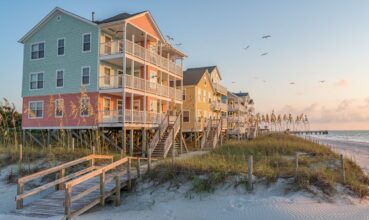
Waterfront properties continue to perform well, both in price and days on market. “The allure of Florida is our integration with our water,” Stannard says. “People come here because they want to live on the water, they’re boaters, or they love the sunset.”
Properties sitting longer tend to share common traits: overpricing relative to current buyer expectations, and designs that don’t suit the dominant buyer profile. In a market heavily shaped by retirees, six-bedroom homes and two-story layouts face real headwinds. “There are some houses, because of their design, that are having difficulty being sold,” Stannard notes.
Seller flexibility is gradually improving. A home Stannard listed a year ago at $389,000 closed recently at $345,000. That kind of adjustment, he suggests, will accelerate once the property tax legislation is finalized and sellers who have been waiting feel a clearer sense of urgency.
Where Investors Should Be Looking
For investors considering Southwest Florida, Stannard points to workforce housing as the most straightforward opportunity. The region’s growth, driven by retirees, service workers, tradespeople, teachers, and first responders, creates steady demand at the lower end of the price spectrum, and supply in that range remains constrained.
“Buy a stable of workforce housing houses under $300,000 that you can rent out,” he advises. It is a practical, unglamorous strategy, but one grounded in the basic math of a growing population and a limited, affordable supply.
Buyers Are Doing Their Homework
One pattern Stannard has noticed across the buyer pool is a higher level of preparation. Prospective residents are researching tax structures, healthcare access, and local services before committing, and they are taking their time. “They’re unlikely to buy a house that doesn’t fit just to own a house,” he says.
That selectivity means sellers who price realistically and present well-maintained properties are still finding buyers. Those waiting for the market to come to them may find that the coming legislative changes compress their options faster than expected. The Florida property tax overhaul is still taking shape. Still, for anyone with a stake in the Southwest Florida market, whether as a homeowner, investor, or professional, the next 12 to 18 months will likely determine whether waiting was a strategy or a missed window.
About the Expert: Rick Stannard is a Realtor with Realty Hub, serving the Southwest Florida market. He has been active in real estate for over six decades.
This article is based on information provided by the expert source cited above. It is intended for general informational purposes only and does not constitute legal, financial, or real estate advice. Readers should conduct their own research and consult qualified professionals before making any real estate or financial decisions.