

After several years of rapid growth, markets along the Texas Hill Country corridor are entering a more measured phase. Inventory has increased, sales cycles have lengthened, and buyers now h...

In Monmouth County, New Jersey, Low Inventory and Six-Figure Overbids Are Redefining What Homes Cost

Written by:
Date:
06 Jul 2026
Share via Facebook

Share via Linkedin

Share via X

Copy to clipboard

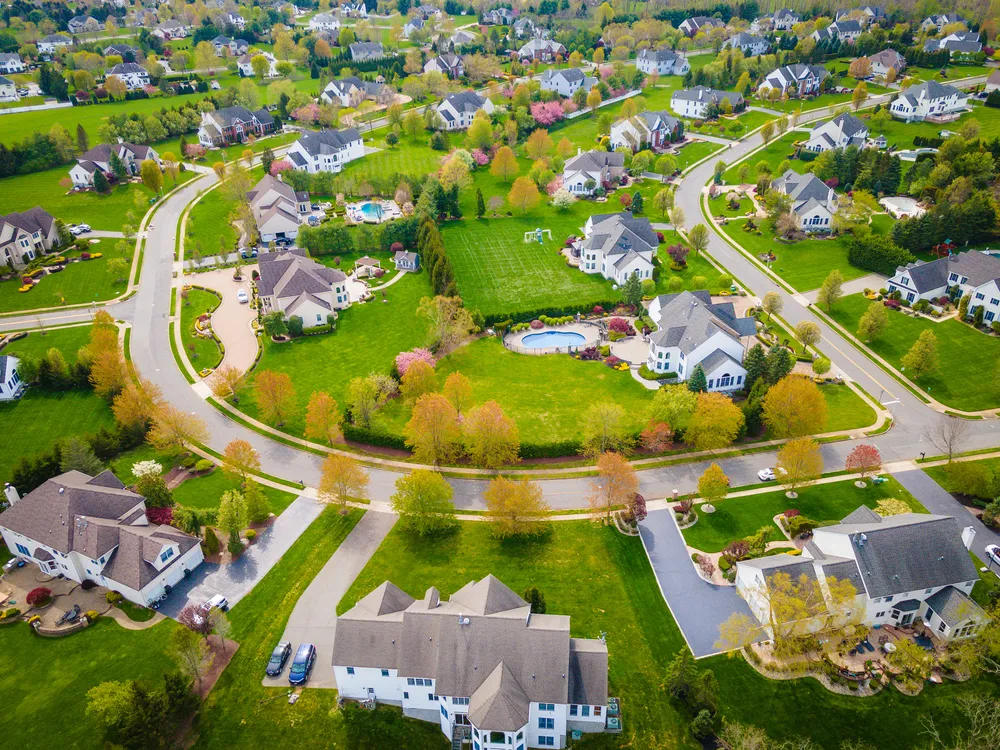
New Jersey ranks seventh nationally for year-over-year home price appreciation. Within the state, Monmouth County stands out as a market where multiple converging forces have reshaped demand in ways that continue to surprise even seasoned observers. For buyers hoping prices will soften, the wait has been a costly one.
Thomas Connors, a Sales Associate with Weichert Realtors in Holmdel, has spent 18 years working in this market, bringing a perspective shaped by a prior career running 125 bank branches across New Jersey and the Philadelphia region. That background in credit, mortgage approvals, and small business lending gives him a numbers-oriented view of what is actually moving the market.
Two Catalysts That Changed the Market
Most discussions of suburban New Jersey’s post-pandemic appeal focus on the general flight from cities. In Monmouth County, two specific developments accelerated that trend in ways that have had lasting effects.
The first was remote work. Unlike closer-in suburbs such as Hoboken or Jersey City, Monmouth County sits roughly an hour to an hour and a half from Manhattan by train. That commute historically kept it off the radar for city workers who needed to be in the office daily. When that constraint loosened, the county’s coastline became a genuine draw rather than a weekend indulgence. “People realized that Monmouth County, being right along the shore area, would be advantageous to live and work from, because they can work from home several days a week,” Connors notes.
The second catalyst was Netflix’s establishment of its eastern operations at the former Fort Monmouth site, a large military installation that had sat largely dormant for years. The arrival of a major employer of that profile changed the area’s economic composition and brought a new wave of professional buyers into the market. Together, these two factors created demand that the county’s housing supply has struggled to meet.
Inventory Is the Defining Problem
Whatever the broader national conversation about interest rates or affordability, the dominant issue in Monmouth County is a straightforward lack of homes for sale. “This year in particular is very, very low inventory levels, and we’re seeing bids, not even exaggerating, of sometimes 100 to 300,000 plus over asking price,” Connors says.
That pressure is visible across price points and property types. A recent transaction Connors closed involved a 3,700-square-foot, six-bedroom home that sold for $1.75 million – roughly $200,000 above asking – after the property had appreciated by more than $800,000 over six years. A townhouse listing drew a bid of $70,000 over the asking price. A 4,000-square-foot home in a neighboring town is currently fielding offers hundreds of thousands above list price.
The median home price in Holmdel has crossed the million-dollar threshold, and properties priced below that level are increasingly rare. “If you find something under a million, it’s probably a smaller home, or maybe a home that needs work, or maybe a home with no backyard,” Connors explains. A 2,500-square-foot ranch with a pool, roughly 15 years old, recently sold for close to $1.5 million.
Who Is Buying and Why
The buyer pool breaks into three fairly distinct groups. The first consists of younger buyers who have been saving aggressively and arrive with substantial down payments. The second is made up of existing homeowners who have outgrown their current space and are willing to trade up despite giving up a low-rate mortgage from the pandemic era. The third is retirees and pre-retirees looking to downsize and unlock equity from homes they have owned for two or three decades.
The city-to-suburb migration plays out in a specific way here. Many buyers spent their post-college years in places like Hoboken or Jersey City before children prompted a move further out. “Mostly it’s the kick of having children that gets people to move to suburbs,” Connors observes. Monmouth County, with its combination of shore access, school options, parks, and proximity to the city, sits at the end of that decision chain for a growing number of families.
The Walkability Factor
One development that has meaningfully changed buyer expectations in the Holmdel area is Bell Works, the adaptive reuse of the former Bell Labs campus. Now a mixed-use destination with restaurants, a gym, a library, a weekly outdoor market, and a large enclosed atrium, it has become a community anchor in a way that traditional suburban developments rarely achieve.
The surrounding residential component includes roughly 180 age-restricted homes and 40 estate properties, all of which have sold and are now being resold. Beyond providing amenities, Bell Works has created a flexible, walkable environment where remote workers spend their days with a laptop and a cup of coffee, meet business partners, or hold appointments, the kind of daily rhythm that has become a meaningful selling point for a market where remote workers are a significant buyer segment.
Deal Mechanics in a Competitive Market
Winning a home in this environment requires more than simply offering the highest price. Buyers are increasingly willing to limit inspection contingencies to structural and environmental concerns – radon, termite damage, septic function, and mold – while waiving mechanical or appraisal contingencies to strengthen their offers. Some are offering to handle the certificate of occupancy process on the seller’s behalf to reduce friction.
Creative flexibility around timing also matters. In the $1.75 million transaction, the sellers needed time to complete a relocation and finish the school year. The buyers agreed to a use-and-occupancy arrangement allowing the sellers to remain in the home for approximately 30 days after closing. “Buyers are being flexible to help out sellers so they can put a deal together,” Connors notes.
One procedural nuance distinguishes New Jersey from many other states: contracts are signed before inspections take place, and no deal is legally binding until attorneys on both sides have completed a formal review period. Until that process concludes, a seller can still accept a higher competing offer, a detail that shapes how both sides approach negotiation.
Where Investors Should Look
For capital looking to enter the market, Connors points to two areas of opportunity. Multifamily properties, when available, remain strong performers given the area’s rental demand. The other opportunity lies in distressed single-family homes – particularly starter properties that have been poorly maintained and can be acquired at a relative discount, renovated, and returned to a market with very little move-in-ready inventory at accessible price points.
The broader appreciation trend shows no sign of reversing. “People are saying, ‘I should have bought three years ago,’ but they were afraid to,” Connors says. That sentiment, repeated across multiple market cycles, reflects the persistent tension between caution and conviction in a market where prices keep climbing.
Seasonality still applies, with activity typically softening over summer and through the holiday period before picking back up in late February and March. But within that rhythm, the structural conditions driving Monmouth County – limited supply, strong employment anchors, lifestyle appeal, and continued inbound migration from the city – remain firmly in place heading into the second half of 2026.
About the Expert: Thomas Connors is a Sales Associate with Weichert Realtors in Holmdel, with 18 years of experience in the Monmouth County market. His background includes running 125 bank branches across New Jersey and the Philadelphia region, with expertise in credit, mortgage approvals, and small business lending.
This article is based on information provided by the expert source cited above. It is intended for general informational purposes only and does not constitute legal, financial, or real estate advice. Readers should conduct their own research and consult qualified professionals before making any real estate or financial decisions.
Similar Articles
Explore similar articles from Our Team of Experts.