
Homeowners across Chicago’s south suburbs are staying put, holding on to their low mortgage rates and avoiding moves that would mean higher monthly costs. As a result, inventory in areas l...

In Greater Boston, Your Neighbor's Sale Price No Longer Predicts Yours

Written by:
Date:
08 Jul 2026
Share via Facebook

Share via Linkedin

Share via X

Copy to clipboard

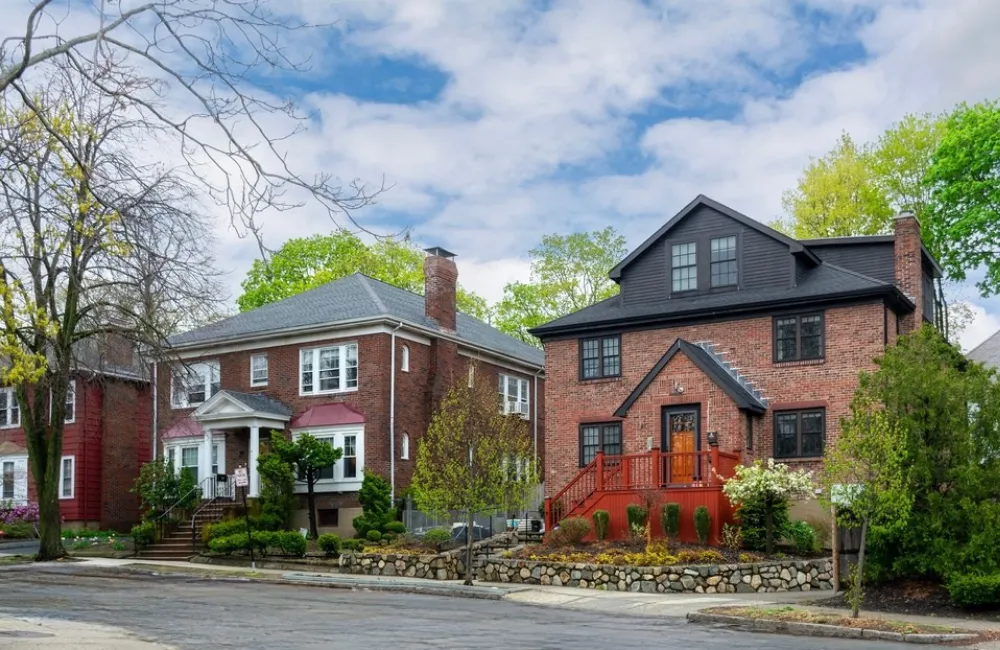
In most housing markets, the home that sold down the street gives you a reasonable sense of what yours might fetch. In Greater Boston right now, that logic has broken down. Two nearly identical listings on the same block can produce wildly different outcomes, one drawing a bidding war, the other sitting for weeks with price cuts.
Bonnie Lai, founder and associate broker at 1st Knock Realty in Greater Boston, describes this as a “tornado market,” a term she borrows from a colleague. Market intensity touches down differently for every single listing rather than lifting an entire neighborhood uniformly. “Just because the house across from you sold 20% over asking doesn’t mean your house would,” she says.
This isn’t a soft market or a hot market. It’s a split market, and the dividing line runs through individual properties rather than zip codes or price bands. Understanding that split is the difference between pricing a home correctly and watching it languish.
Condition Is the Dividing Line
The clearest pattern Lai identifies is condition. Move-in-ready single-family homes – updated kitchens, no deferred maintenance, no obvious flaws – still attract intense competition. Lai says her team was submitting two competitive offers on the same day she was interviewed in June 2026. Homes that need significant work, by contrast, sit. Buyers in mid-2026 are unwilling to take on renovation risk at today’s borrowing costs the way they were when mortgage rates sat near three percent.
This creates a problem for sellers who assume their home will perform like the polished listing that sold fast nearby. If a home needs a new roof, has outdated systems, or shows visible wear, the comparable sale across the street is irrelevant to its pricing. The buyer pool for that property is smaller, more cautious, and far less willing to stretch.
A More Cautious Buyer Pool
The buyer side of this split is equally difficult to navigate. Lai observes that there are “a lot more people who are just casually looking right now.” Many have been searching for two years without buying, not because they can’t afford to, but because they refuse to overbid and haven’t found the right combination of home, price, and timing. They’ll wait indefinitely rather than stretch, which means sellers of imperfect homes face a thinner audience of motivated buyers.
This patient buyer pool marks a sharp departure from the pandemic years, when even deeply flawed properties sold at unreasonable premiums because cheap money made almost anything pencil out. Today’s buyers are selective and willing to walk. That dynamic punishes overpriced or under-maintained listings disproportionately, while rewarding the small number of turnkey homes with competition that can still feel frenzied.
What This Means
For sellers, the practical takeaway is uncomfortable: pricing strategy cannot rely on neighborhood comps alone. Sellers need to assess their home’s condition honestly relative to what’s drawing offers in their area, not what’s merely listed, but what’s actually going under contract quickly. If there’s a gap between a home’s condition and those fast-moving listings, the price needs to reflect it from day one rather than through a series of reductions that signal desperation.
For buyers, the split market creates opportunity, but only for those who are realistic about which side of the divide they’re shopping on. Those looking at move-in-ready single-family homes in good locations should expect competition and be prepared to move decisively. Those open to properties that need work have far more leverage, but they also need to budget honestly for the renovation costs they’re inheriting.
The risk for both sides is anchoring to the wrong reference point. Sellers anchor to the flashy sale next door. Buyers anchor to two-year-old expectations of what their budget should buy. Neither reference holds in a market where outcomes are determined property by property.
Why Inventory Feels Different
Lai notes that Boston’s overall inventory hasn’t increased dramatically; not many more sellers are listing than before. The issue is that homes are sitting longer, creating the appearance of more supply even though new listings aren’t surging. For buyers, that means more options on any given day, but it doesn’t mean prices are falling uniformly. The best homes still move fast, and the rest wait, sometimes for months.
One data point worth watching: adjustable-rate mortgages taken out when rates spiked to eight percent a few years ago will begin resetting over the next three years. If rates remain elevated or climb further due to macroeconomic pressures, some homeowners may be forced to sell, adding inventory to a market that currently moves in unpredictable bursts rather than steady waves. Whether that pressure materializes – and how quickly – could determine whether this split market eventually tilts toward buyers more broadly or remains fractured along condition lines.
About the Expert: Bonnie Lai is Founder and Associate Broker at 1st Knock Realty, serving Greater Boston across Brookline, the South Shore, the North Shore, and Metro West since 2014.
This article is intended for informational purposes only and does not constitute legal, financial, or investment advice. The views and opinions expressed herein reflect those of the individuals quoted and do not represent an endorsement of any company, product, or service mentioned. Readers should conduct their own due diligence and consult qualified professionals before making any investment decisions.
Similar Articles
Explore similar articles from Our Team of Experts.