
As summer 2026 gets underway, the residential real estate market in Southern Westchester County shows little sign of the seasonal slowdown that typically follows Memorial Day. Inventory is g...

How South Florida's New Development Market Is Navigating a More Selective Buyer Landscape

Written by:
Date:
24 Jun 2026
Share via Facebook

Share via Linkedin

Share via X

Copy to clipboard


South Florida’s new development market has entered a period of recalibration. Rising inventory and slower sales volumes tell part of the story, but the picture varies sharply by submarket. For developers and brokers, success now depends less on market timing and more on product quality, pricing discipline, and relationships built long before a project reaches sales.
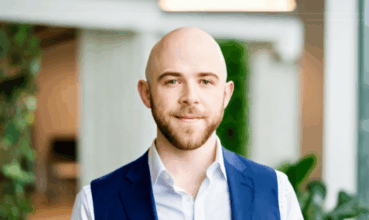
Brandon Talalaevsky, Founder and Principal Broker of Property Pro Partners, has spent 13 years building a brokerage that sits at the intersection of developer services and buyer representation. Licensed in Florida, New York, and Costa Rica, and with projects spanning Orlando, Aventura, Manuel Antonio, and the Bahamas, his vantage point offers a useful read on where the market stands and where it may be heading.
A Market With More Inventory and More Discerning Buyers
With an estimated 165 new developments currently active across Miami-Dade and Broward County alone, buyers have far more options than they did during the pandemic-era run-up. “The buyer does have an advantage today, because there is lots of inventory,” Talalaevsky acknowledges, “and there are some developers who aren’t selling as much as they need to.”
But he’s careful not to generalize. South Florida, he argues, is not one market but a collection of submarkets, each responding differently to broader economic conditions. Projects that are fairly priced, well-finished, and backed by credible teams are still moving. Those that aren’t are where friction accumulates.
The cooling reflects a combination of factors: interest rates, what he describes as “market exhaustion,” and rents that have stabilized after years of sharp increases. Still, the longer-term fundamentals remain intact. Miami continues to attract tech and financial companies, and Talalaevsky believes the current building wave will eventually be absorbed. “Miami is in its early economic life cycle compared to something like New York or Los Angeles,” he notes. “All this building is just preparation for the next wave.”
Who Is Actually Buying
The buyer profile in South Florida’s new development segment is notably international. Talalaevsky estimates that 55% or more of buyers across his active projects come from outside the United States, with Argentina, Colombia, Brazil, Mexico, Peru, and Canada among the most active source markets. Domestic out-of-state buyers – primarily from New York, Boston, New Jersey, and Delaware – account for a significant share of the remainder.
For projects like Eden and Lev, there’s also a meaningful local component: downsizers moving out of single-family homes, driven partly by the rising cost of property insurance in Florida, and empty nesters looking to right-size without leaving the region.
This international concentration means that macro conditions abroad matter as much as local market dynamics. Currency fluctuations, political instability, and inflation in Latin American markets all influence buyer behavior. Many international buyers treat US real estate as a hedge against inflation in their home countries. “I think that’s the biggest bunker we have,” Talalaevsky says.
What Buyers Are Looking For
Buyer preferences are coalescing around three consistent themes across both domestic and international projects. The first is lifestyle infrastructure: walkability, on-site amenities, restaurants, and programming that reduces the need to leave the property. The second is a growing interest in eco-conscious development, particularly among international buyers considering markets like Costa Rica. “Luxury eco-tourism is on the rise,” Talalaevsky says. “People want the freedom of living in a secluded environment while still having access to what they need.”
The third is geographic diversification. For international buyers especially, purchasing in US dollars in a politically stable environment carries its own appeal, separate from the specific property. Costa Rica, where Property Pro Partners is launching Marave Residences and Beach Club – a 66-villa and 50-condo LXR by Hilton branded project in Manuel Antonio – fits that profile. The country’s political stability, dollarized transactions, and proximity to South Florida (roughly two and a half hours from Fort Lauderdale) make it a practical option for buyers already familiar with the US market.
Pricing Discipline and Product Quality
Whether developers are holding firm on pricing or offering concessions depends entirely on the project. For Eden and Lev, Talalaevsky says the team has not needed to reduce pricing because the product was competitively positioned from the outset; finishes include 60-by-30 porcelain tile, custom kitchens, Bosch appliances, and stone bathroom finishes, alongside a low HOA of $1.03 per square foot that covers cable, internet, and building reserves.
The broader lesson is about sequencing. Getting pricing right before launch, through feasibility studies and market analysis, reduces the need for corrections later. “It’s very important that before launching any project, the right marketing, sales strategies, and feasibility studies are done so that you can truly understand the correct pricing for your product from the start,” he says.
How Deals Get Done
Talalaevsky’s involvement with projects typically begins during the design phase, where input from the sales side can still shape unit configurations, finishes, and marketing positioning. His standard practice is to stay hands-on for the first six months of any new project before transitioning management to his team.
When deals fall apart, the causes vary: city planning delays, board decisions, partner disagreements, or better opportunities emerging elsewhere. He’s reluctant to attribute deal failures to any single market dynamic. His criteria for selecting developers come down less to project size and more to character. “If you don’t think you can do a deal with just a handshake,” he explains, “then you’re probably not going to be able to do it with any contract either.”
What’s Ahead
Looking forward, the trajectory for South Florida’s new development market points toward gradual absorption rather than sharp correction. Property Pro Partners is currently under NDA on two new branded residence projects expected to come to market in late 2026 or into 2027. The firm also plans to open a London office in early 2027, reflecting both the international composition of its buyer base and the direction of its developer relationships.
The supply coming online is substantial, but so is the ongoing demand from buyers using US real estate as a store of value, a lifestyle upgrade, or a hedge against conditions in their home markets. The developers and brokers who will navigate this period most effectively are likely those who got the fundamentals right before the first unit ever went on sale, pricing accurately, finishing well, and building credibility with buyers long before the market required it of them.
About the Expert: Brandon Talalaevsky is Founder and Principal Broker of Property Pro Partners, a brokerage handling new development sales across Florida, New York, and international markets, with a current focus on a branded residence project in Manuel Antonio, Costa Rica.
This article is based on information provided by the expert source cited above. It is intended for general informational purposes only and does not constitute legal, financial, or real estate advice. Readers should conduct their own research and consult qualified professionals before making any real estate or financial decisions.
Similar Articles
Explore similar articles from Our Team of Experts.