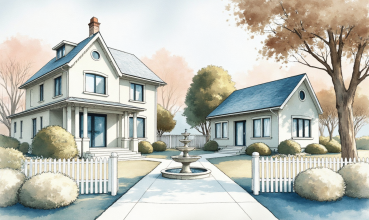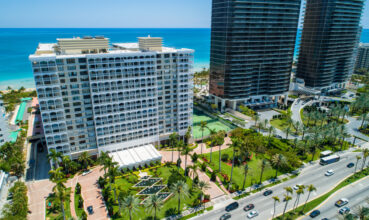

Bergen County, New Jersey, stands apart from other suburban markets, maintaining strong home prices despite broader affordability pressures. The key factor is its unmatched proximity to Manh...

Queens Is Building Plenty of One-Bedrooms. Families Who Want to Stay Are Running Out of Options.

Written by:
Date:
11 Jun 2026
Share via Facebook

Share via Linkedin

Share via X

Copy to clipboard


There is a specific kind of buyer that Queens’ new development has not been serving well. They already live in the borough. They have been renting in Long Island City or Astoria for three or four years, they know the neighborhood, and now they want to buy something larger – a three-bedroom, enough space for two kids or a kid and a home office. The problem, according to people working closely with developers in the area, is that the product they need is largely not being built.
Gregory Kyroglou, managing director and licensed associate real estate broker at Modern Spaces, a Queens-focused brokerage, spends most of his time working on new development projects in Astoria, Woodside, and Long Island City. When asked what the Queens market is getting wrong, his answer was specific: developers are underbuilding three-bedroom units, and the buyers who need them have no realistic option to stay.
Kyroglou describes this as the clearest gap in the current Queens new development pipeline. Many of these buyers want to remain in the neighborhoods they already know, close to the train station, within the school system they have chosen, and a three-bedroom is what they need to make that work.
The buyer profile he is describing is not a newcomer to the borough. It is someone who moved to Long Island City or Astoria for a rental, found a neighborhood they wanted to put down roots in, and is now ready to buy. That renter-to-buyer conversion has been a consistent pattern in Queens over the past several years, driven in part by newer rental buildings that drew younger residents to the outer boroughs and gave them enough time to decide they wanted to stay.
What those buyers are running into is a mismatch between what they need and what the market is producing. New condo development in Queens skews heavily toward one-bedrooms and two-bedrooms. That mix makes sense from a developer’s perspective, smaller units are easier to sell, carry less risk, and move faster. “I get it, the risk is a little higher,” Kyroglou says of larger units.
The risk is real. A three-bedroom condo in an outer-borough market is a harder sell than a one-bedroom because the buyer pool is smaller and the price point is higher. Developers optimizing for velocity and certainty will naturally gravitate toward smaller units. That is a rational choice at the individual project level, but it produces a structural gap at the market level, and that gap falls hardest on the buyers who are most committed to the neighborhood.
The practical consequences for those buyers are limited and imperfect. They can purchase a smaller unit than they need and plan to move again when the family grows. They can look at older housing stock. the one- and two-family homes that make up much of Astoria’s existing inventory, which carries different costs and tradeoffs. Or they can leave the borough entirely, which, Kyroglou’s observation implies, is happening more often than it should.
There is also a price dimension. When a product type is undersupplied relative to demand, the units that do exist tend to hold their value more stubbornly. A three-bedroom condo in Astoria or Long Island City, when one comes to market, is not competing against a deep pool of comparable listings. That scarcity can work in a seller’s favor but creates real friction for buyers trying to negotiate from a position of choice.
Kyroglou’s read on the broader Queens market is that Astoria and Long Island City are moving relatively quickly for well-priced product, a seven-unit building he launched in late 2025 sold out in roughly two months. The velocity is there. What is missing is the unit type that would allow a specific and growing segment of buyers to participate.
Whether developers begin to adjust their mix toward larger units will depend on the clarity of the financial case. Kyroglou argues that the demand is already present, it is just not being met. For buyers in that position, the near-term reality is that three-bedroom options in Queens’ new development will remain scarce, and the ones that do come to market are unlikely to sit long. If anything, that scarcity may itself become the signal developers eventually respond to, but for families looking now, the wait continues.
About the Expert: Gregory Kyroglou is managing director and licensed associate real estate broker at Modern Spaces, a Queens-focused brokerage, where he works primarily on new development projects in Astoria, Woodside, and Long Island City.
This article is intended for informational purposes only and does not constitute legal, financial, or investment advice. The views and opinions expressed herein reflect those of the individuals quoted and do not represent an endorsement of any company, product, or service mentioned. Readers should conduct their own due diligence and consult qualified professionals before making any investment decisions.
Similar Articles
Explore similar articles from Our Team of Experts.