

A buyer in Naperville recently won a bidding war by offering appraisal-gap coverage, waiving the inspection, and allowing the seller to stay in the home for two weeks after closing. Three da...

Florida's Insurance Market Has Stabilized, But Coastal Buyers Still Need to Do the Math

Written by:
Date:
12 Jun 2026
Share via Facebook

Share via Linkedin

Share via X

Copy to clipboard

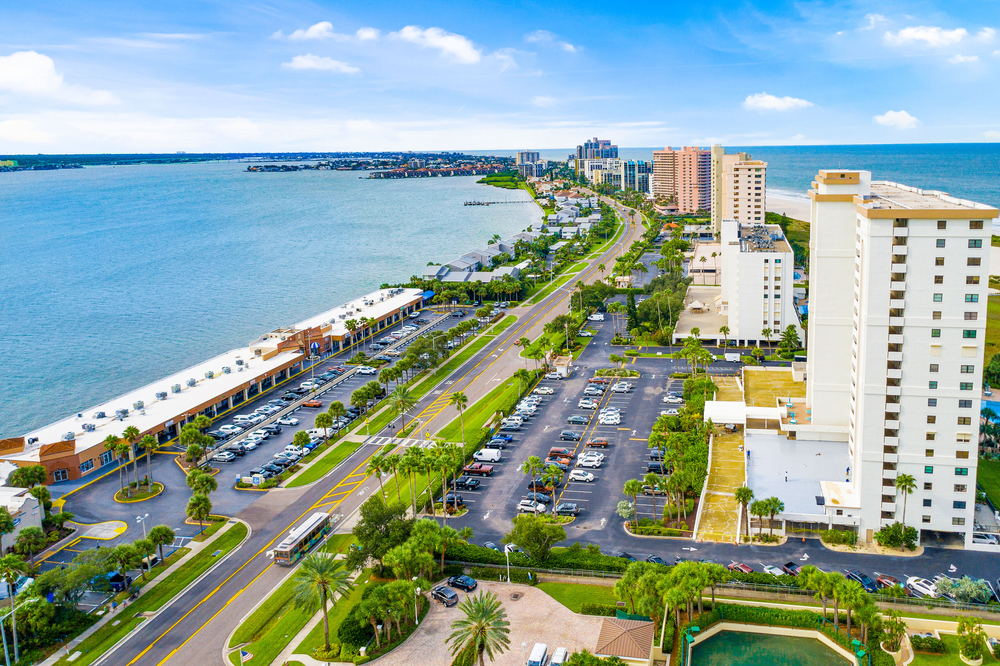
For the past several years, the story coming out of Florida’s coastal real estate market has been one of insurance chaos, carriers fleeing the state, premiums doubling or tripling in a single year, and buyers walking away from deals because the numbers no longer made sense. That period is now ending. Legislative reforms passed in recent years have drawn new insurers back into the state, and rate increases have slowed dramatically, meaning buyers who still treat Florida insurance costs as an open-ended risk may be working from outdated information.
Cyndee Haydon, a broker associate with the Sandbars to Sunsets Team at Future Home Realty, focuses on short-term rental properties along the Pinellas Gulf beaches. She also chairs the Florida Realtors Insurance Committee and has spent more than a decade lobbying at the state and federal levels on flood and property insurance policies.
The instability that defined Florida’s insurance market in the early 2020s had a specific cause. The state had a legal structure called a one-way attorney fee, which meant that if a plaintiff sued an insurance company and won even one dollar more than the insurer had offered, the insurer was required to pay all of the plaintiff’s legal fees. That created a powerful financial incentive for litigation, and the volume of lawsuits became unmanageable. Florida accounted for about 7 percent of all U.S. insurance claims but roughly 82 percent of all insurance lawsuits. Carriers could price for hurricanes and floods, but they could not price for unlimited litigation exposure, and many stopped writing policies in the state entirely.
The Florida legislature closed that loophole, and the market has responded in measurable ways. According to Haydon, 20 new carriers have entered the Florida market since the reform passed, with three more entering this year. The state’s average insurance rate increase is now running at 6 percent, the lowest in the country, she says, and some insurers are offering reductions on select properties.
For buyers, this matters because insurance cost is not a line item you can estimate from a listing sheet. It is a function of the specific property, the flood zone designation, the roof age, and the coverage structure. Haydon recently closed a transaction in Indian Rocks Beach, where the seller’s homeowners insurance for a three-bedroom, two-bath short-term rental property was under $6,000 a year, a figure she described as low even by improving-market standards. That kind of number would have been difficult to find two years ago.
The flood insurance side of the equation has also changed, though the mechanics are less intuitive. The National Flood Insurance Program underwent a major restructuring called Risk Rating 2.0, which recalculated premiums to more accurately reflect each property’s actual flood risk, resulting in significant increases for some properties. Haydon was involved in implementing a cap on how fast those increases can move, no more than 25 percent per year, so that homeowners are not hit with overnight shocks like those that occurred when an earlier law called Biggert-Waters briefly sent some flood premiums from $1,400 to $14,000 a year.
The 25 percent annual cap means that properties with large gaps between their current premiums and their actuarially accurate rate will continue to see increases for several years. That is not a reason to avoid buying, but it is a reason to ask specifically where a given property sits in that trajectory before closing. An insurance agent who specializes in coastal Florida properties can run that number; a general insurance quote may not reflect the full cost path ahead.
One additional factor worth noting: many properties that flooded in 2024 now have new roofs, updated electrical systems, and recently replaced major appliances. Insurers price based on the condition and age of what they are covering, and a recently renovated home often qualifies for better rates than an older property from a year or two ago.
What has not changed is the need to verify the details on each specific property. Flood zone designation, the building’s claims history, the permit status of any post-storm repairs, and the current reserve fund status of a condo association all feed directly into what insurance will cost and whether coverage will even be available. The market may have stabilized at the state level. However, individual properties still carry individual risk profiles, and the gap between a well-positioned property and a poorly positioned one remains wide enough to determine whether a deal makes financial sense.
About the Expert: Cyndee Haydon is a broker associate with the Sandbars to Sunsets Team at Future Home Realty, specializing in short-term rental properties along the Pinellas Gulf beaches, and chairs the Florida Realtors Insurance Committee.
This article is intended for informational purposes only and does not constitute legal, financial, or investment advice. The views and opinions expressed herein reflect those of the individuals quoted and do not represent an endorsement of any company, product, or service mentioned. Readers should conduct their own due diligence and consult qualified professionals before making any investment decisions.
Similar Articles
Explore similar articles from Our Team of Experts.