
Buying a single-family rental in a fast-growing Sun Belt city usually starts with job growth, population trends, and neighborhood quality. What many investors skip entirely is the one factor...

In Brooklyn, Subway Proximity Drives Property Values More Than Price Per Square Foot

Written by:
Date:
10 Jun 2026
Share via Facebook

Share via Linkedin

Share via X

Copy to clipboard

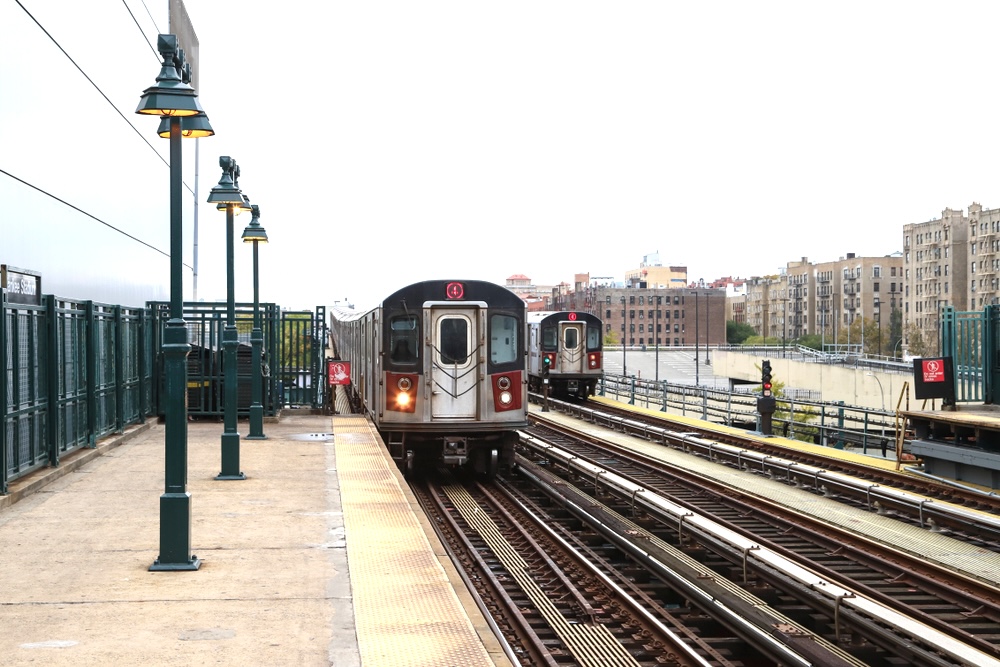
Most people shopping for a home in Brooklyn watch one number above all others: the price per square foot. It shows up on every listing, it’s easy to compare, and it feels like a reliable way to judge value. But after 25 years of selling real estate across Brooklyn’s neighborhoods, Rudolph Saint Walker says that number alone will lead you astray. The real factor that drives value, the one that doesn’t show up in the listing headline, is how close the home is to the subway.
“You cannot build another subway,” says Saint Walker, principal broker at Saint Walker Realty Inc. “That’s usually the way I set the value.”
Why Price Per Square Foot Misleads
Price per square foot makes sense on the surface: two homes, same size, different prices, and you want to know which is the better deal. But in Brooklyn, that comparison can be wildly misleading without accounting for transit access.
Saint Walker has watched this play out across decades of transactions. A 3,600-square-foot brownstone in Bedford-Stuyvesant might sell for around $3 million. Move that same building toward Boerum Hill or Carroll Gardens, closer to downtown Brooklyn and the Manhattan-bound trains, and you’re looking at $8 to $12 million. Cross into Manhattan itself, and that same structure could reach $36 million.
The building didn’t change. The subway access did.
Why the Subway Is the Permanent Variable
Everything in New York City’s real estate market orbits Manhattan; that’s where the jobs and commerce are, and where most residents need to get every day. The subway is the only practical way for most people to make that trip, and unlike kitchens or bathrooms, train stations can’t be moved or added. That permanence is what makes proximity so valuable.
According to Saint Walker, the price gradient follows the train lines almost perfectly. Starting in Bedford-Stuyvesant, for every block you move toward downtown Brooklyn and the water, you can add roughly $100,000 to $250,000 to the value of a comparable property. Cross into Queens heading toward Long Island, and that same 3,600-square-foot building might sell for $1.1 to $1.5 million. Bring it back to downtown Brooklyn, and you’re at $7 million.
What This Means When You’re Buying
This insight changes how buyers should evaluate a home, especially a fixer-upper or a property that needs work.
Saint Walker’s advice: find the best location first, then worry about the building’s condition. A home two blocks from an express train that reaches Manhattan in three or four stops is worth more than a pristine, fully renovated home that requires a 20-minute walk to a slower local line. You can fix the interior. You cannot fix the commute.
He puts it plainly: a dated bathroom costs around $6,000 to update, maybe $10,000 for a high-end upgrade. If you pass on that home and an investor buys it, spends $20,000 on the kitchen and bath, and relists it, you’ll pay $250,000 more for the same building. The subway access will be identical.
How to Use This to Your Advantage
For buyers, before comparing price per square foot on two properties, look up how many stops each one is from a major Manhattan hub. Two blocks from an A or C express train is a fundamentally different asset than six blocks from a local line, even if the homes look similar on paper. Ask your agent for the specific transit distance, not just the neighborhood name.
For sellers, if your home is within two or three blocks of a major subway line, that’s a selling point worth leading with – not burying in the listing description. Saint Walker says buyers who understand this market will pay for access. Make sure your pricing and listing communicate it clearly.
For small investors, Saint Walker’s framework is straightforward: find the best building you can near the best transit access you can afford, and don’t let cosmetic condition scare you off. The things that cost money to fix are fixable. The things that drive long-term value, like a three-stop express ride to Midtown, are not.
Looking Ahead
Brooklyn’s subway map hasn’t changed meaningfully in decades, and no major expansions are planned for the borough’s residential corridors. That means today’s transit advantages are likely to remain fixed, while demand for well-located housing continues to grow. Buyers who understand that proximity to an express line is a permanent feature, not a temporary market trend, are better positioned to make purchases that hold and build value over time. As Saint Walker puts it, “You can fix anything in a building, but you’re not going to dig another subway.”
About the Expert: Rudolph Saint Walker is Principal Broker, Saint Walker Realty Inc., Brooklyn, NY. Focus: Residential sales, brownstones, and investment properties across Brooklyn and the five boroughs. Licensed contractor with over 25 years of experience in New York City real estate.
This article is intended for informational purposes only and does not constitute legal, financial, or investment advice. The views and opinions expressed herein reflect those of the individuals quoted and do not represent an endorsement of any company, product, or service mentioned. Readers should conduct their own due diligence and consult qualified professionals before making any investment decisions.
Similar Articles
Explore similar articles from Our Team of Experts.