
South Florida’s real estate market spans three distinct counties, multiple buyer profiles, and a constant flow of domestic and international capital. For brokerages serving this region...

The Suburbs South of Philadelphia Have Become One of the East Coast's Most Resilient Markets

Written by:
Date:
02 Jun 2026
Share via Facebook

Share via Linkedin

Share via X

Copy to clipboard

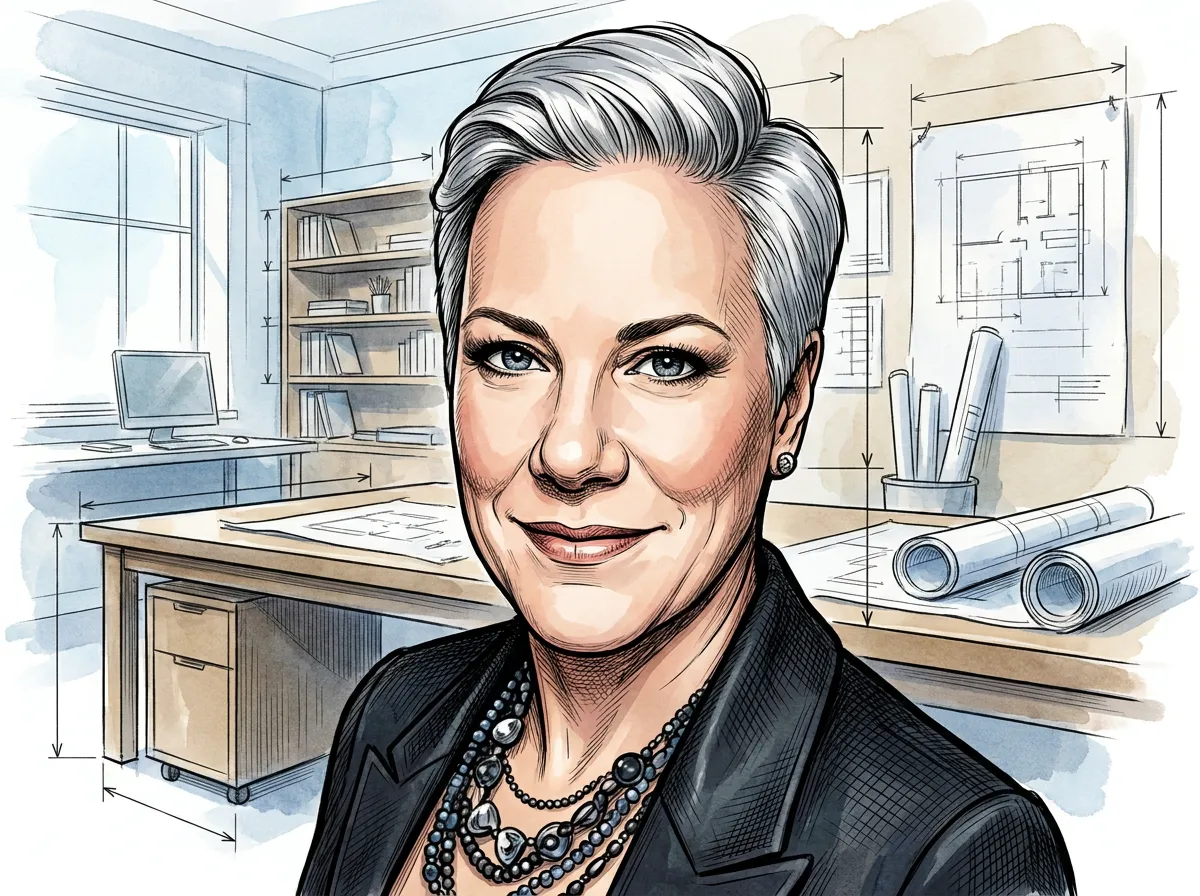
The suburbs south of Philadelphia have quietly become one of the more resilient residential markets on the East Coast. While national headlines tend to paint New Jersey real estate with a broad brush, conditions on the ground in South Jersey tell a more specific story, one shaped by professional migration, constrained supply, and buyers who are gradually accepting that lower interest rates may not arrive anytime soon.
Nancy Kowalik, Founder and CEO of the Nancy Kowalik Real Estate Group and powered by LPT Realty, has spent years building a nine-agent operation in Gloucester County that has closed roughly 3,000 transactions in the area. Her read on the market is direct and grounded in day-to-day observation rather than national data trends.
A Market Built on Space and Schools
South Jersey’s appeal has long rested on a few consistent pillars: proximity to Philadelphia, strong school districts, and the kind of land and space that simply isn’t available closer to the city. “People come to South Jersey for land and space,” Kowalik explains. “Here you have an acre of land: it’s like your little kingdom.”
That draw has been reinforced by institutional growth in the region. A major hospital expansion adding 1,000 beds and the rapid growth of Rowan University have steadily increased the flow of professionals into the area. Combined with the pharmaceutical sector anchored in nearby Delaware, the result is a buyer pool that skews toward move-up purchasers, families prioritizing school districts, square footage, and outdoor amenities over urban convenience.
Inventory Remains the Central Challenge
South Jersey is dealing with a persistent shortage of available homes, and the causes are layered. The region was among the fastest-growing communities on the East Coast heading into the 2008 financial crisis, and many homeowners who bought at peak prices spent the better part of a decade underwater. Values didn’t fully recover until around 2020, meaning a significant cohort of sellers only recently regained equity, and many refinanced into rates they’re now reluctant to give up.
“The 2.8% or 3% interest rate, it’s kind of hard to turn around and agree to a 6 or 7% interest rate,” Kowalik notes.
New construction isn’t filling the gap. The large-scale subdivisions of 200 to 400 units that characterized pre-crisis development have given way to projects of 15 homes or fewer. The region’s rural character, farmland, septic systems, lower density zoning, limits the kind of infill development that has helped other suburban markets absorb demand.
Kowalik’s team responds to the shortage by actively sourcing properties rather than waiting for listings. They knock on doors, send letters, and make phone calls when a client needs something specific. “We don’t wait for it to pop up on the market,” she says.
Condition Is Everything
In a low-inventory environment, it might be tempting to assume any home will sell. The reality is more selective. The market is splitting sharply along condition lines, with turnkey properties commanding strong premiums and anything requiring work sitting considerably longer.
Kowalik describes the luxury segment as particularly competitive when the product is right; buyers seeking 3,000 to 3,500 square feet with finished basements, pools, outdoor kitchens, and privacy are willing to pay significant premiums, largely because fully finished homes at that scale are genuinely rare. “If it’s A or A-plus condition, it’s selling quickly,” she says. “If it’s got some projects, it’s sitting.”
The flip side is a growing wholesale and fix-and-flip market absorbing homes that don’t meet that bar. South Jersey’s diverse housing stock, farmhouses sitting alongside newer construction, has created fertile ground for investors willing to renovate. “Flippers are taking those farmhouses and making them compete with the McMansions,” Kowalik observes.
For investors considering entry, she offers a pointed caution: school district matters more than almost any other variable. Without attention to district quality, there’s no guarantee about tenant quality or buyer demand for a flip. She also flags the risks of skipping proper inspections, noting that even experienced local flippers occasionally get caught by mold or foundation issues when competitive bidding pressure pushes them to move too fast.
Buyers Are Recalibrating
Buyer sentiment has shifted noticeably over the past year. After two years of rising rates and lost bidding wars, a cohort that spent much of 2023 and 2024 on the sidelines is beginning to re-engage. The motivation isn’t optimism about rates coming down – it’s acceptance that they probably won’t, at least not enough to matter.
“The smart buyers are back in the market, recognizing this is the new normal,” Kowalik says. “They’ve seen enough things go by to understand that if they bought two years ago, they’d already see an increase in value.”
Hesitancy hasn’t disappeared entirely. Plenty of buyers remain wary of entering a market where competitive offers can run $50,000 to $100,000 above asking. But for those who need more space or have a genuine life reason to move, the calculus is tipping toward action.
On the seller side, pricing discipline remains uneven. Well-prepared, updated homes still attract multiple offers. But sellers who overestimate their position, particularly those benchmarking against a neighbor’s sale without accounting for condition differences, are finding the market less forgiving than expected. “We only work with people that are realistic,” Kowalik says.
Ranch Homes and the Floor Plan Gap
One structural trend worth watching is the surging demand for single-story living, and the near-absence of new supply to meet it. Ranch homes and floor plans with first-floor master suites are drawing strong interest from both first-time buyers and downsizers, yet builders have largely avoided them because the economics are unfavorable. A single-story home requires the same foundation and roof as a two-story structure but delivers far less square footage per dollar of construction cost.
“That floor plan is blowing up like crazy,” Kowalik says, “and there’s only one or two builders that actually offer those floor plans. It’s kind of shocking that they’re not seeing the trends.”
The gap between what buyers want and what’s being built represents both a market inefficiency and an opportunity, particularly for developers willing to serve an aging population that increasingly values accessibility without sacrificing quality.
What Comes Next
South Jersey’s market fundamentals, professional job growth, strong schools, and limited buildable land point toward continued price stability and tight inventory for the foreseeable future. The constraints that define the market today show no sign of resolving quickly: homeowners locked into low rates aren’t eager to move, builders aren’t adding supply at scale, and the region’s rural character limits density.
For buyers, the clearest signal is that waiting for dramatically better conditions carries its own cost. For sellers, the market rewards preparation and realistic pricing far more than it rewards optimism. And for investors, the opportunities lie in understanding hyper-local variables, school district quality, housing condition, and buyer expectations, rather than relying on broad market momentum.
About the Expert: Nancy Kowalik is the Founder and CEO of the Nancy Kowalik Real Estate Group, a nine-agent operation serving Gloucester County in South Jersey. The group has closed roughly 3,000 transactions in the area.
This article is based on information provided by the expert source cited above. It is intended for general informational purposes only and does not constitute legal, financial, or real estate advice. Readers should conduct their own research and consult qualified professionals before making any real estate or financial decisions.
Similar Articles
Explore similar articles from Our Team of Experts.