
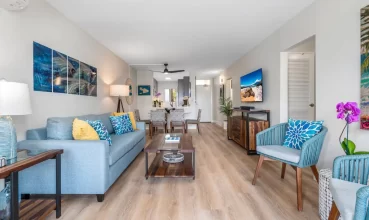
From Where has secured partnerships with many design and home goods brands, expanding the product selection available through its shoppable rental platform. The partnerships provide guests w...

South Florida Real Estate Is Returning to Balance After the Pandemic Boom

Written by:
Date:
02 Jun 2026
Share via Facebook

Share via Linkedin

Share via X

Copy to clipboard


The frenzied pace of Miami’s pandemic-era real estate market has given way to something more measured. Inventory is growing, days on market are stretching, and buyers are taking their time. For agents who built their business during the boom years, the current environment demands a different approach. For those who have adapted, the opportunities remain substantial.
Jeffrey Corriolan, a Broker Associate and Real Estate Advisor at Compass with 17 years of experience across Miami-Dade, Broward, and Palm Beach counties, has already closed 47 transactions in the first five months of 2026. His read on the market offers a useful window into what is actually happening on the ground across South Florida.
A Market Finding Balance
Rising interest rates, expanded inventory, and structural cost increases are forcing South Florida’s housing market into a correction after years of pandemic-driven price growth. Properties that were pushed to inflated values during the rush are now working through multiple reductions before finding buyers. Corriolan notes that many listings go through two, three, or four price adjustments before finally selling. “I think we will eventually get to a place where it’s more obtainable for people to purchase properties, and they’re actually buying something of quality,” he says.
The interest rate environment is a significant part of that story. When rates climbed from the historic lows of the pandemic era to the 5%- 6% range, buying power contracted sharply. A buyer approved for a million-dollar purchase at two percent may now qualify for closer to $700,000. That compression collided with elevated home prices, creating the friction that continues to slow the mid-market segment.
The result is a two-speed market. Ultra-luxury properties are still moving. Single-family homes and condos in the $500,000 to $1 million range have slowed considerably. “We’re noticing that the market has truly slowed down over the last couple of years,” Corriolan says, while pointing out that broader county-level numbers in Broward and Palm Beach remain positive.
Pricing Discipline Decides Sales
With inventory expanding and buyers under no pressure to act quickly, the gap between correctly priced and overpriced listings has widened into one of the market’s clearest dividing lines. Properties priced at current market value sell quickly, while those carrying pandemic-era expectations sit. Average days on market now range from 70 to 140 across price ranges – a significant departure from the multiple-offer environment of 2021 and 2022.
Buyers are aware of their leverage. With more options available, many are content to wait for price reductions rather than compete aggressively. “Buyers are not in a rush to buy, because there are so many options,” Corriolan observes. “They feel like, if I don’t buy this house, another house is going to come, or I can just wait until they drop the price.”
Insurance and HOA Costs
Beyond interest rates and pricing, two structural cost pressures are complicating transactions: homeowners’ insurance and HOA fees. Together with higher mortgage costs, these expenses are reshaping what buyers can realistically afford – even when the purchase price itself looks manageable.
Florida’s insurance market has thinned considerably. Carriers have exited the state, and those that remain have sharply raised premiums. Clients who were once paying $3,000 annually for homeowners coverage are now receiving bills of $5,000 to $10,000 or more. The limited carrier options have reduced competitive pressure on pricing, and the problem shows no immediate signs of easing.
On the HOA side, post-Surfside regulatory changes have required condo associations to fund reserves and complete deferred maintenance. The cost of compliance has been passed to unit owners through higher monthly fees. What was once $400 per month has become $700 to $900 in many buildings. “When buyers are coming to purchase, they’re like, ‘Yes, I love the unit, but the association is extremely high,'” Corriolan says. “That’s definitely causing a slowdown in the market.”
Who Is Still Buying
While the pace has slowed, the buyers who remain active look different from the pandemic-era wave. The rush of relocators fleeing dense urban centers has been replaced by a more deliberate buyer: business owners, executives, and professionals drawn by job opportunities, tax advantages, and lifestyle. New York, New Jersey, Connecticut, and Pennsylvania remain the primary feeder markets. California buyers are still present but less dominant than at the peak.
At the higher end of the market, buyers are prioritizing appreciation potential, community amenities, school quality, and safety. Many are purchasing larger homes – four bedrooms or more – to accommodate both family needs and remote work. Dual home offices have become a practical requirement rather than a luxury for many households.
A recent transaction illustrates the profile well. A pair of attorneys relocating from New York wanted a live-work-play environment close to employment, with walkable access to dining and nightlife, and a strong sense of safety. They ended up in Miami’s Design District, purchasing a condominium that prioritized amenities over square footage. “It pretty much checked everything off their box,” Corriolan says.
Agents Who Adapt Succeed
The divergence in agent performance underscores how much the market has changed since the boom years. While industry data suggests a meaningful portion of licensed agents have gone without a transaction since 2023, those who have adjusted their approach are producing strong numbers. The shift requires changes in marketing, client targeting, communication, and pricing strategy.
Corriolan frames the adjustment plainly: agents who recognize they are no longer operating in a pandemic market – and who adapt their methods to current conditions – are the ones building sustainable businesses. “If you understand how to shift, how to change, you become the ultra agent that is going to succeed in any market,” he says.
What Comes Next
South Florida’s fundamentals – continued population inflow, corporate relocation activity, new construction demand, and its status as a global destination – remain intact. What the market is working through is a recalibration of pricing expectations, not a collapse in demand. The structural cost pressures from insurance and HOA fees are unlikely to ease quickly, which means affordability will continue to shape buyer behavior well into 2027.
For buyers willing to move on to correctly priced properties, and for sellers realistic about where values actually sit today, the market is functioning. The frenzy is gone, but the underlying demand that drives South Florida real estate has not disappeared with it.
About the Expert: Jeffrey Corriolan is a Broker Associate and Real Estate Advisor at Compass with 17 years of experience serving Miami-Dade, Broward, and Palm Beach counties in South Florida. He closed 47 transactions in the first five months of 2026.
This article is based on information provided by the expert source cited above. It is intended for general informational purposes only and does not constitute legal, financial, or real estate advice. Readers should conduct their own research and consult qualified professionals before making any real estate or financial decisions.
Similar Articles
Explore similar articles from Our Team of Experts.