

Secondary and tertiary markets along interstate corridors are attracting more interest from manufacturers. These companies are seeking lower property costs and reliable labor pools, advantag...

Florida Weather Risk Is Being Misunderstood Due to Construction Code Confusion

Written by:
Date:
20 Jan 2026
Share via Facebook

Share via Linkedin

Share via X

Copy to clipboard

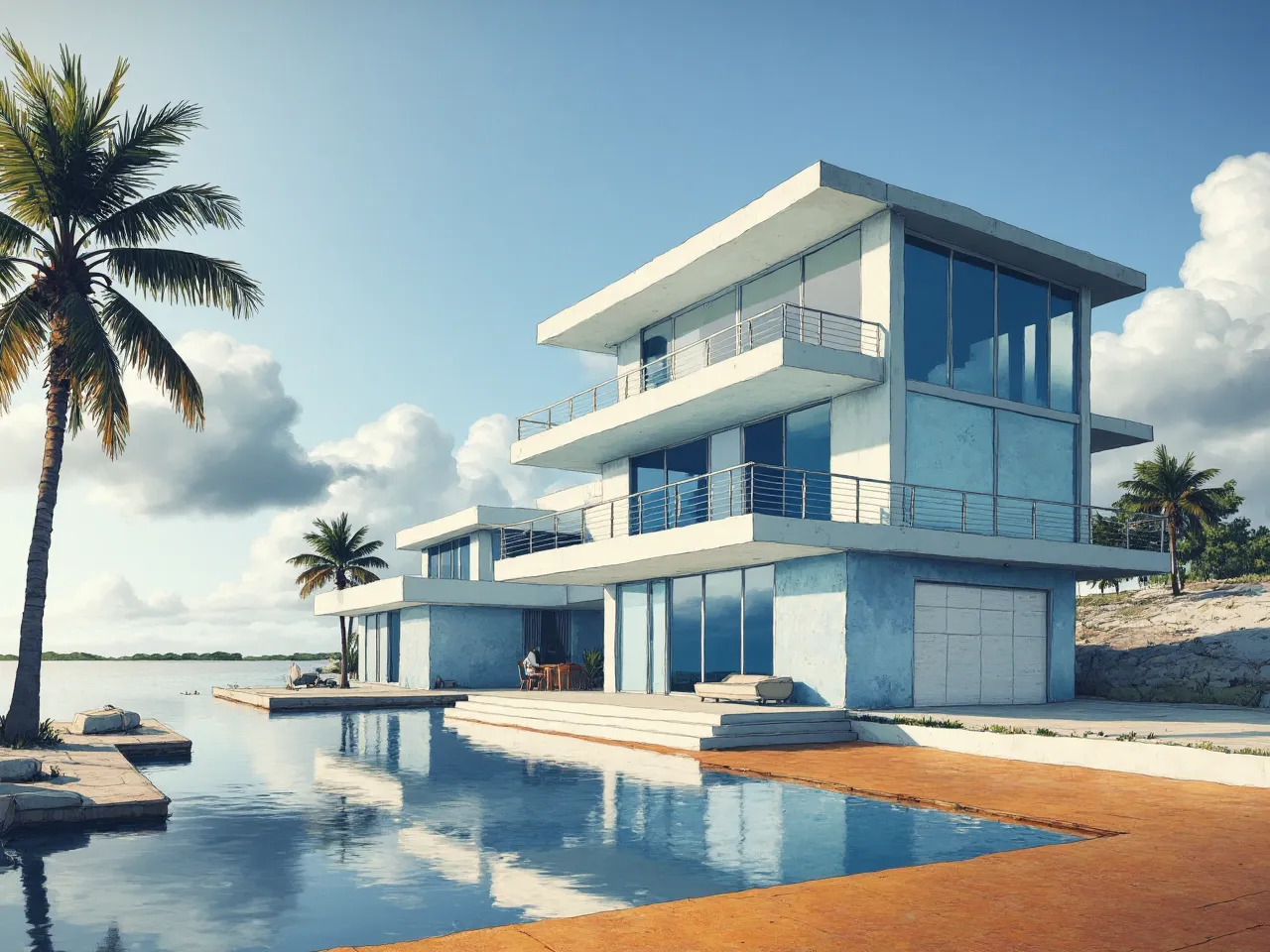
The 2024 hurricane season has heightened concerns about the risk to Florida real estate. Still, the pattern of actual damage tells a more specific story, according to Jose Cardenas, principal at Premier Sotheby’s International Realty. The majority of flood-damaged homes were older, single-story structures built decades before current building codes, not modern construction.
“Most of these homes that flooded were one-story homes from the 1960s, 1970s, 1950s type of structures where the construction code was completely different,” Cardenas says. “Now, FEMA is completely different. If your home sits in a flood zone or near the coast, you must elevate it.”
This distinction between outdated and modern construction is critical for accurately assessing risk in Florida real estate, Cardenas argues. Yet much of the public discussion treats weather exposure as uniform across all properties, distorting how buyers and sellers perceive the actual risks involved.
The Construction Code Gap
Today’s Florida Building Code requires homes in flood zones or near coastal areas to be elevated, with mandatory features such as impact-resistant glass, reinforced structural systems, and foundations drilled into bedrock. “The construction that we have these days is safe and fine,” Cardenas says. “They drill the pier foundations all the way down to bedrock, which drives up costs, but the peace of mind is priceless.”
These are now baseline requirements for any new development. Despite this, Cardenas notes that market commentary often conflates homes built to modern standards with those from the 1960s, overlooking the profound difference in risk.
This confusion, he says, leads to misleading generalizations. “You can just make a very generic statement and in a way can be irresponsible,” Cardenas says, referring to broad claims about Florida flooding. While it’s accurate to say that older, ground-level homes in coastal areas experienced flooding, it is misleading to imply that all homes in a city like Tampa are equally at risk.
The Self-Insurance Response
Affluent buyers are responding to these realities with their own risk calculations. “Eighty percent of these buyers are cash buyers,” Cardenas says. “Most of these cash buyers are self-insured because they understand the quality of the construction.”
Self-insurance— forgoing traditional property insurance and covering losses out of pocket— is only feasible for buyers with substantial resources. But it demonstrates the confidence that many high-net-worth individuals have in modern construction standards. Rather than avoiding Florida properties or demanding deep discounts due to weather risk, these buyers scrutinize the specific property, its build quality, and its proximity to flood-prone areas.
“The more educated you are about the construction of your home and the area where you are, you’re going to feel fine,” Cardenas says. “You’re going to feel safe about it. It’s all about the education part of it.”
Meanwhile, the insurance industry has responded to recent storms by sharply raising premiums, especially for older homes. Cardenas argues that this market response often overstates the risk for new construction, since insurers typically price policies based on aggregate losses rather than the actual resilience of individual properties.
The Infrastructure Investment Factor
Infrastructure improvements at the county and state level are another key factor in long-term risk. “Every storm brings you learn from every storm,” Cardenas says. “How do we prepare? The county with better infrastructure, let’s say, for its plumbing and sewer systems. Again, the pump stations. That’s infrastructure that the county and hopefully the state will get to put more attention and money into, and make life safer for this type of storm.”
Drainage and sewer systems were tested during the 2024 storms, exposing weaknesses in municipal infrastructure. In response, counties are investing in pump stations, upgraded plumbing, and improved stormwater management. While the timeline for these upgrades varies across jurisdictions, the trend is clear: local governments are directing more resources toward reducing future flood risk.
These improvements are not always apparent to buyers at the time of purchase, but they can significantly influence long-term property safety. A buyer who understands ongoing infrastructure upgrades may view current risk differently from one focused only on recent damage.
The Market Bifurcation Ahead
Rising insurance costs and continued weather concerns are driving a split in Florida’s luxury real estate market, according to Cardenas. Properties built to modern codes and located in areas with strong infrastructure are commanding premiums, while older homes face higher insurance costs and increased buyer scrutiny.
This bifurcation means that construction quality and location are becoming central to property valuation. Buyers who rely solely on price appreciation trends or past sales may overlook the underlying structural factors that will determine a property’s long-term value.
For real estate professionals, Cardenas stresses the need to educate clients about each property’s specific risk profile rather than making broad statements about Florida’s weather exposure. This requires knowledge of building codes, construction standards, and local infrastructure plans.
Premier Sotheby’s International Realty is positioning its advisors to have detailed conversations with clients about construction quality and code compliance. Whether this property-specific approach becomes standard practice across Florida’s luxury markets may depend on how quickly other firms recognize that practical weather risk assessment demands attention to individual property details, not market-wide generalizations.
Similar Articles
Explore similar articles from Our Team of Experts.

Perspectives, Real Estate Investment, Industry News, Commercial Real Estate, Market Analysis & Policy
Industry expert Keith Cubba, Senior Vice President and National Director of Golf at Colliers International, argues that investors are significantly overestimating the risk in today’s g...


Perspectives, Industry News, Residential Real Estate, Commercial Real Estate, Market Analysis & Policy
The University of Florida’s significant presence in Gainesville shapes the local real estate market in ways that reach far beyond student housing, according to international real estate ex...

