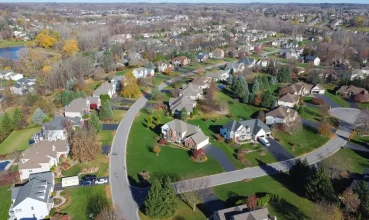

Madison’s residential market is confronting one of the most severe housing shortages in the Upper Midwest, with new construction consistently trailing far behind rapidly expanding househol...

Foreign Capital Missing the Mark in Detroit's Block-Specific Real Estate Market

Written by:
Date:
02 Oct 2025
Share via Facebook

Share via Linkedin

Share via X

Copy to clipboard


While international capital flows into Detroit’s real estate market, one local expert warns that surface-level metrics are masking crucial neighborhood-specific risks that could imperil returns.
“On paper, the numbers look great. You can get a $50,000 house that on Section Eight rents out for like $1,200-1,300,” says Sergio Aguinaga, founder of Michigan Houses for Cash. However, these apparently attractive returns are leading international investors from Argentina, Lebanon, and France into what Aguinaga suggests could be risky territory.
The challenge, according to Aguinaga, lies in the granular nature of Detroit’s market. “Detroit is really block by block, I would say zip code by zip code is a better way of putting it,” he explains. This micro-market reality means broad market statistics can be deeply misleading for remote investors.
The Section 8 Misconception
While Section 8 housing appears to offer guaranteed returns and government-backed rental payments, Aguinaga points to several overlooked challenges. “A lot of the Section 8 buyers, in my experience, they don’t take as good care of the property as they should,” he notes. “There’s a lot of risk for crime in specific pockets of Detroit, especially the ones that they invest in.”
These investors aren’t typically buying in areas like Boston Edison, where warehouses sell for $300,000-400,000. Instead, they’re often drawn to zip codes where the apparent returns look highest on paper, but where local knowledge might suggest greater caution.
The Evolution of Detroit’s Market
“Detroit’s not how it used to be 10-15 years ago,” Aguinaga says, describing the city’s transformation. “There’s a lot happening. Even the areas that used to be not very good 10 years ago now they’ve gone up.” However, this broad improvement masks continuing challenges in specific submarkets.
Some areas, particularly closer to downtown, have seen genuine revival. But others, like Brightmoor, which Aguinaga specifically identifies as “not a very good area,” continue to face significant challenges that may not be apparent in market-wide statistics.
A Path Forward
For international investors interested in the Detroit market, Aguinaga suggests working with local partners who understand these neighborhood-specific dynamics. Many successful operations have built full-service models that include property management and maintenance, helping bridge the knowledge gap for remote investors.
“If the house is worth around $100,000 all fixed up, there’s a lot of activity. There’s a lot of buyers that would be interested in it,” Aguinaga notes. The key is understanding which $100,000 neighborhoods offer genuine opportunity versus those where apparent returns may mask hidden risks.
Looking ahead, Aguinaga believes Detroit continues to offer genuine opportunity for informed investors. However, success requires moving beyond surface-level metrics to develop genuine understanding of neighborhood-specific dynamics that can make or break investment returns.
Similar Articles
Explore similar articles from Our Team of Experts.