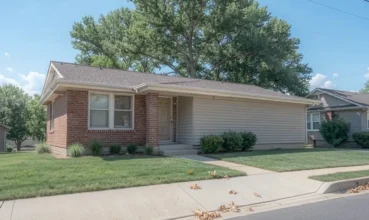
After years of bidding wars, waived inspections, and offers accepted within hours, Wisconsin’s housing market is shifting. Homes that once sold in days are now sitting on the market for weeks, and sellers who expected competing offers are offering closing cost credits just to get a deal done.
The change reflects a broader recalibration in residential real estate: the frenzied pace that defined the pandemic-era market is giving way to something closer to normal. Buyers have time to tour properties, request inspections, and negotiate — tools that were effectively off the table just a few years ago.
Devan Dorzok, a licensed real estate salesperson with NAI Pfefferle, has tracked these changes across Wisconsin. “We’re starting to get back into a normal cycle swing post-COVID,” he says. “Prices are starting to stabilize.” For buyers who sat out the chaos of 2021 and 2022, that stability is an opening.
How the Market Lost Its Mind — and Who Paid the Price
The numbers from 2021 and 2022 still read like a fever dream. Buyers were submitting offers sight unseen, waiving inspections on homes that hadn’t been properly vetted, and routinely bidding tens of thousands of dollars over asking price — only to lose to someone who bid more. In many Wisconsin markets, a home listed on a Thursday could have five offers by Sunday, with contingencies stripped out to make the package more attractive to sellers.
What got lost in that sprint wasn’t just money. It was judgment. The basic due diligence that protects buyers in any major financial transaction — the inspection, the time to read the contract, the ability to walk away — became liabilities in a market that punished hesitation. Buyers who insisted on inspections lost houses. Those who took a week to decide lost houses. The market, in effect, rewarded people for skipping the steps that exist to protect them.
That distortion had consequences. Some buyers closed on homes with undisclosed structural problems. Others overpaid at peak prices and found themselves underwater when the market began to cool. The urgency that defined that era wasn’t a feature of a healthy market — it was a symptom of one running a fever.
Three Reasons the Balance of Power Has Shifted
The cooling didn’t happen by accident. Three overlapping forces have restructured the residential market in Wisconsin, and together they’ve done something the previous two years made seem impossible: they’ve given buyers room to think.
The first is inventory. New construction surged 25 percent last year as developers rushed to meet demand that was already beginning to soften. The result was a glut of available properties arriving just as the urgency driving buyers had started to dissipate. More options mean less pressure — and less pressure means buyers no longer have to choose between due diligence and getting a house.
The second force is memory. After three years of whiplash — rising prices, rising rates, then stabilization — buyers are approaching purchases differently. They are requesting inspections, negotiating repairs, and refusing to stretch beyond what makes financial sense. The recklessness the market once rewarded has given way to something more considered. “We’re starting to get back into a normal cycle swing post-COVID,” says Dorzok. “Prices are starting to stabilize.” That stability, paradoxically, is what’s making buyers cautious rather than confident — they’ve seen how fast things can change.
The third is time. Homes that once sold within days are now sitting on the market for weeks. That lag is doing something structurally important: it’s shifting anxiety from the buyer to the seller. Sellers who once fielded multiple offers are now the ones waiting, and that wait is making them more willing to negotiate — on price, on repairs, on closing costs.
What Buyers Can Do Now That They Couldn’t Before
The practical significance of this shift isn’t just that the market is calmer. It’s that the tools buyers abandoned under pressure — or never had the chance to use — are available again. For anyone entering the Wisconsin housing market now, that’s worth understanding concretely.
The most important recovery is the inspection. During the frenzy, waiving it was often the price of being competitive. That calculus has changed. Sellers are no longer in a position to reject offers simply because a buyer wants to know what they’re buying. An inspection today doesn’t just protect against structural surprises — it creates a negotiating moment. Issues that surface can translate into price reductions, repair credits, or seller-funded concessions that effectively lower the cost of the purchase.
Time is the second recovery. Buyers can now visit a property more than once, compare it against others, and make decisions based on fit rather than fear of losing out. That deliberateness is not a weakness in today’s market — it’s leverage. Homes listed for more than two weeks are particularly worth attention. The longer a property sits, the more a seller’s expectations tend to adjust toward reality.
The third recovery is negotiation itself. Closing cost credits, mortgage rate buydowns, home warranties — these were largely off the table when sellers held all the power. Now, according to Dorzok, sellers eager to close are increasingly willing to structure deals that meet buyers halfway. “It’s not just about the property,” he says. “It’s about structuring the deal in a way that makes sense for both sides.”
For buyers who sat out the chaos of the previous years, this is the market they were waiting for. The question is whether they recognize it.
The Market Is Going Forward
It would be a mistake to read the current cooling as the beginning of a collapse, or to wait for conditions to deteriorate further before acting. Wisconsin’s housing market isn’t broken — it’s recalibrating. And there’s an important distinction between a market that’s crashing and one that’s simply stopped being irrational.
Prices are stabilizing, not cratering. Inventory is up, but not because demand has disappeared — it’s up because supply finally caught up after years of running short. The buyers who will benefit most from this moment are not those holding out for 2021 prices to unwind further, but those who understand that what’s on offer right now is something rarer than a bargain: a fair transaction.
That fairness has a shelf life. As new construction slows — projected to drop from last year’s 25 percent surge to closer to 20 percent this year — the inventory surplus that’s currently working in buyers’ favor will begin to shrink. The window of leverage is real, but it isn’t permanent.
What this market is offering, in other words, is not a crisis to exploit but a correction to meet. Buyers who approach it with the due diligence they were once forced to abandon — inspections, negotiation, time — are positioned to make sound decisions in a way that simply wasn’t possible three years ago. That’s not a small thing. In a purchase this consequential, getting to think clearly might be the most valuable condition the market can offer.
About the Expert: Devan Dorzok is a licensed real estate salesperson with NAI Pfefferle, specializing in multifamily and industrial properties in Wisconsin. He works primarily with investors and property owners looking to buy or sell in the region.
This article is intended for informational purposes only and does not constitute legal, financial, or investment advice. The views and opinions expressed herein reflect those of the individuals quoted and do not represent an endorsement of any company, product, or service mentioned. Readers should conduct their own due diligence and consult qualified professionals before making any investment decisions.