For Brian Rudderow, the case against single-family wholesaling came down to what the work cost him relative to what it paid. His wholesale margins have thinned, seller expectations remain high, and squatter-occupied properties have added a problem no spreadsheet captures: occupants who stretch timelines, raise the risk, and can consume two months of work for a fee that barely justifies the effort.
Rudderow, a real estate investor and founder of HBR Colorado who has worked in wholesaling and fix-and-flips for just over a decade, has shifted his focus to land. He still closed one wholesale deal this past year with a $20,000 fee, his biggest of the year, but his smaller residential deals increasingly came with occupants attached, and the work stopped justifying the return.
“I’m spending two months on squatter-occupied properties, fighting with these squatters, getting threats saying they’re going to come track me down,” he says. “It’s not worth it for $3,000.”
When the Math Stops Working
Two deals crystallized the problem. In the first, a property in Otero County, a family had taken over the seller’s garage, living without electricity and using buckets as bathrooms. Rudderow spent roughly two months working the deal and earned approximately $5,000. In the second, in Windsor, a combative occupant threatened to record Rudderow when he visited and to invite homeless people to sleep in the property. That deal paid $3,000.
Even the buyer on the Windsor deal acknowledged the math didn’t work. “He was like, you’re definitely not getting paid enough to put up with this,” Rudderow recalls.
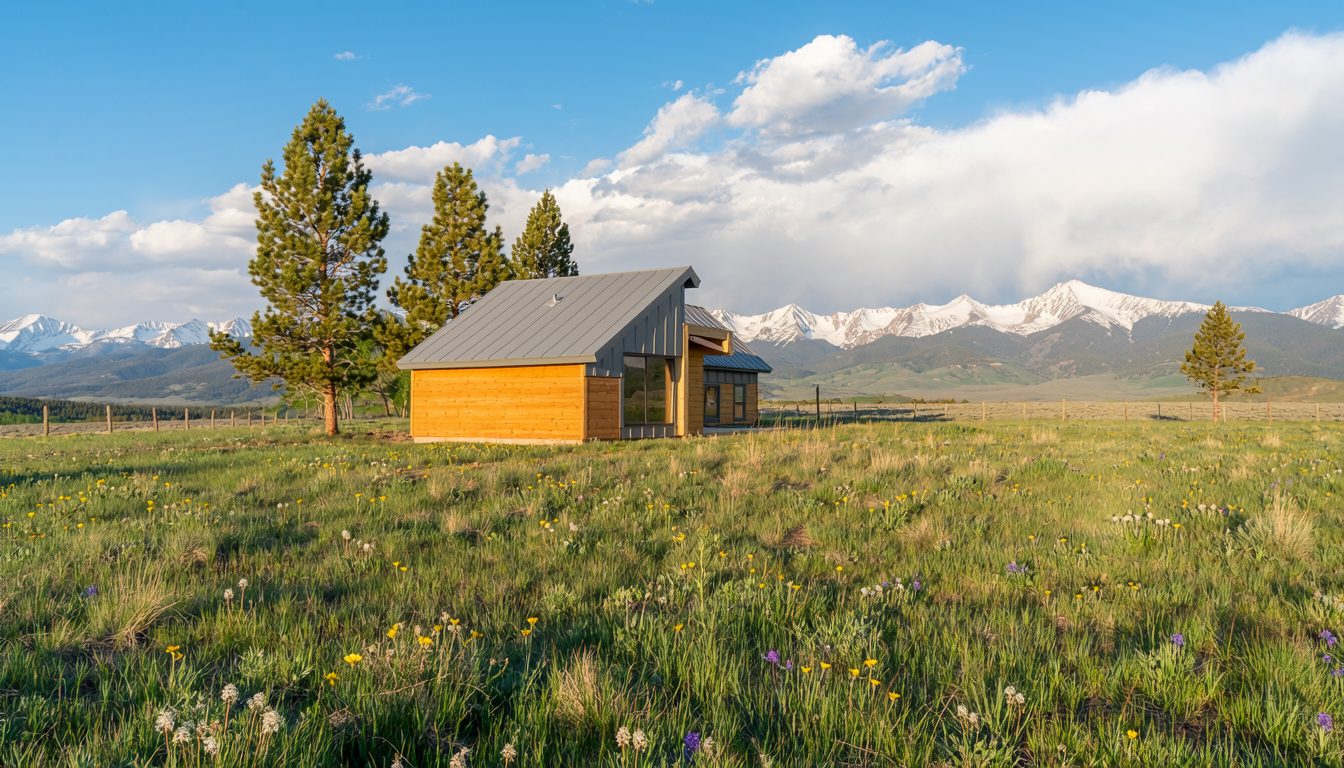
The pattern pushed him toward land, where the operational profile differs. His first land deal, 35 acres in Costilla County that he put under contract for $12,000, yielded only a $1,500 wholesale fee but went through quickly and with far less friction. “All I dealt with was the seller and the title company,” he says. The hardest part of that transaction was helping an elderly seller complete identity verification on her phone.
His best land deal so far was an off-grid cabin he put under contract at $9,000 and wholesaled for roughly $17,000 or $18,000, earning about $8,000 on the assignment. The seller had owned the property for around 30 years, lived out of state, and wanted to liquidate for medical bills.
Sticking to Their Numbers
Whatever the asset class, Rudderow finds sellers holding firm on price. In single-family, most properties he sees are listed or recently listed, often by owners who bought them one to three years ago and want full market value or close to it, sometimes only $15,000 under.
Land sellers negotiate somewhat more, but many owners of five-acre lots still won’t budge. “People are sticking to their guns,” he says. He also faces more competing offers, many of them from agents.
His response relies on volume rather than negotiation: talk to a high quantity of sellers and identify the ones already motivated to move, rather than trying to convince reluctant owners. According to Rudderow, inherited properties with out-of-state owners make the strongest leads.
Inherited properties bring their own complication, and it often comes from inside the family. Rudderow watched it play out during his grandfather’s estate, as his mother and her sisters relitigated decades-old loans and long-ago purchases during probate. His advice is straightforward: a clean, equal split among heirs, without trying to settle decades of perceived imbalances. “You don’t have to try to overcomplicate it and say he owes me this, she owes me that,” he says.
Where Activity Is Concentrating
Geographically, Rudderow sees the fastest movement north and south of Denver. Windsor, Greeley, and the broader Weld County area have the most building activity, along with Parker and Castle Pines south of the city.
Across those markets, the buyer-seller dynamic is complicated. Buyers technically have more leverage as sellers come down on prices, but fewer buyers are exercising it. “Yes, while buyers do have more leverage, there’s less buyers that are using that leverage just because of the higher mortgage rates,” Rudderow says.
Mobile Home Placement
Beyond wholesaling, Rudderow’s favorite strategy involves mobile home placement. The investor buys land, gets it surveyed, installs septic, electric, and other utilities, places a mobile home on it, and sells through a rent-to-own contract that qualifies more buyers. The strategy takes work and real capital, which makes it a poor fit for newer investors. Rudderow calls it the strategy his new disposition agent should aspire to.
By his rough estimate, an investor would need about $100,000 each for the land, the site work, and the home itself. That comes to roughly $300,000 to $400,000 all in, for a finished property that can sell for $400,000 to $500,000 depending on the area.
Expanding the Funnel
For now, Rudderow is widening his acquisition efforts in other ways. He is targeting larger land parcels, 100 acres and up, and has begun expanding statewide and beyond Colorado. He has also added a junk removal service to HBR Colorado as a lead-generation channel, since estate cleanouts put him inside homes whose owners may eventually want to sell. “I figured I would pitch them on junk removal and then show up to their house to clean out a mattress and then hand them my business card and say, hey, if you want to sell, keep me in mind,” he says.
His outreach has also turned up an unexpected pattern: sellers he contacts sometimes turn out to be buyers. Rudderow converts those leads into cash buyers for properties he already has under contract, turning a dead acquisition lead into a disposition opportunity.
Each of those moves follows the logic that pushed him out of houses. What mattered was not the size of the fee but what it took to earn it. Two months on a squatter-occupied property netted him $3,000. His first land deal, which involved only a seller and a title company, netted $1,500.
About the Expert: Brian Rudderow is a real estate investor and the founder of HBR Colorado, based in Colorado Springs, focusing on wholesaling, land investing, and creative finance across Colorado.