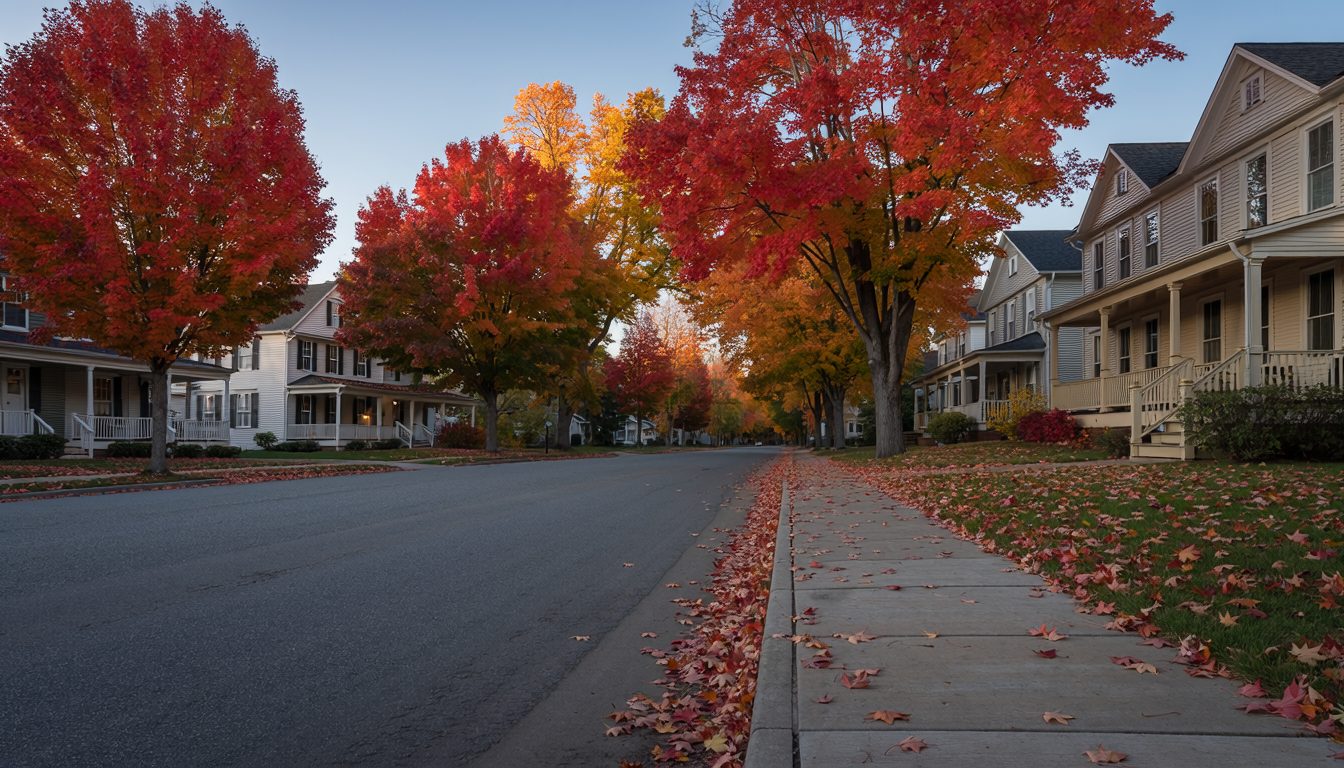
Few housing markets have topped national competitiveness rankings as reliably as Rochester, New York, where listings are so scarce that each one draws a crowd. Jason Mancuso, a team leader with the Anthony Butera Team at Keller Williams Realty Greater Rochester, says those rankings match what his agents have lived for years.
Lately, though, something the market had nearly forgotten is returning. “We actually got to negotiate,” Mancuso says of a handful of recent deals. “That was fun. That was different.” Sellers still hold the advantage, but after close to a decade of bidding wars, buyers and their agents are back at the bargaining table, and many agents are learning to work it for the first time.
A Decade Without Negotiation
Mancuso measures the market by how many offers a well-priced listing draws. At the height of the pandemic boom, before interest rates began climbing, a single home could attract dozens of offers, he says. By last year, that had dropped to a handful. Today, some listings draw only a couple of offers, and some draw no competition at all. Big bidding wars still happen, he says, but they are now the exception and usually take an aggressive pricing and marketing strategy to produce.
Through those years, buyers had little room to maneuver. With so many competing offers, a seller simply picked the strongest one, and a buyer’s agent could only submit an offer and wait to hear whether it had made the cut. If a buyer was well short of the top bid and could not go higher, there was nothing left to negotiate.
As a result, Mancuso says, many agents have spent most of the past decade in a market where traditional negotiation, the back-and-forth over price, repairs and terms, barely existed. Some newer agents have never done it at all.
Relearning the Bargaining Table
Mancuso, who runs a team of roughly 20 with business partner Anthony Butera, now spends much of his coaching time on that gap. In recent weeks, he says, he has been walking agents through live deals: which cards to play in a negotiation and which to hold back. Negotiation will be the focus of his coaching heading into 2027. “We got to really brush up on our skill set and mindset to negotiate,” he says.
He sees it as the core of what agents are hired for, and something the extreme market had largely taken off the table. “It’s always win-win or no deal,” he says. “But I love being the bulldog in the fight.”
For buyers, the practical change is that an offer is no longer only a bid. It can open a conversation about price, timing and terms, something Rochester buyers have rarely had in recent years.
Sellers Still Hold Leverage
The opening is narrow. Homes in the Rochester area still typically go under contract within days of listing, Mancuso says. “Go talk to an agent in Florida, and they’d call you a liar if they heard that.” Prices are still rising, too, though they remain well below the national median.
What has changed is supply and demand at the margins. The number of homes for sale has climbed to its highest level in years, though it remains far short of what a balanced market needs and well below where it stood before the pandemic. At the same time, higher interest rates and economic uncertainty have cooled buyer demand. Together, those shifts have opened room to negotiate.
A Market of Necessity
Mancuso sees today’s transactions as driven more by need than by choice. In his view, the pandemic-era boom was a reaction to cheap borrowing costs combined with a strong urge not to feel stuck at home again. Now, he says, the mood has flipped: with higher rates, high prices and economic uncertainty, many people are asking why they would move at all if they do not have to. “Right now we’re a market of necessity,” he says.
For owners who must sell and buy at the same time, the familiar fear is selling first with nowhere to go. Mancuso says the still-strong selling conditions make that problem easier to solve than it looks. Sellers have been able to set their own terms, such as a longer closing period or a rent-back that lets them stay in the home after the sale. Local lenders offer bridge loans and buy-now, sell-later programs that let owners secure their next home first. Often, he says, the team can line up a short gap between closings or close on both homes the same day.
Where First-Time Buyers Stumble
The most common mistake Mancuso sees from first-time buyers is deciding the market is out of reach before testing it, assuming homes will be too expensive or the competition too uncomfortable. Those assumptions are sometimes right, he says, but in most cases a buyer who works through their budget and goals with an agent finds a workable path.
He puts much of the burden on agents. Before writing an offer, an agent should know whether a buyer can realistically compete for that particular home and coach them accordingly. Agents who simply open doors and submit offer after offer, he says, leave buyers worn down. In the worst cases, a client gives up or fires the agent after 10 or 15 losing offers.
What Investors Should Know
On paper, Rochester looks strong for investors: low entry prices and returns that are hard to find in pricier metros. Mancuso, who invests in the market himself, starts every investor conversation by asking what the property needs to deliver, because the paper numbers rarely tell the full story.
Housing in the City of Rochester is often around a century old, he says, so investors should budget conservatively for deferred maintenance and upkeep. Local eviction proceedings also tend to favor tenants, a risk that does not show up on a spreadsheet. Once those costs are accounted for, returns are still good, he says, “but not what they’re thinking initially.”
Watching Inventory Into Spring
Whether negotiation becomes a lasting feature of the market depends on inventory, Mancuso says. If supply keeps climbing toward pre-pandemic levels while rates stay high and demand stays constrained, he sees the conditions for a real shift. Rochester’s strong seasonality makes that hard to judge until the spring market arrives.
His guess is that the market will not have fully turned by then. What he is rooting for is balance, rather than a return to bidding wars with 30 offers on every listing. Until spring answers the question, his message to agents is simple. “Make hay while the sun shines,” he says. Selling remains easy, and for the first time in years, buyers have something to negotiate with.
About The Expert: Jason Mancuso is a team leader with the Anthony Butera Team at Keller Williams Realty Greater Rochester in Monroe County, New York, which he has co-led with Anthony Butera for 10 years. He says the team has sold the most homes in Monroe County every year since 2017.
This article is based on information provided by the expert source cited above. It is intended for general informational purposes only and does not constitute legal, financial, or real estate advice. Readers should conduct their own research and consult qualified professionals before making any real estate or financial decisions.