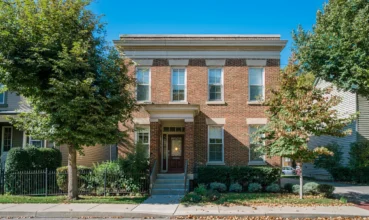
Albany, New York does not show up on most national lists of hot real estate markets. It lacks the name recognition of Boston or the scale of New York City. But investors who have been priced out of those larger metros are increasingly looking at the Capital Region, and agents working the market say the interest is real – with one important caveat. Many of those investors arrive with assumptions that do not hold up once they start looking at actual properties.
Lorenzo Murray, a licensed associate real estate broker with HUNT Real Estate ERA and leader of Your Home Team, which covers Albany, Schenectady, Rensselaer, and Saratoga counties, works regularly with investors from outside the region. He is direct about what draws them in and where their thinking tends to go sideways.
The geographic case for Albany is straightforward. The city sits within a reasonable distance of Boston, New York City, Philadelphia, Montreal, and Toronto. For an investor based in any of those cities, Albany offers price points that are simply not available closer to home. The same capital that buys a single-family rental in Albany would not get a studio condo in most of those larger markets. That spread is the core of the investment thesis for out-of-town buyers.
Investors, Not Owner-Occupants
But Murray pushes back on the idea that Albany is a straightforward spillover market for people priced out of Boston or New York. That framing, he argues, applies to investors – not to owner-occupants. People who want to live near Boston or New York are not relocating to Albany to do it. The owner-occupant buyers in Albany are overwhelmingly people who already live and work in the region. The out-of-town interest is almost entirely investment-driven, and investors who conflate the two dynamics tend to misjudge demand.
That distinction matters for how an investor underwrites a rental property. Buying a two-family in Albany expecting to rent to remote workers fleeing New York City rents means targeting a tenant pool that is smaller than it appears. The actual renter base is largely local, people employed by the region’s anchor institutions, which include GlobalFoundries, GE, Regeneron, and a cluster of colleges and universities that collectively generate steady relocation and rental demand.
Murray’s broader point is that the right question is not where to buy in Albany – it is what an investor is trying to accomplish. He sees investors arrive with a property type in mind before they have defined their goals, and that sequence tends to produce poor decisions. Are they looking for monthly cash flow? Long-term appreciation? A mix of both? The answers point toward different property types, different neighborhoods, and different holding periods. One-to-four-unit residential properties behave differently from commercial assets, which behave differently from industrial. Albany has inventory across all of those categories, but they are not interchangeable.
Low Prices, Hidden Costs
The risk that runs through Murray’s advice is this: investors who skip the goal-setting step and buy based on price alone often end up with properties that generate neither the cash flow nor the appreciation they expected. Albany’s lower price points are real, but lower prices do not automatically mean better returns. Operating costs, property taxes, and the condition of older housing stock in some parts of the city can erode margins that look attractive on paper.
The relocation pipeline Murray describes – driven by major employers bringing workers in from across the country and internationally – does provide a structural floor of rental demand that smaller markets often lack. That is a genuine advantage. But it is not a guarantee, and investors who treat Albany as a passive, set-it-and-forget-it market without understanding the local tenant base and operating environment are taking on more risk than the price points suggest.
Albany’s rental market is anchored by institutional employment rather than a single industry. That diversification reduces – though does not eliminate – the risk of a demand collapse if one employer contracts. For investors doing initial research, that employer mix is worth mapping before committing capital.
Albany Rewards Specificity
The bottom line for out-of-town investors considering Albany is that the opportunity is real but narrower than it looks from a distance. The price-to-rent ratios can work, the demand base is structurally supported, and the market has not been bid up to the point where returns disappear on day one. But the investors who do well here are the ones who define their strategy before they pick a property, understand who their actual tenants will be, and account for operating costs that can quietly eat into what seemed like comfortable margins. Albany rewards specificity, not assumptions imported from larger markets.
About the Expert: Lorenzo Murray is a Licensed Associate Real Estate Broker at HUNT Real Estate ERA and team leader of Your Home Team, serving the Albany Capital Region across Albany, Schenectady, Rensselaer, and Saratoga counties for 13 years. He holds a Cartus Relocation certification reflecting a meaningful portion of his business.
This article is intended for informational purposes only and does not constitute legal, financial, or investment advice. The views and opinions expressed herein reflect those of the individuals quoted and do not represent an endorsement of any company, product, or service mentioned. Readers should conduct their own due diligence and consult qualified professionals before making any investment decisions.