With national office vacancy rates near historic highs and property values falling sharply, adaptive reuse has moved from a niche strategy into a mainstream development conversation.
Across American downtowns, owners of underperforming office buildings face a plain reality. These assets are unlikely to return to their former use, and holding them empty is no longer financially sustainable. Yet despite growing interest, the gap between what developers expect and what conversion projects actually demand remains wide.
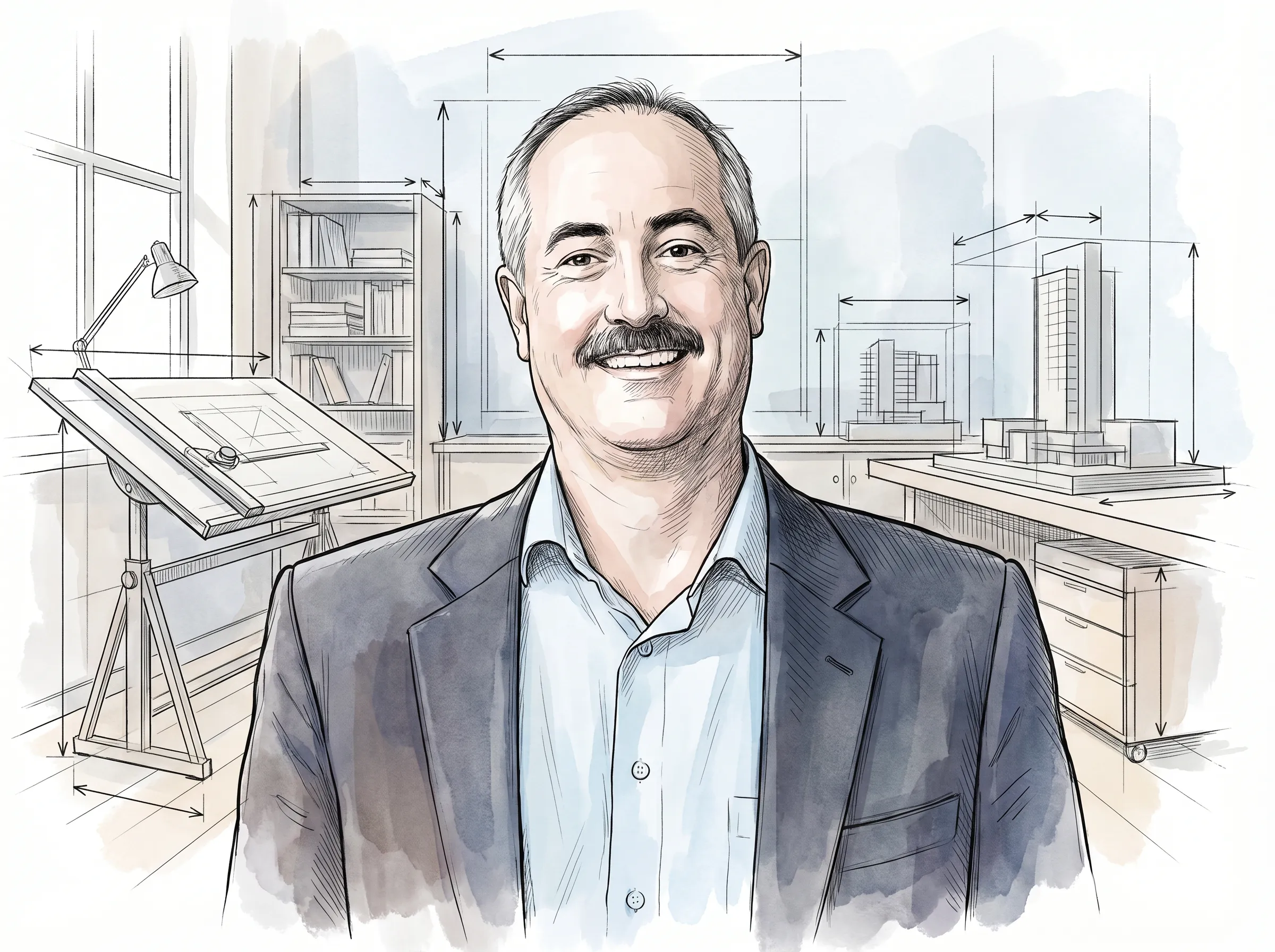
Steve Smith, Principal at Cooper Carry, an architecture and design firm with work across 47 states, has spent the last several years working at the center of this market. His firm’s portfolio includes what was, until recently, the largest adaptive reuse project on the East Coast – a 600,000-square-foot office building in Alexandria, Virginia, converted into 520 residential units with added floors, restructured retail space, and an entirely new building skin.
Getting the Deal Right
For all the complexity that adaptive reuse involves, Smith is direct about where the process starts: acquisition price. Valuations on office buildings across the country have dropped sharply over the past several years, creating a larger pool of potential conversion candidates. But lower prices alone do not make a project viable. The long-term math still has to work, and that requires developers to set aside the assumptions they bring from ground-up construction.
“If you’re trying to apply all your rules of thumb from ground-up development – efficiencies, footprint sizes, units per level – throw them out the door,” Smith says. “Adaptive reuse is another animal.”
His firm typically conducts a quick yield study early in the evaluation process, mapping out where units can realistically be placed given fixed constraints like column grids, stair locations, and elevator cores. That analysis feeds into an iterative conversation with developers as they work toward a purchase number that actually holds up.
What Developers Underestimate
According to Smith, one advantage to office conversions that rarely shows up correctly in an early pro forma is time – specifically, the speed-to-market advantage that adaptive reuse can offer when executed well. Because the structure and exterior are already in place, developers can reach leasing far sooner than with ground-up projects that require foundation work, below-grade parking, and a full construction cycle. “You will get to market so much quicker, and that’s less interest on your money,” Smith notes.
On the risk side, contingency budgeting is where many first-time conversion developers get caught off guard. The older the building, the more unknowns tend to surface during construction – environmental concerns, structural discoveries, and code compliance issues that weren’t visible during due diligence. Smith advises budgeting well above what ground-up projects require. “You’d better have the stomach for it,” he says.
That risk tolerance also affects the investor side. With interest rates having risen significantly and construction costs following suit, some investors are questioning whether the added complexity of a conversion justifies returns that may now be lower than what they were even a few years ago.
Recent Projects
The firm’s work in the Alexandria market illustrates what’s possible when the fundamentals align. The large mixed-use conversion – which involved adding three floors, converting office levels to parking, removing second-floor slabs for retail, and replacing the entire building envelope – hit the market in March 2020, just as the pandemic began. Despite that timing, the building reached 94% occupancy within a year. It later received the CoStar Deal of the Year award.
A more recent project, City House Old Town, presented a different set of challenges. The building had stepped terraces on multiple levels and an internal courtyard with a skylight. The team removed the skylight, adjusted the top floor, and cut an additional floor to bring in more natural light and improve unit yield. The building came to market in November – not an ideal leasing window – but still signed 49 of its 199 units in the first month, without rent concessions.
“People that say you can’t redo the skin, you can’t do this, you can’t do that – yes, you can,” Smith says. “All that matters is what lease rate you’re going to get versus how much you paid for the property.”
Municipalities Starting to Move
Beyond the private side, the regulatory environment has also become more favorable for office conversions. Cities that have watched office tax revenues decline for years are becoming more willing to facilitate conversions.
Denver has offered expedited code review for early conversion projects in designated areas. Washington, DC, has streamlined parts of the review process and introduced incentive structures tied to the inclusion of affordable housing. Some jurisdictions are also reconsidering tap fees and utility connection charges for buildings with existing infrastructure – a cost that can otherwise drag on project economics.
On the code side, states with existing building codes – separate frameworks that apply to already-occupied structures rather than new construction – have generally been more practical about what changes are actually necessary. Smith points to stair dimensions as one example: requiring a building to tear out and replace stairs that met older code standards, when those same stairs were in active use before conversion began, is a requirement many code officials are now willing to approach with flexibility.
Other Project Types
While office-to-residential conversions dominate the current conversation, the adaptive reuse opportunity extends further. Cooper Carry has converted office buildings into schools in Atlanta and the Washington metro area, turned a historic building into dormitory space for University of Georgia public policy students, and adapted historic churches into condominiums.
Hotel-to-multifamily conversions are also picking up speed. Some market data now suggests that hotel conversions are outpacing office conversions in certain markets this year, driven by similar dynamics – distressed assets, motivated sellers, and residential demand that values location.
Underlying all of it, Smith argues, is a sustainability case that often gets less attention than it deserves. Rather than demolishing a building and manufacturing new materials from scratch, reusing an existing structure avoids significant energy and material costs. “The most sustainable thing you can do is reuse the embodied carbon that’s already in a building,” he says.
What Comes Next
The pace of office conversion activity will likely depend on two forces moving in parallel: continued downward pressure on office asset values that keeps acquisition pricing viable, and municipal governments maintaining the regulatory flexibility they’ve begun to show.
For developers considering their first conversion, Smith recommends a discipline that’s distinct from ground-up development, budgeting conservatively for the unknowns, and not overestimating what a building can yield before the study is done. For those who have the experience or the preparation in place, the opportunity has rarely been greater – and the pool of buildings available at workable prices continues to grow.
About the Expert: Steve Smith is a Principal at Cooper Carry, a 66-year-old architecture and design firm with projects spanning 47 states, where he has become one of the country’s leading practitioners in adaptive reuse and office-to-residential conversion.
This article is based on information provided by the expert source cited above. It is intended for general informational purposes only and does not constitute legal, financial, or real estate advice. Readers should conduct their own research and consult qualified professionals before making any real estate or financial decisions.