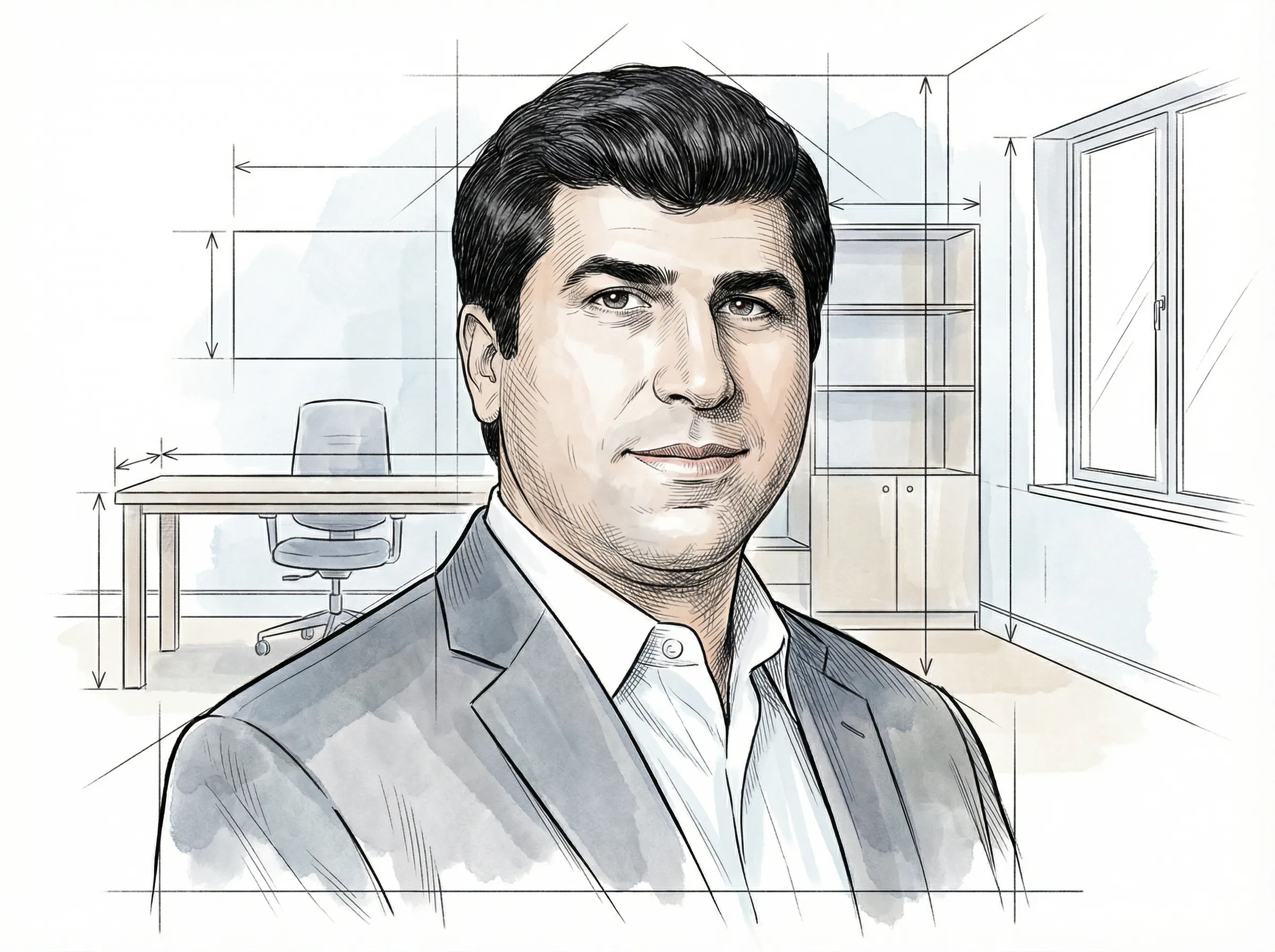
New York real estate is often analyzed through familiar signals such as pricing trends, inventory levels, and interest rate movements. But according to real estate attorney and broker Alexander Paykin, founder of CityFlatsNYC, those surface indicators increasingly fail to capture where the real pressure is building.
From his work across foreclosure litigation, commercial disputes, and distressed transactions, he describes a market where risk is no longer obvious at the listing stage. It emerges later inside the legal and financial mechanics of the deal itself. “What’s happening now is that I no longer get to deal with other experts. Clients come in having already formed conclusions from AI or YouTube, and then ask us to make it happen,” explains Paykin.
That shift from market-driven decisions to assumption-driven decisions now intersects with tighter lending conditions, stricter court enforcement, and growing financial strain across property types.
Market Pressure Beneath Surface
On the surface, New York real estate still appears to move in predictable cycles. However, Paykin describes a quieter structural change: the rules governing transactions themselves have become less forgiving.
He cites changes in foreclosure law and evolving court behavior as key examples. “There were recent decisions wherein if a bank sits on a case for too long, they risk waiving it entirely,” he notes. In practice, lenders can no longer afford delay or procedural drift the way they once did.
At the same time, courts have shifted toward stricter enforcement of statutory requirements. According to Paykin, earlier flexibility designed to give homeowners time to restructure or negotiate has narrowed significantly. “The judges are strictly enforcing all of the statutes,” he explains, leaving less room for informal resolution.
The result is a market where timing, documentation, and procedural accuracy matter more than ever. Deals that once tolerated delays or renegotiation now move in a more rigid legal environment, increasing the cost of mistakes on all sides.
Debt Creates Market Paralysis
One of the most visible but least discussed pressures in the market is the growing mismatch between property values and outstanding debt.
Paykin describes a scenario becoming increasingly common in commercial real estate: owners holding mortgages that exceed current property values. “If you own a building that’s now worth $7 million but you’ve got mortgages for $10 million, what are you supposed to do?” he asks.
In that situation, every option carries a downside. Selling can trigger losses or insolvency, while holding the asset means continuing to service debt that may never be recovered through appreciation. Refinancing is often unavailable due to tighter lending conditions.
He explains that this creates a form of structural paralysis. “Landlords are sitting on very overvalued properties, and they can’t sell in a way that will satisfy creditors and provide a clean title.” In some cases, foreclosure becomes the only organized exit, not because it is desirable, but because all alternatives are worse.
This is where market stress becomes less visible but more consequential. Distress is not always reflected in transaction volume or pricing data. It is embedded in balance sheets and stalled decision-making.
AI Advice Without Context
A growing behavioral shift is adding another layer of risk: how decisions are formed before professionals are ever consulted.
Paykin notes that many clients now arrive with pre-built strategies shaped by AI tools or online content. “Clients come to me having talked to ChatGPT and say, ‘I want to do this, that, and the other thing, can you just make it happen?’” he says.
The issue is not that the information is always wrong, but that it is incomplete. Real estate transactions in New York involve jurisdiction-specific legal rules, procedural constraints, and financial structures that generalized tools cannot fully account for.
He adds that this creates a new kind of confidence gap. “A lot of buyers and sellers are going to start going astray because of AI advice.” In his view, the risk is not ignorance, but overconfidence built on partial understanding.
As more decision-making shifts away from professionals and toward automated or informal sources, misalignment tends to surface only once transactions are already underway, when corrections become more expensive and limited.
Interest Rates Shape Decisions
If there is one variable tying current market uncertainty together, it is interest rates.
Paykin emphasizes that affordability is no longer defined by price alone, but by monthly payment capacity. “What you’re able to sell is not the value of your home in a vacuum,” he explains. “It’s the dollars per month number that the purchaser has to be able to afford.”
That distinction matters because even small rate changes can significantly alter what buyers can qualify for, reshaping demand in real time.
This creates a narrowing window of opportunity on both sides of the market. Sellers waiting for ideal conditions risk reduced buyer capacity if rates rise, while buyers waiting for declines may face increased competition or higher prices if demand rebounds.
His broader warning is less about predicting direction and more about acknowledging uncertainty. Interest rates could rise, remain volatile, or fuel another pricing cycle. In any scenario, delay introduces risk. “If you’re looking to sell, list sooner rather than later,” he says. “If you’re looking to buy, buy sooner rather than later.”
Structural Risk in NYC
Taken together, these forces point to a market where risk is increasingly embedded in structure rather than surface.
Legal enforcement is less flexible. Debt structures are more constrained. Information is more abundant but less reliable. And interest rates continue to redefine affordability in real time.
For Paykin, the most important shift is not any single regulation or market cycle, but the accumulation of hidden constraints that only become visible once decisions are already in motion. Many clients now enter transactions believing they understand the terrain, only to discover that the real complexity lies beneath it.
In that environment, the greatest risk in New York real estate may not be volatility itself, but the assumption that the full picture is already visible.
About the Expert: Alexander Paykin is a New York-based real estate and commercial attorney as well as a licensed broker. He is the founder of CityFlatsNYC, where he works with clients on foreclosure matters, distressed property sales, and complex real estate disputes across the five boroughs.
This article is based on information provided by the expert source cited above. It is intended for general informational purposes only and does not constitute legal, financial, or real estate advice. Readers should conduct their own research and consult qualified professionals before making any real estate or financial decisions.