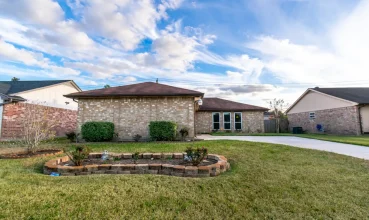
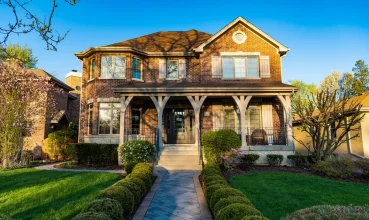
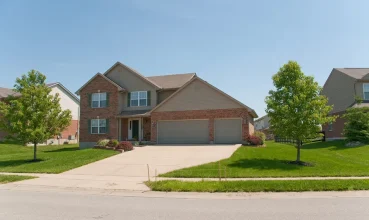
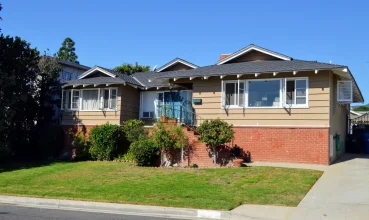
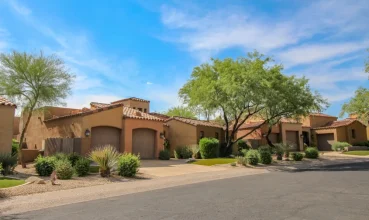
If you’ve searched for a place to rent recently and come away stunned by the prices, you’re not imagining things — and you’re not alone. Across Michigan, a growing number of working families are discovering that they earn too much to qualify for subsidized housing but not nearly enough to afford what’s available on the open market. It’s a gap that has widened quietly for years, and it now sits at the center of a housing crisis that no one in the middle class can afford to ignore.
Marilyn Chrumka, Vice President of Development at Michigan Community Capital (MCC), has spent years trying to build homes for exactly this population — and what she’s found about why that’s become nearly impossible explains a lot about the impossible math families are doing at kitchen tables across the state.
The Gap Nobody Planned For
The affordable housing shortage used to be understood as a problem for the lowest-income households — people who needed deep subsidies to keep a roof over their heads. That’s no longer the full picture. Today the crisis has moved squarely into the middle of the income spectrum, hitting households that earn between 60% and 120% of area median income: the nurses, teachers, tradespeople, and office workers who form the backbone of most Michigan communities.
These families make too much to qualify for government-assisted housing programs, but what they earn hasn’t kept pace with what landlords now have to charge just to break even on new construction. The result is a near-total absence of new housing built for them — not because no one wants to build it, but because the numbers simply don’t work.
Why the Math Broke
Building a home costs dramatically more than it did just a few years ago. Since 2018, construction costs in Michigan have risen roughly 50%, driven by higher prices for materials and labor, as well as increasingly stringent building codes. Those costs don’t disappear — they get passed directly to renters in the form of higher monthly payments. The harder problem is that incomes haven’t moved at anything close to the same pace, which means the gap between what it costs to build housing and what families can reasonably pay has grown into a chasm.
For developers trying to build for middle-income families, this creates a financing puzzle that the private market alone cannot solve: projects routinely require that half their total cost be covered by non-repayable public subsidies before a single unit can be rented at a price working families can actually afford.
What Rents Actually Cost
One reason this crisis has been slow to register publicly is that most people’s sense of “reasonable rent” is years out of date. A two-bedroom apartment that might feel like it should rent for $700 or $800 a month now costs significantly more to provide — even when it’s being offered below full market rate. A studio apartment at $900 a month is, by current standards, considered affordable housing in many Michigan counties.
That figure shocks most people, and understandably so — but the shock points to the problem rather than the price tag. Rents aren’t rising because landlords are simply taking more; they’re rising because the underlying cost of constructing and maintaining housing has fundamentally changed. For families trying to find a home in that space between “subsidized” and “luxury,” the options have grown vanishingly thin.
No Fix Without Government
The private market is not going to solve this on its own — not because developers lack the will, but because the economics don’t allow it. In Michigan’s small and mid-sized communities especially, the cost of building new housing so far outpaces what middle-income renters can pay that no amount of market competition closes the gap. What it will take is sustained, direct investment from federal, state, and local governments: more subsidy funding, expanded tax incentive programs, and policies specifically designed for the missing middle rather than only the lowest-income households.
Michigan has taken some steps in that direction, expanding tax increment financing and payment-in-lieu-of-taxes eligibility for workforce housing — but those measures, while helpful, don’t yet close the gap. Until public investment catches up with the scale of the problem, families in the middle will keep finding themselves priced out of communities they work in, contribute to, and want to call home.
About the Expert: Marilyn Chrumka is Vice President of Development at Michigan Community Capital, a nonprofit community development finance institution focused on building workforce housing for middle-income families across Michigan. Her work targets the “missing middle” — households that earn too much for traditional subsidized housing but too little for what today’s market provides.
This article is based on information provided by the expert source cited above. It is intended for general informational purposes only and does not constitute legal, financial, or real estate advice. Readers should conduct their own research and consult qualified professionals before making any real estate or financial decisions.