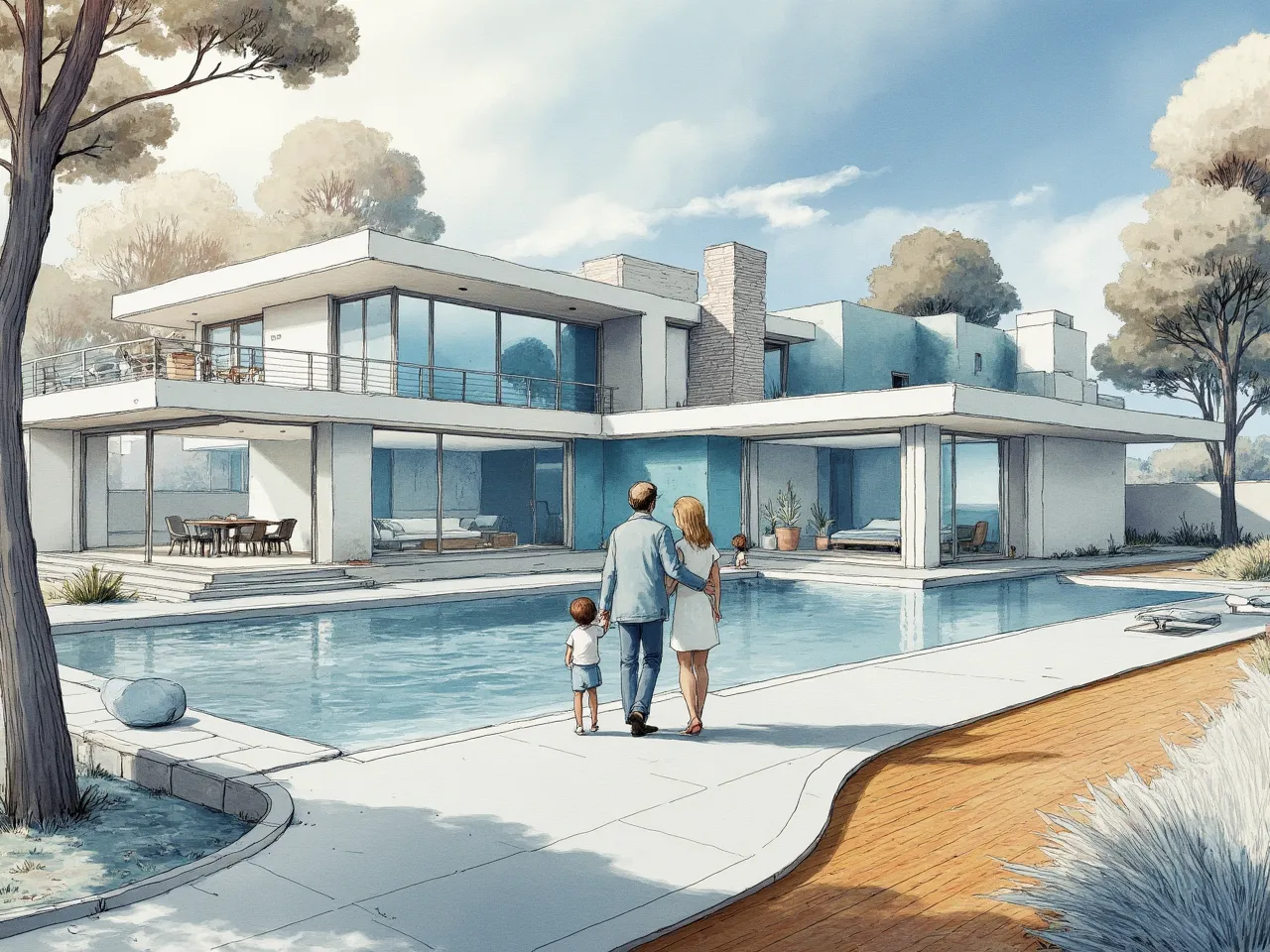
Affluent families are changing how they buy luxury real estate in the Florida Keys, focusing on properties that serve as shared family assets rather than individual investments to be passed down later. This new approach is reshaping what qualifies as a trophy property, how deals are structured, and which homes command the highest prices, according to Michaela Walters, Broker Associate at Walters Luxury Group.
Instead of the traditional model — where one person buys a property and leaves it to heirs through estate planning — families are now involving multiple generations in the purchase from the start. Adult children and even grandchildren participate in the decision-making, and the property is immediately positioned as a place for everyone to use and enjoy together.
“We’re seeing one of the biggest transfers of generational wealth right now,” Walters says. “Families are looking at it as a family asset we all want to enjoy while we’re all here together.”
A New Approach to Due Diligence
This change in mindset has practical consequences for how buyers approach the search and vetting process. Families treating a property as a multi-generational asset conduct much more extensive due diligence before making an offer. They look beyond the home’s current condition or luxury finishes to consider how the space will work for family members of different ages, with different needs and interests.
Walters notes that this often means every stakeholder — parents, adult children, and sometimes grandchildren — has input on the purchase. Buyers spend more time investigating local amenities, accessibility, potential for future adaptation, and even long-term maintenance and insurance costs. “They’re doing a lot more due diligence on the front end,” Walters says. “They want to know as much as possible before even submitting offers.”
While this careful approach sometimes means missing out on rare or quickly sold properties, Walters says these families are focused on long-term value and are willing to be patient. Their goal is not just to own a property, but to ensure it will serve as a family gathering place for years to come. “They’re looking at it from a long-term asset hold plan perspective,” she explains.
Trophy Properties: What Today’s Buyers Want
The homes attracting these buyers are typically high-end estates with what Walters calls “trophy property characteristics.” Buyers in this category want turnkey properties with all major amenities and features already in place — privacy, waterfront access, high-quality construction, and space for multiple generations to coexist comfortably. They are less interested in major renovations or customization after closing.
Walters says these trophy properties continue to command premium prices even as overall inventory in the Keys has reached its highest level since 2020. “People are paying for privacy,” she explains. “The Keys has always been laid back and quiet — a different way of life and a slower pace, which people are willing to pay a premium for, especially in the higher-end sector.”
Because these buyers are motivated by legacy and shared experience, they are less price-sensitive than investors or those seeking a primary residence. They are willing to pay for properties that minimize hassle and maximize enjoyment for the entire family.
How the Market Is Splitting
This focus on legacy properties is creating a split in the local luxury market. Trophy homes that appeal to multi-generational buyers are holding their value or even appreciating, while more conventional properties — those lacking privacy, amenities, or a unique location — face greater price pressure as inventory grows.
Walters notes that high-end buyers are less concerned about ongoing costs such as insurance, which might deter others. “If someone’s spending five to $10 million or more on a home, insurance is a small cost to protect their asset,” she says. This willingness to absorb higher carrying costs further distinguishes the trophy segment from the broader market.
Another factor reinforcing this divide is the limited land supply in the Florida Keys. “Because the Keys are so finite as far as land mass goes, those unique opportunities driven by scarcity and location are still extremely valuable and sought after,” Walters says.
Adapting to the Multi-Generational Buyer
Walters Luxury Group has adapted its business model to serve these complex, family-driven transactions. The team is multi-generational, comprising Walters, her mother — who has over 30 years of experience in the Keys — and her sister, who brings marketing and advertising expertise.
“We are a family team,” Walters says. “My sister and I have different backgrounds. She handles marketing and advertising; I focus on operations; and my mother excels at building relationships. Our different strengths complement each other well.”
This structure allows them to mirror their clients’ decision-making process, guiding families through the nuances of group purchasing, long-term planning, and the search for properties that accommodate evolving needs.
The New Standard in Luxury Real Estate
As the transfer of generational wealth accelerates and families prioritize shared experiences, the multi-generational buying model Walters describes is likely to become the dominant approach in high-end coastal markets. This trend will influence not just which properties sell, but also how they are marketed and priced.
For sellers, the message is clear: homes that are ready for immediate use, offer privacy, and can easily accommodate extended families will attract the strongest offers. For buyers, the process is becoming more collaborative and deliberate, with a focus on securing properties that will serve as the backdrop for family gatherings today, not just future inheritances.
The Florida Keys, with its limited land area and emphasis on lifestyle, is at the forefront of this trend. As more families look to create lasting memories together, the definition of luxury is shifting from individual ownership to collective experience, and the market is responding accordingly.