For most investors, agriculture has long existed outside the boundaries of a typical portfolio. It’s an asset class that produces food for billions of people, yet for decades it remained largely inaccessible to anyone outside farming families or large institutional funds. That is gradually changing as platforms open the door to smaller private investors seeking alternatives to volatile public markets and crowded real estate syndications.
Harvest Returns, founded in 2016, has spent nearly a decade connecting private investors with agricultural operators who need capital. The platform covers a wide range of agricultural investments, from specialty crops like vineyards to livestock operations and row crop farmland, as well as early-stage agricultural technology ventures. Chris Rawley, the company’s founder and CEO, came to this work through a background in commercial real estate investing, and that experience shapes how he structures deals today.
Farmland as a Real Estate Play
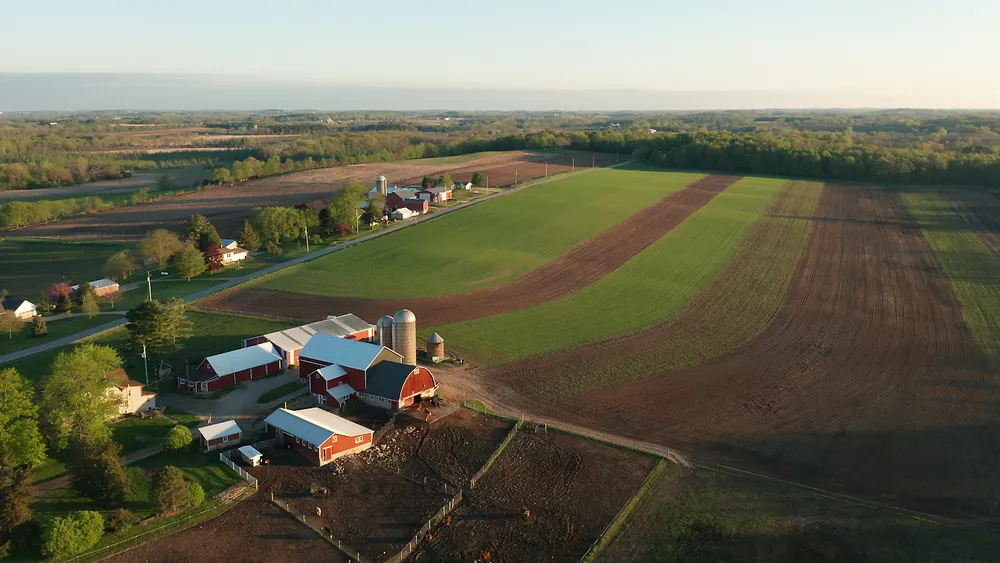
The comparison to commercial real estate is more than superficial. Agriculture is fundamentally a form of real estate. “You have something with an underlying value,” Rawley says. “In multifamily, it’s land and the apartment building. In agriculture, it’s primarily the land, sometimes with infrastructure in place, and cash flows are produced.”
Investors in agricultural deals can generate returns in two ways: appreciation of the underlying land and ongoing cash flows from crop leases, livestock sales, or other agricultural production. The deal structures, whether private equity or private debt, are designed to offer risk-adjusted returns similar in profile to commercial real estate syndications.
This framing resonates with a significant portion of the platform’s investor base, many of whom come from private real estate investing backgrounds. They understand private placements and are already comfortable with illiquid assets. Others arrive from public markets, looking for something less correlated to stocks or bonds.
Filling a Gap in Agricultural Lending
On the borrower side, Harvest Returns focuses on a segment of the market that sits between government-backed lending and conventional agricultural credit. USDA-backed loans serve well-established producers with strong land holdings and long track records. Harvest Returns targets operators who may not meet those thresholds but still represent viable lending opportunities, farmers and ranchers who might have slightly less experience or a smaller asset base, and who find the traditional farm credit system difficult to access.
These loans carry higher rates to reflect the additional risk, but the borrowers are still creditworthy by the platform’s underwriting standards. This middle tier of agricultural lending is where Harvest Returns sees the most consistent deal flow, and it informs the structure of products like the private credit fund launched in late 2023 and 2024. Rather than syndicating individual loans, the fund pools capital across multiple borrowers with geographic and crop-type diversity, reducing concentration risk. “We feel that the risk is more favorable to have a pool of loans rather than single loans for our investors,” Rawley says.
A Mixed Picture Across Sectors
Current conditions in agriculture vary sharply by sector, and the stress making headlines in some farming segments does not apply equally across the board.
Livestock, particularly cattle, is performing well. Beef prices are elevated, partly because herd sizes were reduced several years ago due to drought conditions. That supply constraint has kept prices high, benefiting operators who survived the earlier downturn. “That industry is doing very well right now,” Rawley says, though he adds that high cattle prices require more selectivity when evaluating new deals. Producers need to demonstrate they can still turn a profit at current input costs.
Row crops tell a different story. Corn and soybean producers are dealing with oversupply in commodity markets and elevated fertilizer costs, which have softened land values in some regions. Still, Rawley does not see a sharp correction ahead. Agricultural land is generally less leveraged than commercial real estate assets that have struggled with debt refinancing pressures. “It’s not going to be a giant fall like you might see in other aspects of real estate where they’re facing maturity walls,” he says.
Farmland’s low liquidity, often cited as a drawback, also functions as a stabilizer. Unlike stocks or bonds, farmland does not change hands quickly, and that inertia dampens volatility. “Farmland is not a volatile instrument,” Rawley notes. “That’s some of the appeal of it.”
How Exits Work in Practice
For investors unfamiliar with the asset class, understanding how and when they get their money back is a reasonable concern. The answer depends on the deal structure. Debt investments typically carry a defined maturity – often two to three years – after which the borrower refinances or repays. Equity investments in livestock operations follow a different timeline, tied to the natural production cycle. A cattle herd grows over time as cows calve, and mature animals are sold, generating cash flows and eventually a return of capital through distributions or a buyout.
“It’s the interesting body process of cattle actually having babies,” Rawley says, describing how a small initial herd can grow into a larger operation that supports investor returns over a multi-year horizon.
Technology and What Comes Next
Beyond current market conditions, Rawley is watching the adoption of precision agriculture technology as a longer-term development worth tracking. Robotic weeders, biological inputs replacing synthetic chemicals, and other labor-saving innovations are moving from pilot programs into broader commercial use. “In the past two to three years, we’re really starting to see more adoption of some of that precision agriculture,” he says. Harvest Returns has a venture arm that allows investors to participate in early-stage agricultural technology companies, though investors should note that venture-stage investments carry significantly higher risk than farmland debt or equity.
Looking ahead to 2026 and 2027, the company is preparing to launch a rural opportunity zone fund focused on agriculture. Recent federal legislation has renewed interest in opportunity zone investing, offering investors the ability to defer capital gains taxes, reduce their tax liability, and potentially eliminate gains on the investment itself over time. Rawley sees meaningful potential for this structure in agricultural markets, where rural opportunity zones overlap with farmland and livestock operations that could benefit from outside capital.
For investors who have not previously considered agriculture, the entry point is clearer than it has been in the past. Platforms like Harvest Returns represent one route into the asset class, though prospective investors should weigh the illiquidity, limited track record of newer platforms, and sector-specific risks before committing capital. “People just don’t realize this is a thing you can invest in,” Rawley says. “This is the most important industry in the world, because it impacts every single person.”
About the Expert: Chris Rawley is Founder and CEO of Harvest Returns, an agricultural investment platform founded in 2016 that connects private investors with agricultural operators across farmland, livestock, specialty crops, and early-stage agricultural technology ventures.
This article is based on information provided by the expert source cited above. It is intended for general informational purposes only and does not constitute legal, financial, or real estate advice. Readers should conduct their own research and consult qualified professionals before making any real estate or financial decisions.