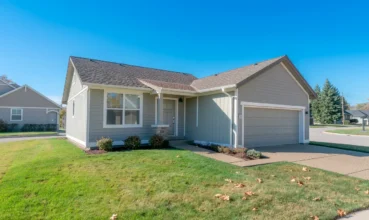
Just a few years ago, buying rental property in central New Jersey was straightforward. Rents and home prices were climbing, and investors could secure positive cash flow with a standard down payment. Today, higher interest rates and elevated prices have changed the equation. Cash flow is harder to achieve, appreciation is less certain, and the market now favors investors with patience and strong reserves.
Robert Webb, Lead Agent at RE/MAX Supreme – Destination NJ Home Selling Team and an active investor in the area, says the old playbook no longer works. “I’m focusing on a 10-year trajectory, not a three-year plan,” Webb explains. “Cash flow is a defense in the meantime.”
Here’s what’s changed, what still works, and what to avoid if you’re considering putting money into central New Jersey real estate right now.
The Cash Flow Squeeze
Rental properties in central New Jersey rarely generate significant monthly profit under today’s financing conditions. With mortgage rates near 6 percent and high purchase prices, rental income often barely covers the mortgage, taxes, insurance, and maintenance. Investors putting down 25 percent or less are likely to break even or run a small loss each month.
“Unless you’re putting down a substantial down payment or going all-cash, yield is hard to come by,” Webb says. As a result, investors can no longer rely on monthly profit as their primary reason for buying. Instead, they’re betting on long-term appreciation, using rental income to cover costs while building equity over time. For those who need immediate cash flow or lack a financial cushion, this market may not be a good fit.
Why Money Is Still Moving In
Despite a challenging environment, investor interest in central New Jersey persists — and for reasons that hold up under scrutiny. Home prices in the region have demonstrated notable resilience, underpinned by limited inventory, highly regarded school districts, and proximity to New York City, all of which sustain long-term demand even when broader markets soften. Webb acknowledges that appreciation has become a component of most investment calculations, though he stops short of treating it as a guarantee.
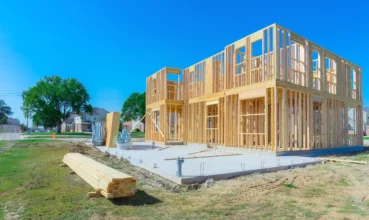
In the meantime, rental income serves as a practical buffer: even modest monthly returns help offset carrying costs and hedge against inflation, while over a ten-year horizon, mortgage balances decline, rents tend to rise, and equity quietly accumulates. Supply constraints reinforce the case further — new construction in central New Jersey is both expensive and slow-moving, with most new builds targeting the luxury segment, which does little to relieve overall inventory pressure and continues to support existing property values.
Layered beneath all of this is the region’s economic diversity, a mix of industries and employers that provides a degree of stability uncommon in more sector-dependent markets, helping to sustain rental demand and dampen the kind of volatility that can undermine long-term investment strategies.
What’s Actually Working
For investors committed to entering the market, a handful of strategies are proving more resilient than others. Larger down payments — 40 to 50 percent, or all-cash purchases — meaningfully improve monthly cash flow and insulate buyers from the worst effects of elevated interest rates.
Flipping, meanwhile, has become increasingly difficult given high renovation costs and a more selective buyer pool, making the buy-and-hold approach the more dependable path: acquiring well-located properties, renting them out, and allowing equity to build gradually over time.
Neighborhood selection matters just as much as deal structure, with investors gravitating toward areas with strong schools and low resident turnover — characteristics that tend to attract stable, long-term tenants and reduce both vacancy rates and ongoing maintenance demands.
Tying it all together is a disciplined approach to underwriting: Webb recommends projecting only modest appreciation over a ten-year horizon, and cautions that any deal requiring simultaneous monthly losses and significant appreciation to pencil out is one that deserves serious skepticism. In a market with little margin for error, conservative assumptions aren’t timidity — they’re the foundation of a sound investment.
Common Pitfalls
Certain approaches carry outsized risk in today’s market and are best avoided altogether. Chasing high yields in weak or distressed neighborhoods may appear attractive on paper, but renovation costs and persistent vacancy rates routinely cancel out projected gains. Equally dangerous is excessive leverage — financing 80 to 90 percent of a purchase while operating at a monthly loss amounts to a speculative bet on future appreciation, one that most individual investors simply don’t have the reserves to sustain through a prolonged downturn.
Short-term thinking compounds the problem: investors expecting to exit within three years face the compounding drag of transaction costs, market volatility, and insufficient cash flow accumulation, making the current environment one that disproportionately rewards those with the patience to hold for a decade or more.
Underlying all of these pitfalls is a failure to take the numbers seriously. Webb regularly advises clients against investing when the math doesn’t support it, stressing the value of honest calculations and conservative projections over optimistic assumptions — a discipline that separates sustainable real estate strategies from costly mistakes.
Why Patience Is Now Essential
Investing in central New Jersey real estate is no longer about quick gains. The path to wealth is slow, relying on steady equity growth, modest cash flow, and eventual appreciation. Investors willing to hold for 10 years are positioned to benefit from the region’s fundamentals. Those seeking fast returns or lacking reserves risk disappointment. Webb puts it: “It’s my job to give you information. It’s your job to make an informed decision.”
The Bottom Line
Central New Jersey real estate now requires patience, significant capital, and clear-eyed expectations. Cash flow is limited, but long-term appreciation and stable demand make it a reasonable play for well-capitalized investors. Those chasing quick profits or investing without reserves are likely to struggle. For those thinking a decade ahead, the fundamentals remain solid.
About the Expert: Robert Webb is a broker associate and lead agent with RE/MAX Supreme, heading the Destination NJ Home Selling Team. He works with buyers, sellers, and investors across Somerset County and central New Jersey.
This article is intended for informational purposes only and does not constitute legal, financial, or investment advice. The views and opinions expressed herein reflect those of the individuals quoted and do not represent an endorsement of any company, product, or service mentioned. Readers should conduct their own due diligence and consult qualified professionals before making any investment decisions.