

Industry expert Keith Cubba, Senior Vice President and National Director of Golf at Colliers International, argues that investors are significantly overestimating the risk in today’s g...

Soaring Home Prices Raise the Bar for Middle-Class Buyers in Wellington

Written by:
Date:
06 Nov 2025
Share via Facebook

Share via Linkedin

Share via X

Copy to clipboard

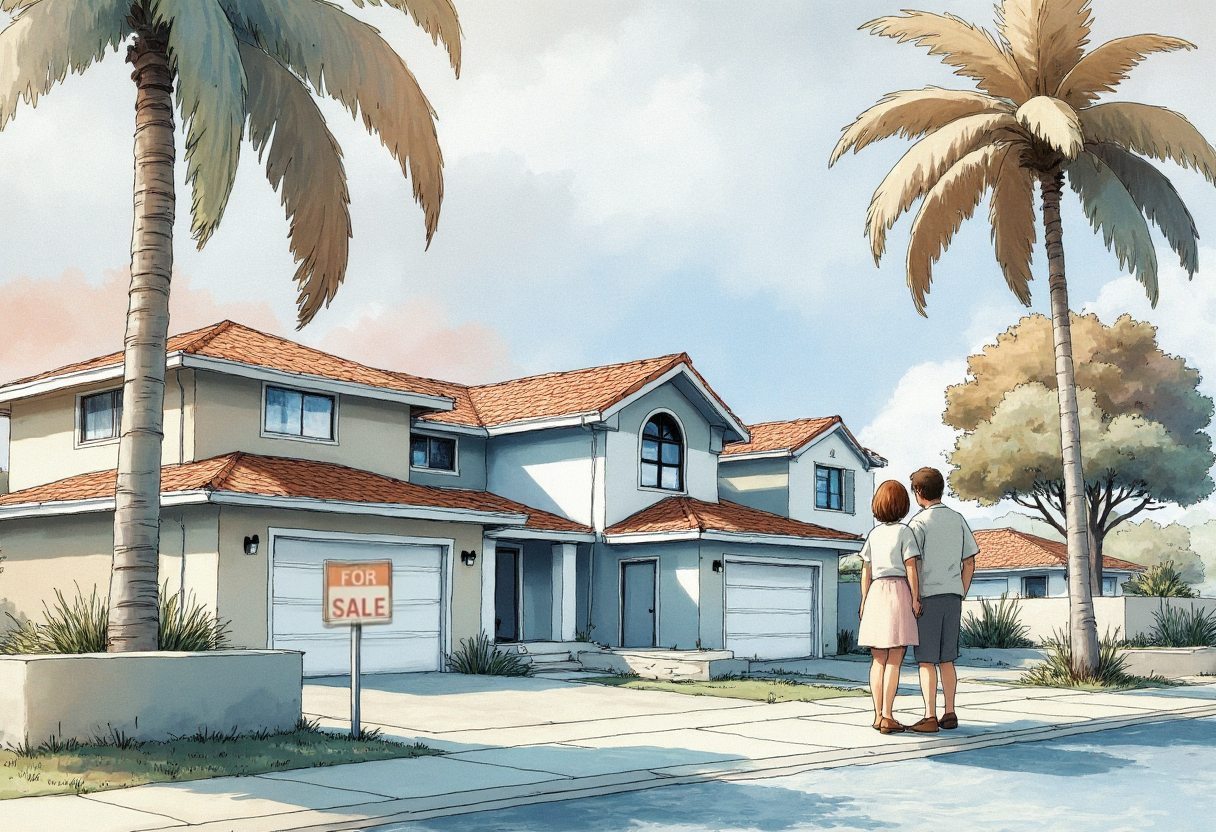
A significant shift in what qualifies as middle-class housing is happening in Wellington, where local real estate expert Alan Monica of RE/MAX Prestige Realty now identifies $600,000 as the starting price for an affordable family home. This change is altering who can access Wellington’s highly regarded school districts and family-oriented neighborhoods.
“It’s hard to really say what a middle class home price is nowadays. I mean, probably at least $600,000, which is a lot of money, that’s still a lot of money,” Monica said. With 25 years of experience in Palm Beach County and over $100 million in closed transactions, Monica’s perspective reflects a fundamental change in the local housing market.
The $600,000 threshold signals more than just rising prices; it marks a new structure for Wellington’s housing market. What once seemed like luxury pricing is now the minimum for families seeking access to A-rated schools and safe neighborhoods.
While working families contend with higher prices, Monica points out that Wellington’s luxury segment is less affected. “I have a good amount of friends that are in the luxury market, and that stuff will still go if it’s the right property. If the wealthy person can afford it, they’re not going to worry about it. They’re going to come down, they’re going to buy it.”
This results in a split market. High-end properties continue to sell, while middle-market homes are increasingly out of reach for many. Monica mainly works with properties up to $1.5 million, placing him at the center of these market dynamics.
The affordability issue is intensified by buyers’ reluctance or inability to purchase homes that require renovation. Higher interest rates have removed the financial flexibility that previously allowed buyers to consider homes needing updates.
“So somebody in that price point, if they go to buy a home and it needs a roof, or it needs a kitchen, or it needs floors, they might just not even go look at it. You need stuff that is move-in ready if you want to try to get anywhere near that inflated price that people used to get,” Monica explained.
As a result, fixer-uppers are often ignored, further reducing available inventory. The expectation for move-in ready homes at the $600,000 mark creates additional challenges for families hoping to enter the Wellington housing market.
Rising prices have increased interest in nearby communities that offer similar benefits at lower costs. Monica lives in unincorporated West Lake Worth, just outside Wellington, where residents can access the same A-rated schools while paying lower taxes and purchase prices.
“You get the best of both worlds. You get the lower taxes, you get the cheaper purchase price, and you’re right there. You’re right there,” he said about the West Lake Worth area.
This trend shows how the boundaries of desirable school districts are expanding as families seek more affordable options.
The $600,000 middle-class threshold has wider effects on Wellington’s community makeup. Traditional middle-class workers such as teachers, police officers, and municipal employees may find themselves unable to afford living in the areas they serve. This could result in longer commutes, less community involvement, and changes to the social character that has defined Wellington.
Local businesses and services are also affected by these shifts. When a larger share of household income goes to housing costs, spending on restaurants, services, and entertainment often declines.
Monica’s comment that “money’s just tight all around” captures the broader financial strain reaching beyond just real estate.
Looking forward, Wellington must find ways to maintain its reputation as a family-friendly town while dealing with housing costs that increasingly restrict access to higher-income households. The $600,000 baseline for middle-class homes may be only the start of Wellington’s transformation, with consequences that extend beyond the housing market.
Similar Articles
Explore similar articles from Our Team of Experts.