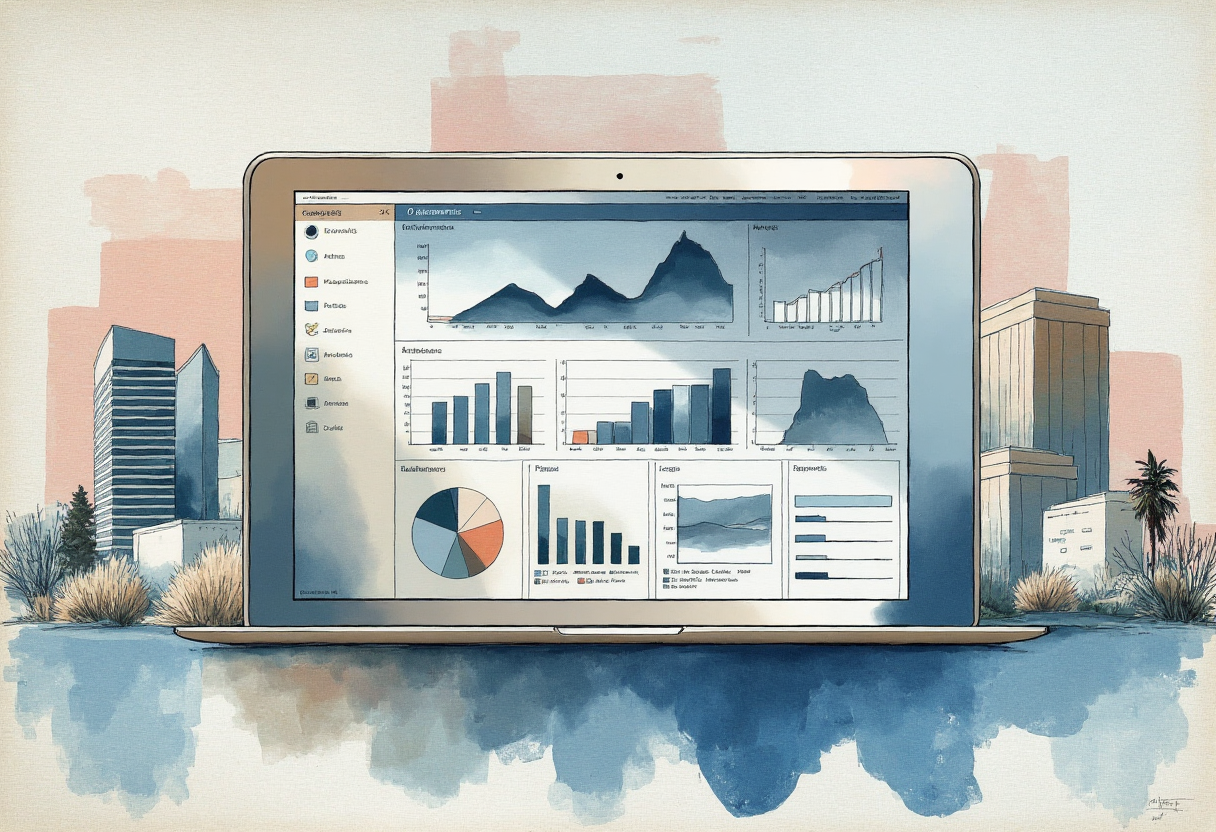
HelloData executive reveals how simplified interfaces and public data are democratizing sophisticated property analysis tools previously reserved for industry giants.
The technology gap between large and mid-sized property companies is closing, according to one industry expert, as new solutions make sophisticated analytics accessible to operators who traditionally lagged in tech adoption.
“We’ve been growing in that middle portion of the market as well where folks typically aren’t as quick to hop on new software trends,” explains Gavin Maxwell, Enterprise Account Manager at HelloData. “But with our platform, one of the things we hear a lot of the time is that it just kind of makes it easy to get in and start doing some basic analytics on your property.”
Breaking Down Barriers
Maxwell says this democratization of property analytics comes from a deliberate focus on user experience and accessibility. “It was just a mix of going to those companies that had good data departments and connecting them with our API, and then getting just a lot of feedback from multifamily operators and owners in terms of what a good interface would look like.”
This approach has helped address several traditional barriers:
- Complex user interfaces
- High technical requirements
- Resource-intensive implementation
- Steep learning curves
The Evolution of Market Analysis
According to Maxwell, even basic market analysis traditionally required significant manual effort: “They used to just call these properties, check their websites, go to some of the typical sources like CoStar and kind of look to see what they could use to cobble together a market survey, typically in Excel.”
The new platform automates these processes, making sophisticated analysis accessible to operators without large data departments or technical resources.
Expanding Access and Capabilities
Following its recent acquisition by Grace Hill, HelloData continues to develop features aimed at making property analytics more accessible. The company recently added rent roll parsing capabilities in response to market demand.
“We heard a lot of chatter about people just looking for a good multifamily parser that knows all our formats and templates,” Maxwell notes. “That’s kind of the latest thing, so we’re working to just make that as fine-tuned as possible.”
The democratization of these tools suggests a future where sophisticated property analytics are no longer the exclusive domain of industry giants.