
As market pressures mount on inexperienced real estate operators, seasoned syndicators are strategically positioning themselves for what could be significant acquisition opportunities in the...

How Economic Diversification Shields Secondary Markets From Oil Price Crashes

Written by:
Date:
30 Jan 2026
Share via Facebook

Share via Linkedin

Share via X

Copy to clipboard


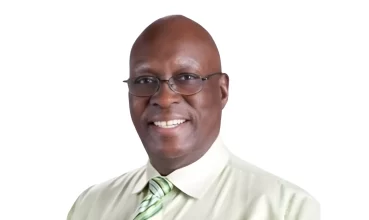
Conventional wisdom often casts oil-dependent real estate markets as risky, prone to dramatic swings in home values when energy prices fall. Yet Chris Cline of Grassroots Realty Group, a REALTOR® with 19 years of experience in Grand Prairie, Alberta, argues this view overlooks how economic structure can insulate a city from the worst effects of commodity crashes.
Grand Prairie’s economy is closely linked to oil and gas, but Cline says its housing market has avoided the massive losses that other Alberta energy cities have experienced during downturns. “I’ve seen ups, I’ve seen downs. We’ve always been insulated, more so than like a Fort Mac, for instance,” Cline says, referring to Fort McMurray. “When prices crashed, it devastated their real estate market. Here it certainly hurts, but we don’t see the highs and the lows.” The contrast is stark: “When they were losing $200,000 in equity, we might have lost $25,000 on a typical house,” he says.
Why Grand Prairie’s Losses Are Smaller
The key difference, Cline explains, is not that Grand Prairie is immune to oil price swings, but that its economic base is broader. While oil and gas are major contributors, other sectors play vital roles. “Lumber is a big thing. Farming is big here,” Cline says. “We’re a retail hub for about 300,000 people going into Northwestern BC to northern Alberta. So it’s more diverse than a typical oil and gas city.”
This diversity is central to the market’s resilience. When employment is distributed across several independent sectors, industry-specific shocks tend to cause localized disruption rather than a market-wide collapse. “We do have a lot of sectors here that do really well, not just that,” Cline explains. “That’s why in these oil dips of the past, we didn’t really take the blow like other cities did.”
Grand Prairie’s retail sector serves a broad regional population, generating economic activity that doesn’t depend solely on energy. Agriculture and lumber operate on different cycles than oil and gas, providing jobs and stability when energy prices fall. This mix of industries helps buffer the housing market from the extreme volatility seen in places like Fort McMurray.
A Misunderstood Market
Despite this resilience, Cline says outsiders often misunderstand Grand Prairie. “People hear Grand Prairie, think oil and gas,” he says. “There is, like I say, a lot of industries here, and that’s why in these oil dips of the past, we didn’t really take the blow like other cities did.”
This misperception matters for investors and analysts assessing risk. Markets with genuine economic diversification are less likely to experience catastrophic value loss, even if they appear to rely on a single industry. The risk profile of a city with multiple strong sectors is fundamentally different from one where most jobs depend on oil alone.
Cline also points out that, even within energy, Grand Prairie’s mix differs from what many assume. “There’s a lot more here than just oil and gas. And it’s more gas than oil, actually,” he says. “We are invested in it, but we do have a lot of sectors here that do really well, not just that.”
Policy Uncertainty and Market Stability
While Grand Prairie’s housing market is less volatile than Fort McMurray’s, it is not free from risk. Cline notes that energy-sector exposure entails ongoing policy uncertainty. “There’s always a risk with a city that is so heavily tied to oil and gas,” he says. “There’s OPEC policy, there’s government decisions, there’s Venezuela right now. There are a lot of things that can happen that can affect the price of oil and gas.”
According to Cline, these policy risks affect the pace of growth rather than threaten market stability. “While that is uncertain, and it’ll definitely play a factor, it’s historically anyway—I can’t predict the future—but it hasn’t been devastating by any means,” he says. “We’re pretty well insulated with other industries as well.”
For investors, the difference is essential. A market that experiences slower growth during downturns still offers a different risk-return profile than one in which home values collapse. Cline’s experience suggests Grand Prairie fits the former pattern: exposed to volatility, but protected from severe value destruction by its diversified economy.
The Role of Infrastructure
Looking ahead, Cline sees pipeline development as a possible boost for the region’s energy sector, but not a make-or-break factor for the housing market. “If we get a pipeline, if they approve a pipeline, that would help the area,” he says. “There are a lot of wells around here that would be able to feed a pipeline, whether it goes to the coast of BC.”
Still, he views this as an incremental improvement rather than a necessity. Grand Prairie’s stability does not depend on new pipelines; instead, additional infrastructure would strengthen an already resilient economic base.
What This Means for Investors
For institutional investors considering secondary markets, Cline’s observations highlight the need to look past surface-level energy exposure. The crucial factor is whether a city’s employment and economic activity are genuinely diversified, not just whether oil and gas play a role.
Markets like Grand Prairie, with multiple strong sectors, may offer steadier price appreciation and less severe downturns than more specialized energy cities. While transaction volumes may be lower than in major metros, the risk of catastrophic loss appears much smaller.
Cline argues that the difference is evident in the historical record. Markets that have weathered several commodity cycles with only minor declines in home values show structural resilience that is likely to persist. “It’s historically anyway, I can’t predict the future, but it hasn’t been devastating by any means here,” he says.
In today’s environment of volatile energy prices and global uncertainty, understanding the actual economic structure of secondary markets is essential. For investors, that means digging deeper than headlines and looking at how cities like Grand Prairie have actually performed during past downturns, because not all oil towns are created equal.
Similar Articles
Explore similar articles from Our Team of Experts.