

Central Florida’s residential market is seeing a clear divide: homes without homeowners associations (HOAs) are selling faster and attracting far more interest than similar properties gove...

Florida Keys Pay the Highest Wind Rates Despite Minimal Storm Losses

Written by:
Date:
07 Jan 2026
Share via Facebook

Share via Linkedin

Share via X

Copy to clipboard

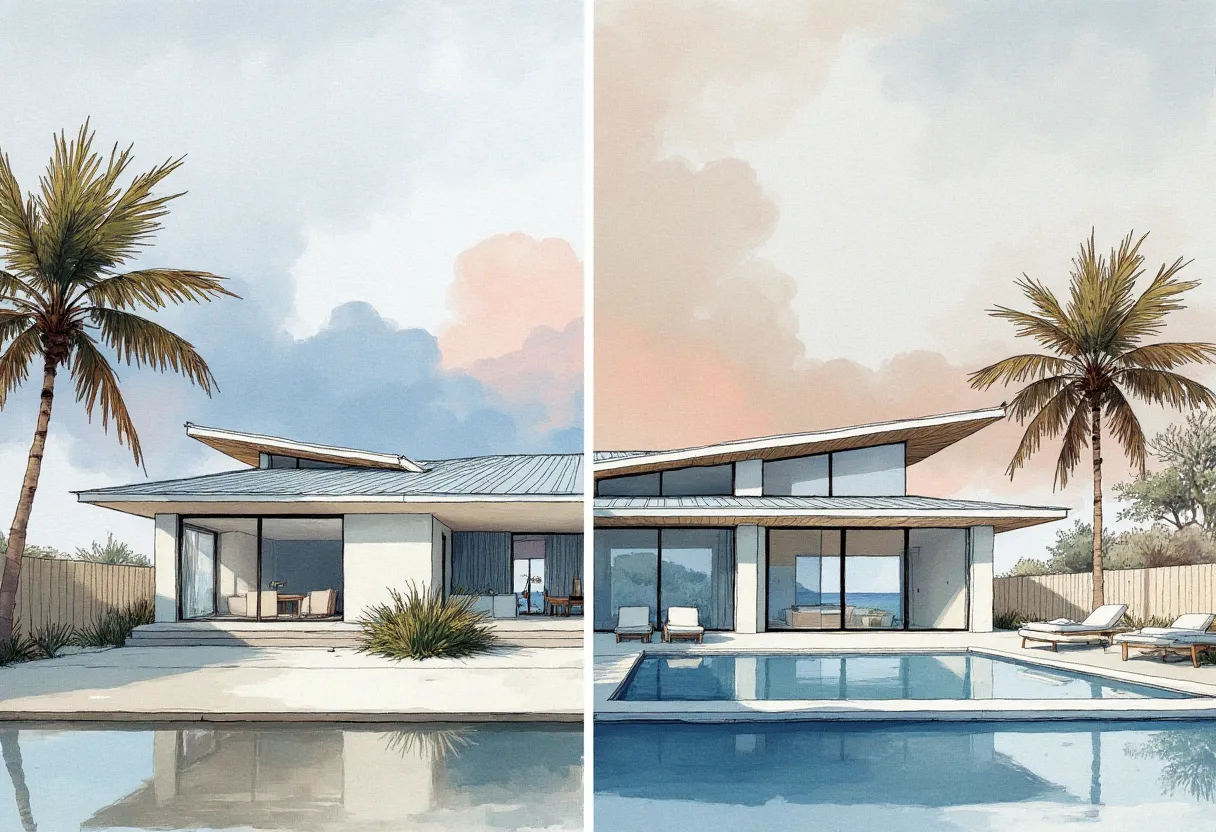
Real estate expert Ellen Gvili argues that Category 5 construction standards and advanced hurricane-warning systems make the Florida Keys safer than many earthquake- and tornado-prone regions. Yet, insurance companies continue to charge the region the highest wind premiums in the state. The result is a pricing paradox: lower actual hurricane damage rates but higher insurance costs than in any other part of Florida.
Gvili, a global real estate advisor at Ocean Sotheby’s International Realty with 26 years of experience in the Keys, says the region’s strict building codes and proven storm resilience are not reflected in insurance pricing models. “Our rates are higher than in the rest of Florida because of our exposure, because people think we live on an island and we are more prone to hurricane damage, but it’s actually the opposite,” Gvili says. “Because of our strict building rules, we have the least damage of all counties in Florida. And it’s just not fair that our rates are the highest.”
This gap between actual risk and insurance pricing has become so significant that it is changing how real estate deals are structured in the Keys. Many buyers now choose to self-insure, declining traditional wind coverage because premiums do not match the region’s superior construction standards.
Category 5 Standards Provide Strong Protection
The foundation of the Keys’ resilience is its building code, which sets a higher standard than that of most coastal regions nationwide. Gvili explains, “Every new building that’s still built is built up to Category 5 hurricane standards, and that has been the case for the last ten years at least.”
These standards require hurricane-rated windows, reinforced roofs and walls, and elevated foundations designed to withstand extreme winds and storm surge. This approach has created a housing stock that performs better during hurricanes than properties in areas with older or less rigorous standards.
Gvili argues that the result is a built environment that consistently sustains less damage than the insurance industry’s models predict. While the Keys’ location puts it in the path of Atlantic storms, the strength of its buildings means actual losses are lower than in regions with outdated codes or weaker construction.
Advance Warning Reduces Risk
Another advantage, Gvili notes, is the predictability of hurricanes compared to other natural disasters. “We always have enough notice. We get like a 10-day notice before hurricanes arrive here, which you don’t have with tornadoes or earthquakes,” she says.
This warning period gives property owners time to secure buildings, protect valuables, and evacuate if necessary. In contrast, earthquakes strike without warning, whereas tornadoes provide only minutes’ advance notice. Despite this, insurance rates do not reflect the Keys’ ability to prepare in advance.
Gvili’s personal experience underscores the rarity of significant hurricane impacts. “Historically, I mean, we really get struck. I have experienced this twice in the 26 years I’ve lived here. There were two instances of Hurricane Wilma: in 2005 and 2017. I never left the island for any other hurricane,” she says.
Two direct hits in over two decades are far less frequent than many buyers assume. The perception of a constant hurricane threat does not align with the statistical reality of storm impacts in the Keys.
Comparing Disaster Risks in Other Regions
Gvili points out that buyers often relocate to avoid perceived hurricane risk, only to encounter greater dangers elsewhere. “I see more damage in other areas happening, like flooding or what happened in North Carolina. People bought in the mountains there because they wanted to avoid the hurricanes here in the Keys, and they were hit the hardest when the hurricanes came,” she notes.
Recent catastrophic flooding in North Carolina and mudslide damage in mountain regions show that disaster risk is not limited to coastal Florida. California faces earthquake hazards without a warning system, and the Midwest regularly experiences flash flooding and tornadoes that can destroy homes in minutes.
“You have earthquakes in California or flash flooding in the Midwest. I think it’s a misconception,” Gvili says. “I think it’s a calculated risk, too, because on top of that, we always have enough notice.”
She argues that real estate decisions based solely on avoiding hurricanes may be misguided. The Keys, with its strict building codes and advanced warnings, may offer a more manageable risk than locations buyers assume are safer.
Local Advocacy for Fair Insurance Pricing
The mismatch between actual damage and insurance premiums has sparked grassroots advocacy in the Keys. “We have some grassroots organizations here in the Florida Keys that fight for years for more affordable but also more just rates because our rates are higher than in the rest of Florida,” Gvili explains.
These groups, which include the local Realtor Association and homeowner representatives, regularly lobby lawmakers in Washington, D.C., and Tallahassee. Their goal is to advocate for insurance pricing that reflects the region’s actual loss data, rather than its geographic location alone. “We have representatives from our Realtor Association and homeowners who go to Washington, D.C., and also Tallahassee and really fight for fair rates in Monroe County, for fair windstorm rates especially,” she says.
This advocacy highlights a broader issue in insurance markets: pricing often relies on outdated assumptions or stereotypes rather than current loss experience. As building codes improve and construction quality rises, premiums should decline to reflect the reduced risk. But market inertia and regulatory complexity often prevent this adjustment.
Market Adaptation and the Path Forward
Whether insurance companies will eventually update their pricing models to reflect the Keys’ accurate risk profile remains uncertain. For now, many buyers are adapting by self-insuring, especially those with the resources to absorb potential losses.
Gvili’s firm, Ocean Sotheby’s International Realty, has adapted to this environment by offering expert guidance on construction quality and risk management. As the exclusive Sotheby’s affiliate in the Keys, the firm advises clients on how building codes and disaster preparedness affect real estate value and risk.
If ongoing advocacy efforts succeed in realigning insurance rates with actual risk, the Keys could see traditional coverage become economically viable again. Until then, the region serves as a case study of how insurance markets can lag behind reality, leaving residents to navigate the consequences of a disconnect between perception and fact.
Similar Articles
Explore similar articles from Our Team of Experts.



Industry Profiles, Real Estate Investment, Real Estate Services, Residential Real Estate, Market Analysis & Policy
The rental market in Orlando is undergoing significant changes. Rising costs, new regulations, and increasing competition are prompting property managers and property owners to reassess thei...

