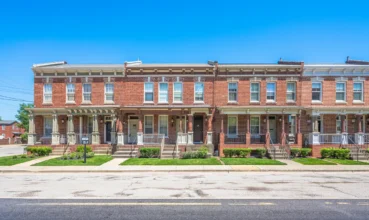
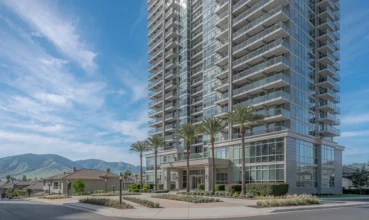
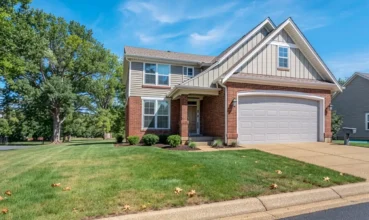
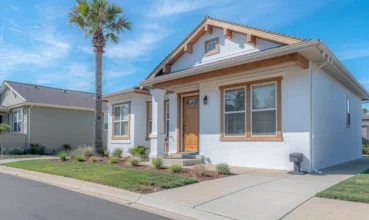
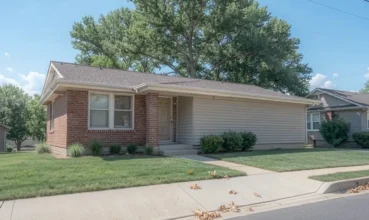
Washington, DC’s strict building regulations keep the city’s residential market supply-constrained, setting it apart from other major metros. While cities such as Miami, Phoenix, and Austin have expanded housing through large-scale developments, DC’s height restrictions, historic preservation requirements, and protective zoning rules limit supply growth that typically moderates prices during downturns.
Daryl Judy, a luxury agent at Washington Fine Properties, explains the challenge: “You can’t just build homes. In cities like New York, developers can build high-rise towers to meet demand. In contrast, you can’t build a 14-story skyscraper in DC.”
The Height of Buildings Act of 1910 caps most construction at 14 stories, restricting vertical development. Large areas of DC’s neighborhoods are also designated for historic preservation, further limiting new construction. These regulations create persistent supply constraints, insulating the market from the boom-bust cycles seen in less-regulated cities.
Lack of Large Developments
DC’s core market lacks major national homebuilders. Companies like Toll Brothers and EYA, which routinely build 500-unit communities elsewhere, are largely absent from the city.
Judy notes, “We don’t have Toll Brothers, EYA, any of those companies coming in, building a 500-unit development. It doesn’t exist.”
New housing grows slowly through individual lot development, small infill projects, or renovations. Unlike cities where builders quickly add large numbers of homes, DC sees only incremental increases in supply.
Historic Preservation Constraints
Historic preservation rules add another layer of restriction. Many property owners cannot demolish structures without board approval. Even when demolition is allowed, new construction must meet strict design guidelines to maintain neighborhood character.
“A lot of the homes for sale are older properties that might be renovated, but you don’t see new homes replacing them at the same rate as in the suburbs,” Judy says. “Supply and demand are not in balance.”
Zoning in Surrounding Counties
Supply limitations extend to surrounding counties, including Arlington, Fairfax, and Montgomery. These jurisdictions maintain zoning rules that restrict density and protect neighborhood character.
Judy explains, “The laws in Arlington County, Fairfax County, DC, and Montgomery County protect the integrity of the neighborhoods. There isn’t a lot of building there like in other places.”
Even where suburban jurisdictions allow more development than DC itself, the scale remains limited. This regional constraint makes it difficult for the DC metro area to respond quickly to changing demand. Inventory cannot expand rapidly when demand rises, and speculative development is rare, reducing the risk of sudden oversupply when demand falls.
Market Stability Amid Workforce Cuts
DC’s supply-demand dynamics have become more relevant amid federal workforce reductions and economic uncertainty. Despite concerns about job losses at federal agencies such as the Department of Government Efficiency (DOGE), the local housing market has not experienced sharp corrections seen in more elastic markets.
“The problem is, there aren’t enough homes here for the number of people that need them,” Judy says. “That’s really kind of protected us.”
The chronic shortage of homes relative to demand puts a floor under prices, even during downturns. Buyers who might wait out a downturn in other markets face tighter inventory and higher prices in DC.
This imbalance affects property types differently. Condos, which have seen more new construction, experience softer conditions, with longer market times and slower price growth. Single-family detached homes — where supply is most limited — continue to see strong demand and price appreciation.
“Condos don’t appreciate the way houses do,” Judy notes. Increased condo construction has eased supply constraints in that sector, while single-family inventory remains especially tight.
Limited Conversions to Residential
Converting downtown office buildings to residential use has not occurred at scale. While some activity exists, it remains limited.
“Converting big downtown buildings to condos hasn’t really taken off since COVID,” Judy says. “We’ve had a little of that, but not a lot.”
Conversions face regulatory hurdles, including zoning changes, strict building codes, and costly structural modifications. Financial feasibility depends on the gap between office and residential values. In some submarkets, the gap is too small to justify conversions.
DC’s regulatory environment acts as both a constraint and a safeguard. The inability to rapidly expand supply protects property values and creates scarcity premiums, but limits opportunities for large-scale profits. Buyers and renters face ongoing upward pressure on prices and rents.
While other markets may experience oversupply from speculative development, DC’s structure stabilizes the market, preventing both extreme price increases and steep declines. Without policy changes to allow greater density or streamline conversions, competition for limited inventory is likely to continue.