Tucked between Austin and San Antonio along the edge of the Texas Hill Country, New Braunfels has spent the past several years absorbing growth that its larger neighbors could no longer contain. Now, as Central Texas real estate enters a more measured phase after the pandemic-era surge, this city surpassing 100,000 residents is showing a different kind of resilience, one built on geography, lifestyle appeal, and a buyer pool that keeps replenishing itself from across the country.
Iñaky Strick, Broker Associate at Kuper Sotheby’s International Realty, has watched this evolution from the ground level. His path into real estate came through investing rather than sales, which shapes how he approaches the market today. That background, which included marketing a resort development in Belize and raising capital for mobile home park acquisitions, informs an advisory approach that extends well beyond the transaction itself.
A Market That Plays by Its Own Rules
One of the more persistent misconceptions about Central Texas real estate is that its markets move together. They don’t. Austin, San Antonio, and New Braunfels each follow their own rhythms, and conflating them leads to poor decisions on both sides of a deal.
Austin experienced a sharp run-up during the pandemic years and has since been working through a meaningful correction. New Braunfels has softened as well, but the adjustment has been more gradual. Seller expectations are starting to come down, but prices have not fallen dramatically. That distinction matters. A market where sellers are recalibrating is fundamentally different from one where values are declining, and the difference has real implications for buyers and investors evaluating entry points.
What’s driving that stability is partly structural. New Braunfels sits at a geographic crossroads that gives it a dual draw: people who work in Austin or San Antonio but prefer smaller-town living, and retirees and remote workers seeking space, scenery, and a lower cost of living. “Some people just choose to live here and work in either of the big cities,” Iñaky says. “We have a lot of people that come retire here, as well as a lot of young families looking to plant roots.”
The Buyer Profile Has Changed
The frenzy of 2021 and 2022 brought a wave of out-of-state buyers who pushed prices well above historical norms. That wave has receded, but it hasn’t disappeared. California buyers remain active, drawn by relative affordability and the absence of a state income tax. Buyers from Seattle and Dallas have also been showing up, some paying cash at the luxury level.
What has changed is the balance of power. Inventory has grown, pent-up seller demand is finally coming to market, and builders are moving aggressively to offload completed product. According to Strick, builder incentives now include discounts, credits toward upgrades, and interest rate buydowns, but capturing those benefits requires an agent familiar with which programs are available and how to structure offers around them.
That point matters because New Braunfels attracts licensed agents from across Texas, but local knowledge makes a measurable difference. An agent unfamiliar with the market may not know which incentives exist or how to negotiate them effectively.
Neighborhood Dynamics Are Highly Specific
Broad market statistics can obscure what’s actually happening at the neighborhood level, and New Braunfels is a clear example. The market carries more than 13 months of inventory for homes priced at $1 million and above in some areas. In others, particularly properties with river access, well-priced listings can move over a weekend.
The gap between those two realities reflects the city’s dual identity as both a primary-residence market and a second-home destination. That second-home and short-term rental demand creates pockets of activity that don’t show up cleanly in aggregate data, and it means that a property’s location within the market often matters more than its price point alone.
Canyon Lake and Hill Country properties illustrate this well. These areas draw a mix of full-time residents, second-home buyers, and investors running short-term rentals. Buyers furnish a property, rent it when they’re not using it, and visit when they choose. The flexibility of that model continues to attract buyers who want both personal use and income potential.
Where Investors Are Looking
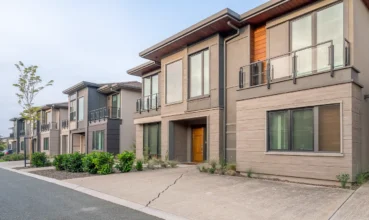
For capital looking to enter the New Braunfels market, new development offers the clearest opportunity – particularly for buyers willing to think beyond the dominant Texas Hill Country aesthetic. Iñaky notes that modern and contemporary homes remain undersupplied relative to demand. “Anytime we put one up for sale, it usually gets lots of traction,” he says.
Land acquisition and ground-up development is another avenue gaining attention. One active example is a 16-unit condo development in Gruene, a historic district within New Braunfels known for Gruene Hall, widely recognized as the oldest continually operating dance hall in Texas, and a venue where artists like George Strait built early followings. The project, currently in its second phase, is priced between $405,000 and $510,000 for two- and three-bedroom units, with short-term rental use permitted. Iñaky’s team is preparing to launch sales in the coming weeks.
Sellers Are Coming Around
One of the quieter adjustments in the market has been on the seller side. For much of the post-pandemic period, some sellers held firm on prices that the market was no longer supporting, buoyed by memories of bidding wars and the reluctance to trade a low mortgage rate for a higher one. That resistance is softening.
Iñaky says the most productive conversations with sellers now center on closed prices rather than list prices. As inventory has risen and days on market have extended, showing sellers what comparable homes actually sold for, not just what they were listed at, has become the most effective way to reset expectations. “It’s not what the sellers want,” he says. “It’s what the buyers are actually paying.”
What’s Coming
Commercial permit activity suggests a wave of new restaurants and retail is on the way, which Iñaky views as a sign that the market is maturing rather than just growing. For a city that many Texans still think of primarily as a place to float the river or attend Wurstfest, the annual 10-day German heritage festival that draws visitors from across the state, that perception may be the market’s biggest underappreciated asset.
Iñaky notes that each year, visitors who come for the river or the festival leave with a stronger impression of the city’s livability. “More and more people are discovering it,” he says. That pattern, visitors becoming buyers, is typically how durable real estate markets build their base, and it suggests New Braunfels may continue to benefit from steady, organic demand even as the broader Central Texas market recalibrates.
About the Expert: Iñaky Strick is a Broker Associate at Kuper Sotheby’s International Realty, covering New Braunfels and the surrounding Central Texas Hill Country market. His background includes real estate investing, resort development marketing, and capital raising prior to entering residential sales.
This article is based on information provided by the expert source cited above. It is intended for general informational purposes only and does not constitute legal, financial, or real estate advice. Readers should conduct their own research and consult qualified professionals before making any real estate or financial decisions.