

The Ann Arbor commercial real estate market stands apart from national trends, showing a resilience that has made it a magnet for investors seeking stability. While property values in most r...

Ohio Legislator Says Office Conversions Only Work in Urban Cores, Not Suburbs

Written by:
Date:
02 Jan 2026
Share via Facebook

Share via Linkedin

Share via X

Copy to clipboard

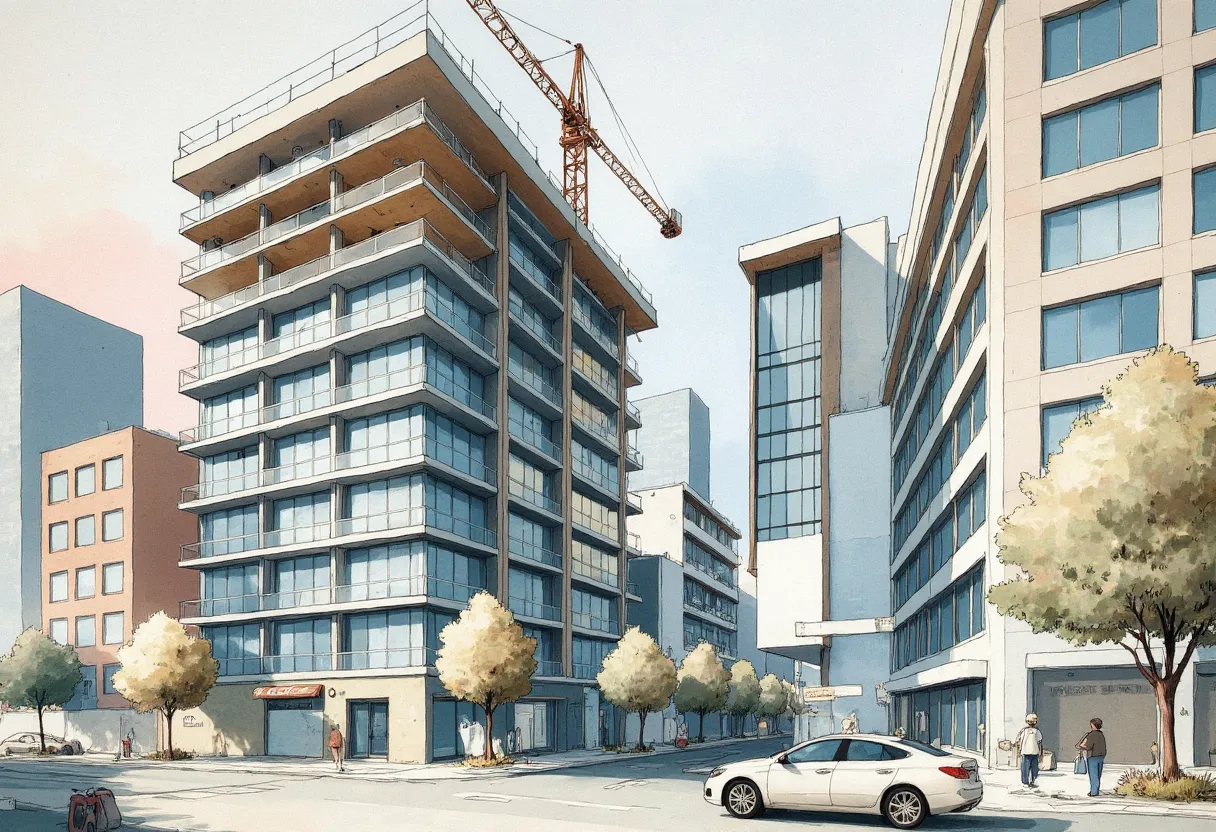
Office-to-residential conversions are gaining traction in Ohio’s city centers. Still, Brian Lorenz, Director of Planning and Permitting for the Ohio House of Representatives, warns that the strategy only succeeds when carefully matched to the location.
Lorenz, who is the sole planner in Ohio’s General Assembly, argues that converting vacant offices to apartments can revitalize urban cores, but applying the same approach to suburban office parks often results in isolated residential enclaves without the amenities and infrastructure that define thriving neighborhoods.
“There’s nothing wrong with living in a repurposed building if you’re a young professional looking to be close to the action and the activity, instead of building a 200-unit apartment complex right next to a cornfield,” Lorenz says. He emphasizes that the key factor is location: conversions thrive where established amenities, transit, and employment centers already exist. In contrast, suburban conversions typically fail to create vibrant communities.
Lorenz sees firsthand the trend’s momentum through his work with the Ohio Housing Finance Agency, where he serves on the board. He notes that most demand comes from young professionals seeking walkable, urban lifestyles—not from those looking for suburban, car-dependent apartments. This demographic shift is driving interest in city-center conversions, but not in office parks on the metropolitan fringe.
Why Suburban Conversions Fall Short
Lorenz argues that converting suburban office buildings into apartments does not create the conditions necessary for urban living. Instead, it relocates people into structures unsuited for residential use, in areas that lack walkability, public transit, and proximity to jobs or cultural amenities.
“It’s more in existing urban areas, and that’s where that kind of use should make sense in those cores and not in the suburbs,” Lorenz says. He points out that successful conversions depend on being near employment, entertainment, and essential services—the elements that support active, desirable neighborhoods.
This distinction is crucial as indiscriminate conversion risks compounding problems rather than solving office vacancies. “The people and the markets and the attractiveness of the amenities in the area really help drive that particular demographic to a particular space,” Lorenz explains. Without surrounding amenities and infrastructure, new residential units in former office parks often struggle to attract long-term residents.
The concern extends beyond individual projects to the broader development patterns shaping Ohio’s metropolitan regions. Lorenz notes the ongoing tension between accommodating suburban growth and preserving farmland, and the need to prioritize redevelopment in already urbanized areas. “We want to redevelop areas that are already developed, and looking at that, instead of taking 100 acres of a farm and throwing up a bunch of condos,” he says.
How Sprawl Strains Infrastructure
Lorenz warns that spreading development across the suburbs—including through office conversions—places unsustainable pressure on infrastructure. Dispersed growth increases traffic congestion, strains school systems, and drives up water and sewer costs. “When we spread that out, all we’re doing is creating traffic congestion. We’re overburdening our school systems. Our water and sewer rates go up. We can’t keep up,” he says.
He cites cities like Austin, Indianapolis, Nashville, and Columbus as examples of fast-growing “second-generation cities” now grappling with the consequences of unchecked sprawl. In these markets, rapid development has outpaced planning, resulting in infrastructure challenges and higher public costs.
Lorenz’s legislative focus is on maintaining new residential density near existing transportation corridors and established infrastructure. “We want that density closer to those,” he says, referring to highways and transit routes. Spreading out new housing away from these corridors increases the infrastructure burden for municipalities, making long-term maintenance and service delivery more difficult.
This argument directly informs office conversion policy. Converting buildings in downtown areas with established infrastructure makes economic and environmental sense. In contrast, adding residential density to suburban office parks—where roads, utilities, and transit are inadequate for higher populations—creates lasting challenges.
When Conversion Works: The Urban Core Advantage
According to Lorenz, well-located conversions create a “virtuous cycle.” Increased residential density in city centers supports local retail, restaurants, and entertainment venues, making neighborhoods more attractive to young professionals who drive demand. This, in turn, encourages further investment and urban revitalization.
“What’s important is to have that careful consideration on how we can redevelop a lot of these properties,” Lorenz says about the need to focus on existing urban office stock. He maintains that adaptive reuse in the right locations is a better alternative than building new housing on farmland or in car-dependent suburbs.
For developers, Lorenz’s framework is clear: target urban cores with amenities, transit access, and existing density. These locations offer sustained demand and contribute to citywide revitalization goals. Suburban office parks, by contrast, lack the foundations for thriving long-term residential communities.
The Policy Challenge: Distinguishing Value-Add from Problem-Shifting
Policymakers and developers must distinguish between conversions that genuinely advance urban revitalization and those that relocate underutilized space. Lorenz stresses that successful office-to-residential projects require more than favorable economics—they must also align with sound urban planning principles about where housing density adds value and where it introduces new burdens.
The future of Ohio’s office conversion wave will depend on how rigorously this location-based approach is applied. Treating all vacant office space as equally suitable for housing, Lorenz warns, risks undermining both neighborhood quality and regional infrastructure. The opportunity lies in strategic, urban-focused conversions that support walkable, vibrant communities and avoid the pitfalls of suburban sprawl.
Similar Articles
Explore similar articles from Our Team of Experts.