The real estate investment education space has become increasingly crowded with digital-first approaches, social media gurus, and high-volume strategies promising massive scale. Yet some of the most successful practitioners are finding that traditional relationship-building methods continue to outperform modern marketing tactics, particularly when targeting motivated sellers in today’s changing market.
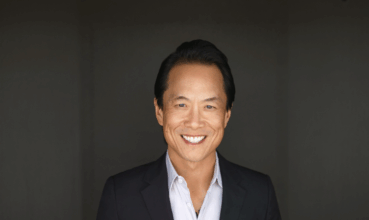
William Tingle, host of The Sub2Deals Show and a real estate investor since 1999, represents this counter-trend approach. While newer investors gravitate toward text messaging campaigns and social media outreach, Tingle has built a sustainable business around direct personal contact and genuine relationship building.
“I’ve always been much more of a get in their face, get belly to belly approach,” explains Tingle, who has coached thousands of investors over more than two decades. “I find that works a lot better for me. Even though people are used to texting now, especially the older generation, they like that personal touch. They like to make contact with somebody that’s going to deal with them.”
From Restaurant Management to Real Estate Freedom
Tingle’s journey into real estate investing began out of necessity rather than ambition. After 20 years in restaurant management, he found himself working 70 hours per week as a district manager covering three states, with little time for family life. “I only had a ninth grade education. I quit school in ninth grade, ran away from home,” Tingle recalls. “For those reasons, I felt sort of locked in. I had a pretty good salary and a lot of responsibility, but I worked constantly and was looking for something different.”
The turning point came during a sleepless night at 2 AM when he encountered a Carlton Sheets infomercial about buying real estate with nothing down. “I ordered the course and just did what he said, because I didn’t know any better, and started buying houses. I bought a house in the first month, then another one and another one.”
Within a year, Tingle had a plan for replacing his job income through real estate and made the leap to full-time investing. His rapid success before social media made him a sought-after teacher at real estate investment clubs and conventions across the country.
The Creative Finance Strategy
Rather than traditional buy-and-hold or fix-and-flip, Tingle developed a focus on seller financing that addresses multiple profit centers at once. His approach involves buying houses using creative financing methods, particularly subject-to transactions, then selling them with seller financing.
“If I sell a house with seller financing, I can collect a down payment, which is almost like a wholesaling fee. I can collect monthly cash flow, which is like landlording with no landlord headaches, they’re not calling me to fix stuff because they own the house. Then in a few years, when they refinance, I get a back end payday, which is generally larger, almost like a rehab profit.”
This strategy also circumvents traditional lending limitations. “Because of the limitations that banks tend to put on you, even if you have great credit, they’ll only finance usually somewhere between 10 and 20 properties. I really honed in on subject-to and creative finance as a means of acquisition, so I can buy as many houses as I want.”
Managing the Due-on-Sale Risk
The primary concern with subject-to transactions is the due-on-sale clause present in most mortgages, which technically allows lenders to call loans due immediately upon transfer of ownership. However, Tingle’s 26 years of experience provides perspective on this risk.
“Banks aren’t in the business of owning real estate. They really don’t want to own that house. I’ve been doing this for 26 years and I’ve never had a loan called due,” he explains. “Really, what the bank wants is to get their payment. They put the due-on-sale clause in there starting in the early to mid-80s when interest rates went to 20% and a lot of people were taking over loans at six or seven percent instead of getting new loans at 18 to 20 percent.”
With historically low interest rates persisting for years, lenders have had little motivation to enforce these clauses. “Making sure we make the payments on time and handle the insurance properly can pretty much assure you’re not going to have a due-on-sale issue.”
Grassroots Marketing in a Digital World
While newer investors increasingly rely on text messaging and social media, Tingle maintains two marketing strategies that emphasize personal connection: radio advertising and direct door-knocking to homeowners in foreclosure.
“We run radio ads where they’ll call us, they got a house to sell. Then we door knock people in foreclosure, approaching them asking how we can help. If they want to keep their house, we’ll talk to the lender for them and try to help them stay in their house. But if they want to sell it, we’re there to make a deal.”
Targeting Motivated Sellers
The most effective leads, according to Tingle, come from homeowners facing foreclosure notices. “Nothing beats people that the lender has filed a notice of default. Those people, no matter what state they’re in, they have a situation with a deadline.”
The timeline varies by state, creating different opportunities. “If you’re in certain states, maybe Georgia, maybe Texas, even here in Arkansas where we are, that timeline is about 90 days. So they’ve got a deadline on a situation they’ve got to take care of.”
Many of these homeowners want to keep their properties, and Tingle provides assistance without charge. “We’re there to help, and we do help them, and we don’t charge them a penny to do that. But a lot of those people want to sell their house because they can’t afford it.”
Legislative Challenges on the Horizon
The growth of real estate investing has attracted increased regulatory attention, with potentially significant implications for the industry. Tingle points to a bill introduced in North Carolina that would severely restrict investor activities.
“This bill has such a fine point on it that they really want to prevent an unlicensed person from even speaking to a potential seller of a residential property,” he explains. “If this bill passes as written, you can’t even have a conversation with your neighbor about buying his property without a real estate licensed agent being involved in that transaction.”
Such legislation reflects broader concerns about investor activity in residential markets, though Tingle notes that creative financing strategies remain viable regardless of market conditions. “If you’re doing creative real estate financing, you can make money in any market. I’ve been doing it for 26 years, and I’ve seen a couple of changes. It’s all good.”
The Anti-Scale Philosophy
In an industry increasingly focused on massive growth, Tingle advocates for a deliberately smaller approach. “I’ve been teaching and preaching for the last 10 years: keep it small, keep it simple. We buy between 10 and 15 houses a year, about one a month on average. We work about 10 hours a week, and you can create an amazing income just doing that and have time to enjoy your life.”
This philosophy extends to his coaching business, where he maintains direct involvement rather than delegating to junior coaches. “We’re not a billion dollar a year coaching industry. We keep our stuff pretty small. If you sign up with a coaching program with William, you talk to William, and he’s the one that’s going to teach you.”
Market Outlook and Future Plans
Looking ahead, Tingle expects market conditions to continue normalizing after the recent period of intense activity. “It’s becoming more of a normal market now, pretty balanced in most places between buyers and sellers. But I think it’s going to lean back more toward a buyer’s market here in the next 12 months or so.”
For his own business, Tingle plans to maintain his current approach rather than pursuing expansion. “That’s where we are, that’s where we’re going to stay. I’m getting up there, so I’m looking to maybe scale back just a little bit. We enjoy teaching and we’re going to continue to do that for a bit, but 10 to 15 houses a year, that’s probably going to be it for me.”
His approach serves investors seeking sustainable retirement income rather than massive scale. “Most of the people that follow me are not real flashy. They’re the Millionaire Next Door type people. They’re looking to buy 10, 15, 20 houses a year and just have a really good retirement.”
In an industry often dominated by promises of rapid scaling and massive returns, Tingle’s success demonstrates the enduring value of personal relationships, consistent execution, and sustainable business practices. For investors seeking long-term wealth building rather than quick profits, his approach offers a proven alternative to the high-pressure, high-volume strategies that dominate much of today’s real estate investment education space.
This article was sourced from a live expert interview.
Every month we conduct hundreds of interviews with active market practitioners - thousands to date.
The idea that regional banks have pulled back entirely from commercial real estate lending oversimplifies the reality, according to Stephen Haase, Director of Capital Markets at Greysteel. W...
The multifamily development landscape in the New York metropolitan area presents significant challenges for small-scale developers, from complex regulations to rising construction costs. Yet...
The Bay Area retail market is diverging from national trends, with strong transaction momentum and focused tenant expansion driving growth despite broader economic uncertainty. Local dynamic...
A new breed of mid-sized real estate operators is emerging, combining institutional-grade expertise with the agility to pursue opportunities across specialty housing sectors, according to on...
The head of a financial technology company working in emerging markets says inefficient property verification systems are creating massive barriers to economic development, with some rural b...
According to Joseph Keshi, founder and CEO of Keshman Property Management, investors often focus on cap rates, appreciation, and tax advantages when evaluating markets. However, Keshi argues...