Across the country, the story is the same. Buyers are competing for fewer homes, developers are hesitating to break ground, and the gap between what people can afford and what’s actually available keeps getting wider. The price points are different — a $500,000 home in Port St. Lucie, a $2.78 million home in Menlo Park, a $250,000 starter in Wichita — but the underlying dynamic is similar in every market: attainable inventory is shrinking, and the forces driving that shortage run deeper than mortgage rates or buyer sentiment.
Those forces start at the construction site. Chad Cummings, a real estate attorney at Cummings and Cummings Law, practicing in Southwest Florida and North Texas, has watched the chain reaction play out firsthand. The ongoing conflict in Iran, he says, is driving fuel prices to levels that are reshaping construction economics in real time. “When diesel prices spike, most contractors do not absorb that cost,” he says. “Lumber yards, concrete batch plants, and steel distributors all add fuel surcharges within weeks. Those surcharges do not disappear when oil prices retreat. They become the new baseline.”
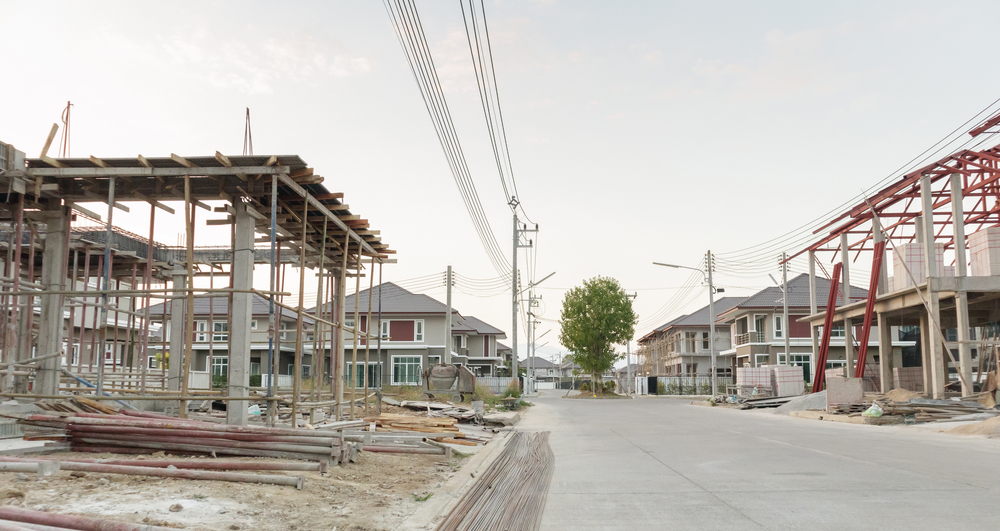
But diesel is just one strand in a larger knot. Labor shortages are stretching project timelines by months. Permitting delays are stalling developments before a single foundation is poured. Supply chain disruptions, rising material costs, and municipal impact fees are all adding layers of cost that never show up as a single line item, but that buyers ultimately absorb. When developers can’t hold a bid beyond ten days, they don’t break ground. When they don’t break ground, fewer homes enter the market. When fewer homes enter the market, prices rise. When prices rise, the buyers who needed those homes most get pushed further out of reach.
It’s a chain reaction that begins long before a property ever hits the market — and one that agents, developers, and real estate attorneys across the country are watching play out in real time.
The Gap Is Growing
The gap between luxury and attainable housing isn’t a new problem, but it is a worsening one. Across markets, luxury inventory is holding strong or accelerating, driven by wealth effects, equity, and sustained demand from buyers who aren’t rate-sensitive. Attainable inventory, by contrast, is shrinking.
Rose Sklar, a South Florida agent with The Sklar Team, sees this playing out in her market every day. “Multiple generations are competing for the same limited pool of properties,” she says. “Baby Boomers and Gen X who are downsizing, and Millennial and Gen Z buyers who are starting families later and entering the market for the first time. That convergence creates an outsized buyer pool fighting for the same attainable inventory.”
What makes this moment different is that the gap is no longer just a function of demand. The supply side has its own set of problems, and they’re structural. Daniel Kaufman is founder of Kaufman Development, and his work spans workforce housing, commercial development, and real estate technology investment. He puts it plainly: “Luxury inventory has recovered and then some. Attainable supply hasn’t, and the pipeline isn’t catching up fast enough. Until we fix entitlement timelines, labor costs, and financing constraints simultaneously, the gap won’t close.”
That pressure shows up at different price points depending on where you are. Every market has its own version of “attainable,” defined less by a number than by what local buyers can realistically afford given local wages, local competition, and local inventory. But across markets, the pattern holds: whatever falls within reach for ordinary buyers is precisely what’s in shortest supply.
The Rising Cost of Building
The cost pressures hitting new development aren’t the result of any single factor — they’re a compounding stack. Fuel prices feed into delivery costs, which feed into material pricing, which feeds into contractor bids. Labor shortages stretch timelines, and every additional week a project sits unfinished costs a developer interest on capital that’s producing nothing. Permitting delays add more time. Municipal impact fees add more cost.
Paras Panjwani, Managing Director of Panjwani Projects, describes the cumulative effect plainly: “Input cost volatility is tightening margins, while procurement delays are extending project timelines. Uncertainty in execution is now as significant a factor as cost in development decisions.”
The result is a development environment where caution has become the default. Contractors are reluctant to hold pricing beyond a matter of days. Steven Libman, Founder and Managing Director with Integrity HG, sees it across the Midwest and Southeast: “Many developers are pausing speculative ground-up builds and shifting toward adaptive reuse or value-add on existing assets. Pricing for new product has adjusted upward to reflect these realities, but absorption slows if rents can’t keep pace.”
What’s notable is that this isn’t purely a market correction. It’s a structural shift in who can afford to build and what they can afford to build. When the economics of development only work at the premium end, that’s what gets built. Daniel Kaufman, whose development work focuses specifically on workforce housing, is direct about the consequence: “The missing middle — workforce housing for teachers, nurses, first responders, and service workers — is being systematically priced out. The pipeline isn’t catching up fast enough, and until that changes, the gap won’t close.”
What Comes Next
Nobody in the industry is predicting a quick turnaround. The forces driving the affordability gap — construction costs, labor shortages, permitting delays, and a development pipeline skewed toward the premium end — don’t unwind quickly even under favorable conditions. Chad Cummings is direct about the timeline: “Even if hostilities cease tomorrow, these inflationary effects will linger for at least six to twelve months — or alternatively, this may become the new normal.”
What most observers agree on is that the gap won’t close from the demand side alone. Buyers can adapt, and they are adapting. Rose Sklar, who works with buyers across South Florida, sees that adaptation up close. “Homeownership is still achievable for this generation,” she says. “It just requires a more intentional strategy to get there.” But intentional strategy has limits. At some point the math simply doesn’t work, and no amount of strategy closes the distance between what buyers can afford and what’s available.
The more promising signals are coming from the supply side, slowly. One quiet shift is changing how attainable housing gets built — and who pays for it. Daniel Kaufman points to a growing willingness among municipalities to engage with private developers in ways that weren’t common even a few years ago: “Municipalities that spent years slowing things down are increasingly coming to the table as partners — whether through land contributions, employer housing programs, or streamlined entitlement for workforce-targeted projects.”
When cities absorb some of the cost and friction that has made attainable development unworkable, the math starts to change. Modular construction and templated design are giving some developers a path to attainable housing that pencils where traditional construction doesn’t. These aren’t silver bullets, but they’re real.
What’s less clear is timing. Even if conditions improve — costs stabilize, rates ease, permitting gets faster – the pipeline takes years to catch up. And if current pressures persist or worsen, the gap that’s been widening for years could become a defining feature of the American housing market for a generation.
This article is based on information provided by the expert sources cited above. The views expressed are those of the individual contributors and do not represent a unified industry position. This article is intended for general informational purposes only and does not constitute legal, financial, or real estate advice. Readers should conduct their own research and consult qualified professionals before making any real estate or financial decisions.