The cap rates, the insurance complications, the interest rate stalemate – Southern California real estate investors have spent the better part of three years navigating conditions that reward patience over action. Most experienced investors have adapted. What many haven’t fully reckoned with is a quieter liability: the banking relationship that looks adequate until the moment it isn’t.
When conditions shift, and the window opens, the lender who knows only one slice of your portfolio isn’t the same asset as one who knows all of it. Victor Mena, Executive Managing Director at Citizens Private Bank, spent 28 years at First Republic watching that distinction play out – and now he’s building in Southern California around the premise that for high-net-worth real estate investors, the right banking relationship isn’t a convenience. It’s a competitive edge.
The Void Still Open
When First Republic failed in May 2023, the immediate conversation was about deposits, acquisitions, and which institution would absorb the wreckage. The longer-term consequence got less attention. For high-net-worth real estate investors, First Republic hadn’t just been a lender – it had been a specific kind of lender. One that followed clients across asset types, made decisions based on relationships and judgment rather than rigid product categories, and treated lending as the entry point to a broader financial partnership rather than a transaction to be processed.
That model didn’t transfer when the bank did. The FDIC-brokered acquisition preserved accounts. It didn’t preserve the approach. Private lenders absorbed some of the demand in the interim, and smaller community banks and credit unions filled the edges of the gap. While institutions like Citizens Private Bank have moved deliberately to rebuild that integrated, relationship-driven model – one that can handle a home loan, a multifamily portfolio, an industrial acquisition, and a wealth management relationship inside a single conversation – that approach is still finding its footing across the broader market, and many borrowers haven’t yet found their way to a lender operating at that level.
One Lender, Every Asset
The way most banks are built, a borrower who diversifies their portfolio eventually outgrows their lender. A multifamily specialist handles the apartments. A different institution handles the industrial acquisition. Someone else manages the wealth event when a property sells. The borrower becomes the connective tissue between institutions that don’t talk to each other, managing relationships that were never designed to work together. Every new asset class means a new underwriting relationship, a new approval process, a new set of terms negotiated from scratch – and a demonstrated track record that has to be proven all over again.
The alternative is a lender whose coverage moves with the borrower. Mena describes a client who came to Citizens as a multifamily investor and later began acquiring industrial and self-storage assets. Rather than redirecting him elsewhere, Mena’s team underwrote the new asset classes directly. “We’re in the you business,” he told the client. “We’re not going to limit what we do for you by product.” That continuity – one relationship, one credit history, one banker who already understands the borrower’s judgment – is what makes the difference when a time-sensitive opportunity surfaces and speed matters.
Patience Has a Price
Southern California’s real estate market in mid-2026 is not frozen – but it is suspended. Affordability remains stretched. Construction costs are elevated. In some submarkets, rents are softening. Cap rates are the more immediate pressure: when they sit below borrowing costs, loan proceeds no longer make sense for buyers, and transactions stall not from a lack of interest but from math that doesn’t work. Interest rates compound the problem, but it’s the cap rate gap investors are watching most closely.
The mood is less paralyzed than the patient’s. The phrase “survive until 2025” circulated widely as a marker for anticipated relief. That threshold passed without the expected reset, and investors who were positioned to move are still waiting for the modest shifts – some give on interest rates, improvement on cap rates – that would unlock the cycle. What that waiting obscures is its own cost. Investors who are liquid, lowly leveraged, and operationally strong are sitting on capacity they can’t yet deploy. When conditions shift, the window will open quickly, and the borrowers who capture that moment won’t just be the ones with the best assets — they’ll be the ones whose banking relationships are already in place and capable of moving at the speed the opportunity requires.
Speed Wins
Two converging forces will drive lending activity regardless of where rates land. The first is the wave of commercial real estate loans originated between 2020 and 2023 at historically low rates, many of which are now approaching their refinancing windows. As those loans reprice, borrowers divide sharply: those with low leverage and strong cash flow will manage the transition; those who stretched during the low-rate window may not. For well-positioned investors, this is an opportunity to consolidate with lenders who already understand their balance sheet rather than introduce themselves to a new one under pressure.
The second is distressed inventory beginning to surface. Office remains the asset class most lenders are avoiding. Still, selective buyers are already looking at mixed-use opportunities where strong retail offsets struggling office components – acquiring at distressed pricing with a longer-term repositioning thesis. These are not transactions that work with a lender who needs to be introduced to the borrower mid-deal. They require someone who already knows the track record, the risk tolerance, and the capacity to execute.
The next cycle will reward preparation over reaction. The banking relationship is a bigger part of that preparation than most investors currently treat it.
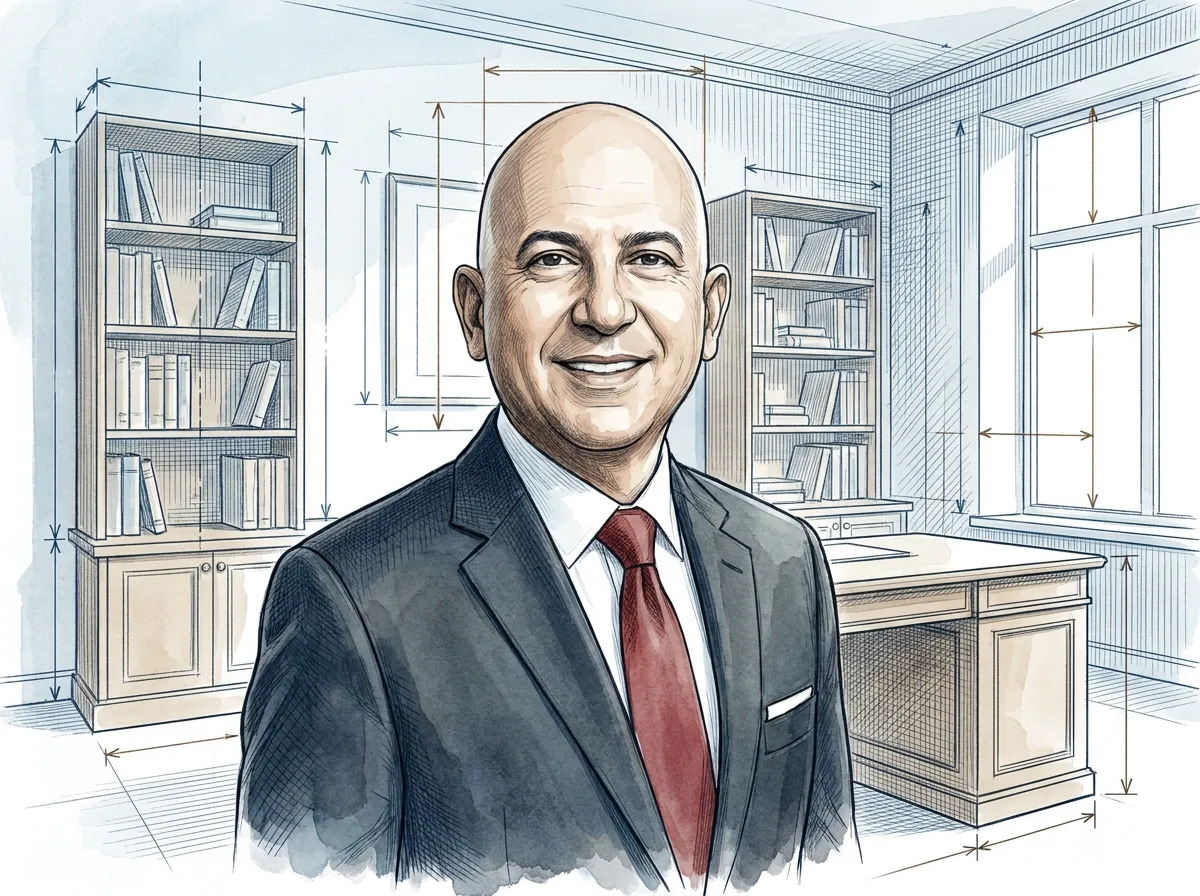
About the Expert: Victor Mena is an Executive Managing Director at Citizens Private Bank, focused on high-net-worth real estate investors in Southern California. He spent 28 years at First Republic Bank prior to joining Citizens Private Bank.
This article is based on information provided by the expert source cited above. It is intended for general informational purposes only and does not constitute legal, financial, or real estate advice. Readers should conduct their own research and consult qualified professionals before making any real estate or financial decisions.