

Rapid expansion in real estate often leads to diluted culture and inconsistent results, but K2 Omni Group, spanning five states with nearly 60 agents, has charted a different path. Their gro...

Teddy Abdelmalek: The Discipline of Excellence: Why Student Housing Success Isn't Mysterious

Written by:
Date:
14 Jan 2026
Share via Facebook

Share via Linkedin

Share via X

Copy to clipboard

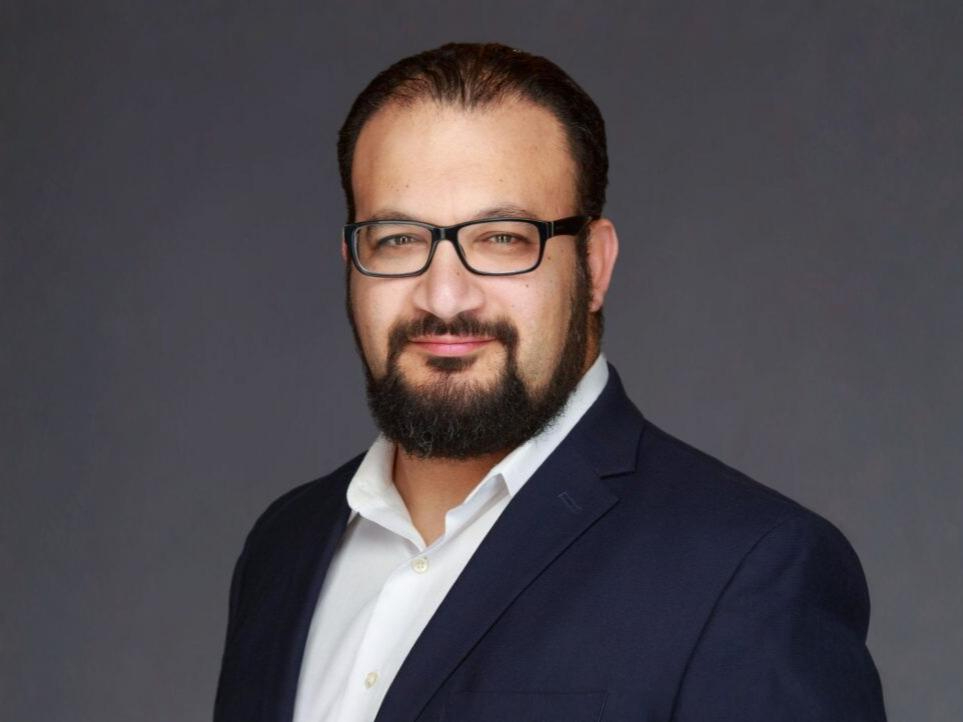
Teddy Abdelmalek on why consistent execution of fundamentals beats flashy strategies every time
Everyone in student housing is searching for the secret formula. The magic bullet that will drive occupancy, boost NOI, and solve operational challenges overnight. But according to Teddy Abdelmalek, Senior Vice President of Business Development at HH Red Stone, there is no secret. There’s only discipline.
“Success in student housing is not this magical or mysterious thing,” Abdelmalek states plainly. “It’s about doing the fundamentals consistently every single day.”
After 25 years in the industry, from residence hall advisor to executive leadership, Abdelmalek has distilled what separates thriving properties from struggling ones. The answer isn’t found in the latest technology platform or the most elaborate amenity package. It’s found in the daily grind of executing basics with unwavering consistency.
The Fundamentals That Actually Matter
What does consistent execution look like in practice? According to Abdelmalek, it means showing up every day to do the foundational work, even when results aren’t immediately visible.
“That means you’re marketing, and you’re interacting with your residents, and you’re following up, and you’re doing the foundational items even though you’re not seeing the results daily, but you’re doing them consistently to drive that success through the door,” he explains.
This includes marketing to strategic businesses near campus, interacting with the student body, engaging with student organizations, and maintaining constant visibility in the campus community. “Just like anything else, you’re not going to see the fruits of your labor until much later.”
The challenge? Maintaining that discipline when the payoff isn’t immediate. It’s the professional equivalent of going to the gym every day. “If you exercise every single day, you’re going to lose weight. Obviously, it’s not apparent in the first week, the second, or the third, but over time, the investment starts to show. It is a discipline versus this mindset of wanting to be successful.”
Speed Wins: The Competitive Advantage You Can Control
In an increasingly competitive market, one factor consistently separates winners from losers: response time.
“One of the things that moved the needle specifically is speed wins,” Abdelmalek emphasizes. “If I am faster than my competitor and I can call back a prospect that left me a message or emailed me, if I am faster, then I’m going to win.”
The logic is straightforward but often ignored. Prospects don’t reach out for the sake of reaching out. They need information to make a decision. The property that provides that information first has an immediate advantage.
HH Red Stone has incorporated what Abdelmalek calls a “bias towards action” into its operational philosophy. “Get stuff done. Why put something off until tomorrow that you can get done today? We’re burning the candle at both ends of the wick sometimes in student housing, but really, that is the game. You have to be quick, and you have to be strategic, and you have to get stuff done consistently.”
Your Property Doesn’t Need to Be Perfect
Here’s a truth that liberates operators from the endless amenities arms race: your property doesn’t have to be perfect to be successful.
“I’ve been in so many distressed asset situations throughout my career, and the number one thing that I’ve turned to is ensuring that the residents of the property feel valued and welcomed,” Abdelmalek recalls. “Even though I couldn’t necessarily upgrade the siding or the color scheme of the property, I can make sure the property’s clean. I can make sure the curb appeal looks great. And that’s me respecting the residents.”
At one property struggling with turnover and engagement, Abdelmalek skipped the traditional playbook of doubling down on marketing spend. Instead, he returned to his student affairs foundation: create belonging before chasing performance.
“We launched mentorship programs, leadership opportunities, and resident-driven initiatives that gave students a sense of community. Within a year, renewals and satisfaction both increased. It was proof that when you put people first, results follow.”
The lesson? “Your property doesn’t necessarily have to be perfect regarding the highest-end amenities and all the bells and whistles. If you have all the bells and whistles associated with your asset and your amenities are top-notch, and you don’t treat your residents with respect, it doesn’t matter.”
Treating Residents Like Ownership
Abdelmalek’s philosophy can be summed up in one powerful statement: “The residents are your CEO.”
This isn’t metaphorical. He means it literally. “When you treat your residents as if they are the owners of the property, everything else falls into place. Your resident experience, your staff have invested in the property, your reputation, your hospitality, how your residents treat your property—everything falls into place.”
The proof is in common operator behavior. When ownership visits a property, teams spring into action. The property gets cleaned top to bottom. Every detail gets perfected. Staff are attentive and responsive.
“If we just use that level of attention with the people that are actually living on our property every single day, your properties would be elevated to such an extreme level that everything would be just running as smoothly as possible,” Abdelmalek argues.
This extends to small but meaningful gestures. “Me knowing their names, me saying, ‘Hey, how are you doing?’ because I know you as a person, adds additional value to the asset. People like hearing their own name, the name of their pets, and if you know they have children, their sons and daughters. In student housing, it could be a brother, a sister, a family member.”
These aren’t nice-to-haves. They’re fundamental to property performance. “The way you make people feel on your property and at your asset dictates how your asset performs at the end of the day.”
The Real Role of Technology
As AI and automation tools proliferate in property management, Abdelmalek has explicit opinions on appropriate use cases.
“AI should definitely supplement things that we’re already doing. It should take some of the mundane work, things that distract us from the resident experience and resident interaction. Anything that helps with the paperwork aspect that is not necessarily customer-facing—that’s where the value is.”
Technology should enable what he calls “superhumans” rather than replacing human connection. The goal is freeing staff from administrative burdens so they can focus on what actually matters: genuine interactions with residents that build community and drive retention.
“You don’t want to lose the humanity component when you implement AI into your communities. Part of the reason our residents are living with us is something that makes them feel a certain way, whether it’s our staff, our people, or our maintenance. You don’t want to lose the aspect of your hospitality and make it all robotic.”
Business Development as Extended Leasing
Abdelmalek’s approach to business development offers insights for operators at any level. He views securing new management contracts through the same lens as leasing apartments.
“I liken business development to the leasing process. You have prospects that are surveying many different properties. They may not necessarily be engaged or committed to signing a lease that day, but you have to build a relationship with them and build that rapport. There’s continual follow-up associated with it.”
Just as property markets themselves are the place to live, management companies must market themselves as partners who will protect and enhance assets. “Same thing on the business development side. You’re externally marketing the property management company as the place where your asset will be protected and taken care of.”
The parallels extend to the challenges. “You get a hold of a prospect, and there’s continual follow-up. You have objections, and you have all the things you normally see in leasing. They say they’re going to sign tomorrow, and they fall off the face of the planet.”
Success requires the same qualities: patience, persistence, relationship-building, and genuine belief in your value proposition.
The Bottom Line: Discipline Over Dreams
Ask Abdelmalek for his final advice to operators, and he returns to the fundamentals.
“The secret sauce, the $100 million recipe—it’s not this mysterious or magical thing that’s not attainable. It’s about doing the fundamentals of your daily operations consistently every single day. If you said you were going to go market on Wednesday, Thursday, and Friday, and you only market on Friday, you’re only getting a third of what you said you were able to attain.”
Success comes from discipline, not magic. From consistency, not innovation. From respecting residents as the CEOs they genuinely are.
“When students and residents feel respected, your occupancy and NOI will follow,” he concludes. “And that one phrase is: our residents are our CEO. That’s literally the answer. That’s the $100 million recipe I just gave you.”
For operators tired of chasing the next big thing, Abdelmalek’s message offers both challenge and relief. The path to excellence isn’t mysterious. It’s just demanding. And it starts with showing up tomorrow to execute the fundamentals one more time.
Teddy Abdelmalek is Senior Vice President of Business Development at HH Red Stone, bringing 25 years of student housing and multifamily experience to property management strategy. HH Red Stone is the property management arm of HH Group, managing approximately 10,000 beds across multiple asset classes, including student housing, multifamily, affordable, and mixed-use properties nationwide.
Similar Articles
Explore similar articles from Our Team of Experts.

Real Estate Services, Residential Real Estate, Market Analysis & Policy, Industry Profiles, Top Articles
Connecticut’s Greater Hartford metro area has become one of the nation’s most active housing markets, creating both opportunities and challenges for local leaders. As demand for housing ...