
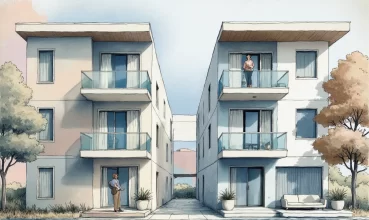
The difference between owning a four-unit building and a five-unit building is not just one additional apartment. According to Niko Apostal, managing broker at Essex Three-Twelve, it represe...

Retail Conversions Surge as Strip Centers Lose Value in Changing Market

Written by:
Date:
18 Oct 2025
Share via Facebook

Share via Linkedin

Share via X

Copy to clipboard


Real estate development veteran explains why dead retail properties could be the solution to America’s housing shortage.
The death of traditional retail may hold the key to America’s housing crisis, according to Scott Clark, Chairman & CEO of The True Life Companies. In a candid assessment of current market conditions, Clark argues that the widespread decline of strip malls and shopping centers has created an unprecedented opportunity for housing development.
The Economics of Retail Conversion
“Strip centers are worthless right now,” Clark says, noting the fundamental shift in retail property values. “They’ve lost their grocery anchor. That whole world has changed.”
This market reality, while devastating for retail property owners, creates a unique opportunity for housing developers who can acquire these properties at dramatically reduced prices. According to Clark, this lower acquisition cost is crucial for delivering attainably-priced housing to the market.
“It’s got to start with a low price,” Clark explains. “So we can deliver a low price to the builder, who can deliver a lower price to the end user.” This focus on cost basis drives The True Life Companies’ acquisition strategy, with Clark noting they’ll “make offers on 180 properties to bring in 15.”
The Sustainability Advantage
Clark argues that retail conversion represents a more sustainable approach to housing development than traditional greenfield development. “Are you going to run out of sites? Well, if it was just land, you’d have to go farther and farther out to get land. But since we repurpose, it’s a matter of making the economics work, not if there’s enough sites.”
This approach aligns with growing environmental concerns and urban sprawl restrictions while utilizing existing infrastructure and maintaining neighborhood density.
Market Selection Strategy
The True Life Companies isn’t pursuing retail conversion opportunities everywhere. Clark says they focus on specific markets where demographic and economic fundamentals support housing demand.
“We love Raleigh, we love Southern California,” Clark notes, emphasizing the importance of in-migration patterns and job growth. The company particularly targets areas with strong STEM job creation and educational institutions that drive housing demand.
The Solution Emerges
While The True Life Companies’ approach to retail conversion is gaining traction, Clark emphasizes that success requires extensive due diligence. “We’ve gotten really good at doing the due diligence – is there something wrong with the dirt? Was there a dry cleaner on it?”
The company’s selective approach appears to be working. With public homebuilders recently pulling back from land acquisition, Clark says his team is finding more opportunities. “These are the times we’ve been waiting for. We love the pricing we’re getting, because we believe two years from now, things will be like they were two years ago.”
For communities grappling with both dead retail space and housing shortages, this emerging solution could address both challenges simultaneously. However, Clark emphasizes that success requires patience and expertise: “You just keep going, and you hang around the rim until they get realistic.”
Similar Articles
Explore similar articles from Our Team of Experts.