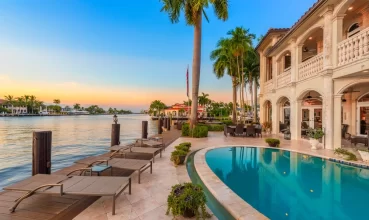

Florida’s condo market is facing what veteran realtor Ray Collins calls a “perfect storm” of pressures, forcing a rapid reassessment of coastal property values. Collins, an...

St. Augustine’s Real Estate Market Faces the New Insurance Reality

Written by:
Date:
26 Jan 2026
Share via Facebook

Share via Linkedin

Share via X

Copy to clipboard


The real estate market in Northeast Florida is undergoing significant changes as traditional coastal appeal collides with rising insurance costs and stricter requirements. In St. Johns County, anchored by historic St. Augustine, these pressures reflect statewide trends but are shaped by local factors unique to the area.
A Market Resets After the Boom
After a period of rapid price growth and low inventory during the pandemic, St. Augustine’s housing market has cooled over the past 18 months. Inventory across Northeast Florida is up 40% from its lows, marking a clear shift away from the intense seller’s market that defined the previous few years.
“We didn’t crash by any means. We kind of just leveled out,” says Shelby Hodges, team leader of The Shelby Hodges Group at Keller Williams. Her team ranked sixth in St. Johns County last year, closing 85 transactions and more than $37 million in sales.
Higher inventory has changed what buyers expect and how they behave. Where buyers once accepted homes in need of updates or repairs, today’s purchasers want move-in ready properties and are less willing to compromise. “If you were looking five years ago, and there was a house that needed projects, the buyer was a lot more open-minded to it, where now buyers would prefer move-in ready,” Hodges says.
Insurance Costs Take Center Stage
Insurance, once a background concern in Florida real estate, is now a central issue in nearly every transaction. New rules require most roofs to be 12 years old or newer and water heaters to be 10 years old or newer for insurance companies to offer coverage. This has forced sellers to replace or upgrade major systems before listing and made buyers more cautious.
“There’s definitely been some things that have happened recently that’re making it a lot more difficult for sellers, unfortunately,” Hodges explains. Many buyers now ask for insurance quotes and coverage details before making an offer. They also include contract riders that allow them to walk away if insurance costs exceed a set limit—a strategy that has become “a lot more common lately than years past,” according to Hodges.
These insurance hurdles can delay or even derail sales, especially for older homes that don’t meet new standards. Buyers are increasingly unwilling to take on properties that require expensive upgrades to secure coverage.
Geographic Risk and Uninsurable Properties
Some areas face greater insurance challenges than others. On Anastasia Island, which includes parts of St. Augustine’s coastline, FEMA has raised flood elevation requirements after repeated flooding events. As a result, certain low-lying homes have become uninsurable. Owners of these properties are sometimes forced to demolish and rebuild, as selling to a typical buyer is no longer an option.
“There’s definitely been some uninsurable properties we’ve seen that a lot of people just have to knock down and start over,” Hodges says. She adds that St. Augustine may be more affected than other parts of Florida due to its geography and low elevation.
Despite these obstacles, the first-time buyer market has not disappeared. St. Johns County’s average home price remains in the low $400,000s, which—when paired with careful insurance planning—keeps ownership within reach for many qualified buyers.
New Construction: A Strategic Option
Current market dynamics have opened the door for new construction to play a bigger role. Builders who overestimated demand during the pandemic are now holding extra inventory and offering aggressive incentives to attract buyers. Recent deals include price cuts of up to $60,000, full coverage of closing costs, and mortgage rates as low as 4.99%.
“New construction’s kind of the way to go that we encourage a lot of first-time home buyers, just because they have so many incentives,” Hodges says. This is a sharp contrast to the pandemic era, when new homes often sold at a premium with long wait times.
Builders’ willingness to negotiate provides buyers with more affordable entry points and fewer worries about insurance, as new homes typically meet the latest standards and requirements. For sellers of older homes, this increased competition means that pricing realistically and making needed updates are more critical than ever.
Relationship-Driven Sales in a Tight-Knit Community
The Shelby Hodges Group relies exclusively on referrals, drawing on what they call “the native network” rather than paid leads. This approach reflects both the close community ties in St. Augustine and the effectiveness of relationship-based business in smaller markets.
“We’re 100% referral based, so we kind of rely on what we call the native network,” Hodges says. “Everyone’s always amazed to hear that there are still natives in St. Augustine. There are a lot of them, and they’re amazing.”
Their service model extends beyond closing, with client appreciation events, holiday cards, and ongoing support for a range of needs. “We joke with people that we’re not everyone’s cup of tea, because when you work with us, you’re a friend for life,” Hodges says. This long-term approach helps maintain steady business even as market conditions shift.
Pricing and Inventory Drive the Outlook
Looking ahead, Hodges expects inventory levels to remain the key driver of pricing. If homes continue to sit on the market, she anticipates sellers will need to accept further price reductions. “If the inventory still stays high and not much is moving, then the sellers are going to have to realize we need a little bit more reductions,” she explains. “The only things you can change are price and location.”
Recent declines in mortgage rates have already sparked more buyer interest. “This week alone, we’ve obtained at least six new buyers and four new listings,” Hodges notes. Previously inactive prospects are returning to the market, encouraged by lower rates and builders’ incentives.
For investors, Hodges sees opportunity in long-term rental properties, particularly in South St. Johns County, where homes priced between $250,000 and $350,000 are in demand. She points out that many relocating families with strong job prospects may not qualify for a mortgage right away but are seeking quality rental options. “I think there’s a huge need for long-term renters that isn’t being filled,” she says.
Seasonal Cycles Remain Steady
Despite the changes in insurance and inventory, St. Augustine’s seasonal buying patterns remain consistent. The market still responds to the weather up north, with more substantial snowstorms often driving greater buyer activity from out-of-state residents. The city’s two main seasons—snowbird and summer—continue to support both permanent home sales and short-term rental investments.
The area’s appeal remains strong due to its top-rated school district, coastal setting, and affordability compared to other Florida markets. “They’re not making more land here. We still don’t have snow, so I think any investment is going to be an excellent investment,” Hodges says.
Navigating the New Normal
St. Augustine’s real estate market is adapting to new insurance realities and higher inventory, but remains fundamentally stable. The combination of stricter requirements and increased supply means buyers have more leverage and are better informed, while sellers must be transparent about costs and realistic about price.
Opportunities exist for those willing to adjust: buyers can benefit from builder incentives and newer homes with lower insurance risks, while investors can fill a gap in long-term rental demand. For sellers, success depends on understanding what today’s buyers need and addressing potential insurance or repair issues before listing.
The market’s resilience will depend on clear communication, flexible pricing strategies, and the ability to identify and act on new opportunities as they arise. In a climate where both risks and rewards are shifting, St. Augustine’s experience shows that local knowledge and strong relationships remain essential for navigating Florida real estate’s next chapter.
Similar Articles
Explore similar articles from Our Team of Experts.
Perspectives, Industry News, Residential Real Estate, Market Analysis & Policy, Real Estate Investment
A combination of rising insurance costs and increasing HOA fees has turned Jacksonville Beach’s oceanfront condos from sought-after investments into difficult properties to sell, according...