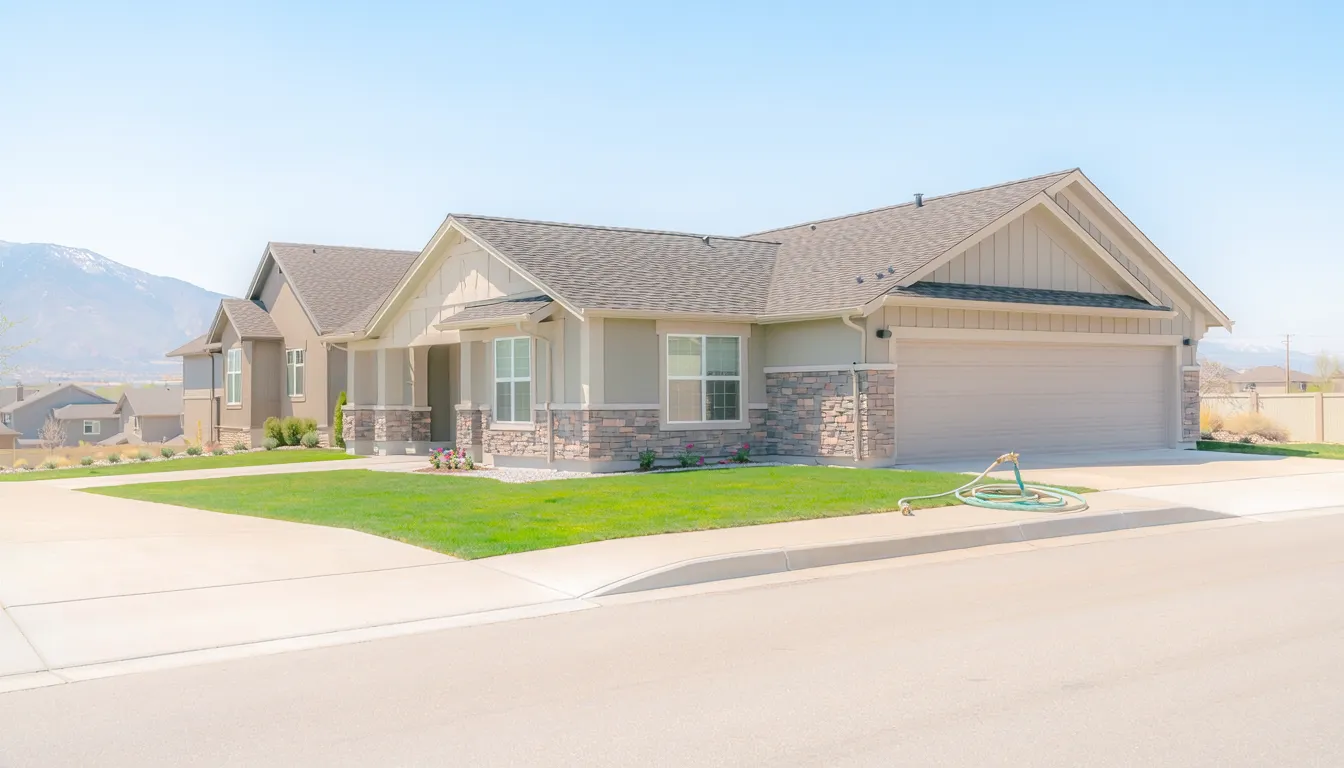
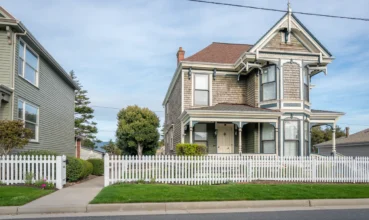
South Weber, Utah, sits in a canyon between Layton and Ogden along the Wasatch Front, with a population of about 8,200 and roughly 2,400 housing units. By most measures, it is a small market. But it faces a structural constraint most growing Utah communities do not share: the town is approaching its buildable limit, with capacity for only about 1,000 more households before geographic and zoning boundaries close the door on new supply.
That finite ceiling is already influencing how properties are priced, how quickly they move, and where investors should look for opportunity, according to Graham Allen, who leads the Graham Allen Group, brokered by Real Broker, LLC. Allen handles 60 to 70 transactions annually across the Wasatch Front and has lived and sold in South Weber for years.
A Pricing Gap That Reveals Local Demand
Statewide in Utah, the average sold price currently runs almost $15,000 below the average list price. In South Weber, that gap narrows to roughly $2,000 to $3,000. The difference points to stronger perceived value in a community where inventory is limited by design.
Allen attributes the tighter spread partly to the town’s proximity to Hill Air Force Base, a major employer, and partly to larger lot sizes – many homes sit on a third or half an acre – in a location that still offers a 30-minute drive to the international airport and 20 minutes to ski slopes. “South Weber is a town where people move to, and they don’t leave,” he says, “because they love the community, they love the small-town feel of it, and they love the access to everything.”
The town is roughly 90 percent single-family homes, with a small pocket of new construction dominated by a local builder. That housing mix, combined with the approaching buildout ceiling, means the existing stock will increasingly be the only stock available. “If you want to buy in South Weber, you’re going to have to either buy now and build or find something existing,” Allen says.
Two Markets Running Side by Side
The broader Utah residential market currently averages 68 days on market statewide. But Allen’s own listing data tells a different story: his current listings average 11 days on market, and over the past year his average has been 24 days. The gap, he argues, comes down to preparation and pricing.
“When someone tells me there’s no buyer demand, that’s not what I’m seeing,” he says. “The demand exists. But the question is, do the buyers perceive the value in the property you’re putting forward?”
Allen describes the current environment as two parallel markets. Well-positioned homes – priced in line with what buyers can independently verify through tools like Zillow, Redfin, and UtahRealEstate.com – still generate quick activity. Homes that miss on price or condition sit for 90 to 160 days and ultimately sell for far less. “The biggest mistake sellers make is pricing like they still are in 2021,” he says. “And the biggest mistake buyers make is buying a home like we’re in 2010 or 2011. We’re not in either one of those markets.”
Allen frames the current market as neither a runaway seller’s market nor a distressed buyer’s market. Instead, he calls it a healthy market where buyers have enough inventory to be selective, and sellers who price correctly can still move homes quickly.
What Investors Should Watch
For investors considering South Weber, Allen emphasizes two factors: location within the location, and the condition buyers now expect.
Homes near a major freeway sell for roughly $15,000 to $25,000 less than comparable properties in quieter parts of town, according to Allen. Three years ago, buyers overlooked that kind of drawback. Now they do not. “Be picky about what you buy,” Allen says, “because if you don’t like that location, chances are somebody else won’t like that either.”
The town’s older housing stock – homes built in the 1970s through the 1990s – offers renovation opportunity, particularly if investors focus capital on kitchens, bathrooms, and flooring. But Allen warns against a cosmetics-only approach. In a buyer’s market, inspections are where deals collapse. He recounts a recent South Weber listing on a half-acre lot that lost a buyer over roof issues. The sellers ultimately repaired the roof, but the failed contract cost time and leverage. Allen says investors should consider getting a pre-home inspection before closing so they can renegotiate if major issues surface. “There’s a real world where it makes sense to get a pre-home inspection before you close,” he says, “so you can actually be prepared for what your bottom line looks like on the other side.”
For resale, Allen identifies the high $300,000s to mid $400,000s as a strong range for reaching first-time buyers near Hill Air Force Base and the surrounding employment centers.
A Structural Floor Under Values
South Weber’s limited commercial district distinguishes it from larger neighboring cities where aging retail corridors can drag down surrounding property values. Allen says the town has enough commercial activity to contribute to the local tax base but not enough to create the boom-and-bust cycles that affect property values in more commercially developed areas. “You don’t see the ebbs and flows of retail,” he says. “You don’t have that in South Weber.”
Combined with the geographic cap on new development, this commercial limitation acts as insulation for residential values. The town draws on nearby commercial centers in Riverdale, Ogden, and Layton without absorbing the risk that comes with hosting large retail districts that may deteriorate over time.
For buyers and investors weighing South Weber against larger Wasatch Front communities, the calculus is straightforward: a market approaching its physical limit on new supply, with tighter pricing spreads than the state average, stable demand driven by military employment, and a housing stock old enough to offer renovation upside – but only for those willing to invest in condition, not just appearance.
About the Expert: Graham Allen leads the Graham Allen Group, brokered by Real Broker, LLC, covering South Weber, Utah, and the Wasatch Front.
This article is based on information provided by the expert source cited above. It is intended for general informational purposes only and does not constitute legal, financial, or real estate advice. Readers should conduct their own research and consult qualified professionals before making any real estate or financial decisions.