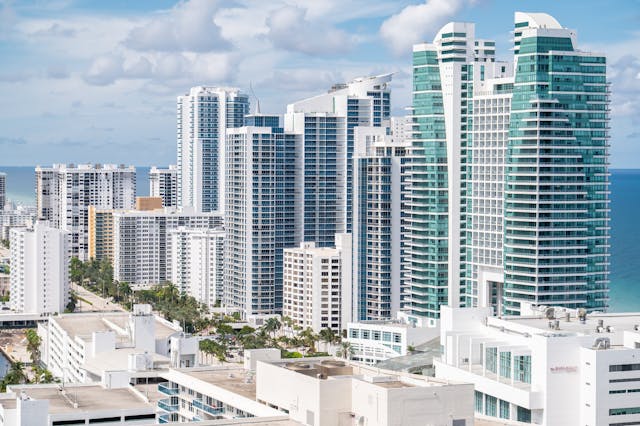
While much of the nation grapples with real estate market uncertainty, South Florida continues to demonstrate remarkable resilience, driven by sustained population growth and steady investment interest, according to Dan Ross, Executive Director at Native Realty.
Ross, who leads the commercial team at the Fort Lauderdale-based boutique brokerage, has observed the market’s continued strength firsthand. “In South Florida, we’re in a unique position because there’s still a lot of demand,” Ross explains. “Especially since the pandemic, everybody is moving down here from other parts of the country…we’ve seen population growth explode. And with that population has come investment dollars.”
Native Realty, which operates throughout the Tri-County area, has maintained a strong presence in the market, particularly in the retail sector, which comprises about 75% of their business. While the firm has expanded into other commercial real estate sectors, including industrial and office properties, their retail focus has proven advantageous in the current market environment.
Recent transactions highlight the market’s vitality. The firm recently closed a $19 million deal for a Class A office building at the intersection of Federal Highway and Broward Boulevard, a prime Fort Lauderdale location. Additionally, several strip center retail investments are set to close this month, indicating renewed investor confidence as interest rates begin to trend downward.
“Now that some of the macroeconomic pressures are starting to get a little bit better, and especially now that we’re past the election, we’re seeing activity begin to ramp up even more,” Ross notes. This uptick in activity comes despite the 10-year Treasury remaining higher than ideal, suggesting investors are looking past current conditions to anticipated improvements in the financing environment.
However, Ross identifies a potential challenge on the horizon: a looming apartment shortage. The past 18 months have seen development activity constrained by high interest rates and construction costs, particularly in the downtown core. “If you drive through the downtown core, you see a lot of these sites still sitting vacant. They have approved high-rise projects, but it just doesn’t pencil to lift a tower right now,” Ross explains.
This development slowdown could have significant implications for the multi-family market. “Over the next year, I think we’re going to see some apartment shortages, just because there hasn’t been the new construction started in the last 18 months,” Ross predicts. “The rents are going to continue to rise where, probably over the last 12 months they’ve been kind of stable.”
Looking ahead, Ross and his team are preparing for what they anticipate will be a robust 2025 and beyond. The combination of continued population growth, pent-up development demand, and improving financial conditions suggests sustained market strength in the region. “People are still coming down here in droves and looking to make investments,” Ross observes, pointing to the enduring appeal of the South Florida market.
For developers and investors sitting on the sidelines with capital ready to deploy, the improving macroeconomic environment could signal opportunities ahead, particularly in addressing the region’s growing housing needs. As the market continues to evolve, Native Realty’s position at the intersection of retail, office, and development positions them well to capitalize on South Florida’s sustained growth trajectory.