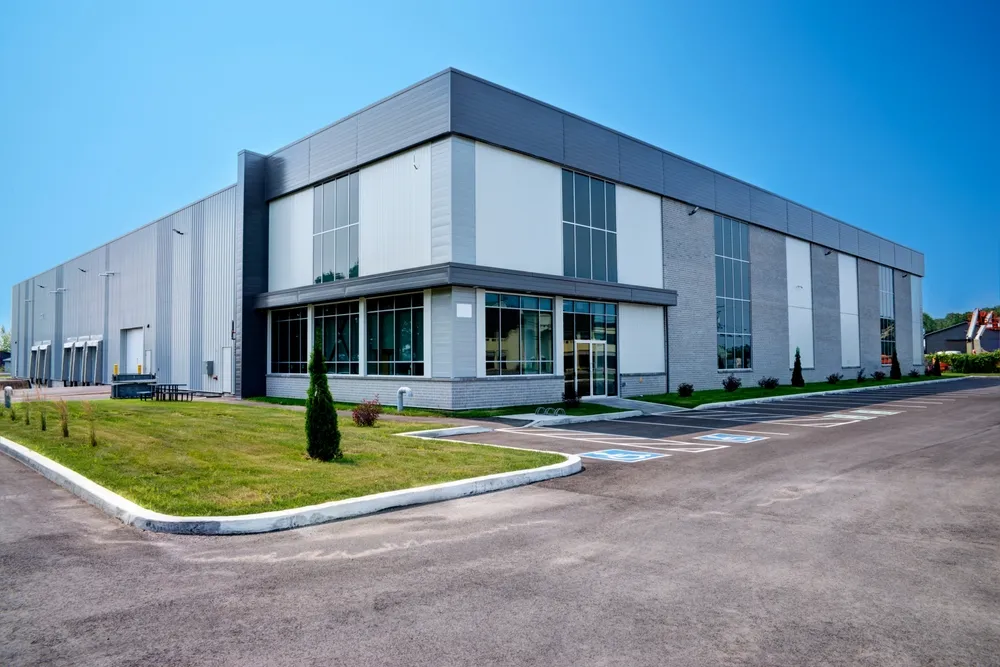
The industrial real estate market across the western United States has absorbed a wave of post-pandemic construction, but not evenly. Large-format warehouses and distribution buildings drove both headline capital flows and elevated vacancy in markets from Seattle to Phoenix. One segment, however, has been largely absent from the construction pipeline: small and mid-bay multi-tenant industrial parks. That gap, now stretching back roughly two decades, is creating a distinct investment dynamic that does not show up in the headline data.
Tyler Mattox of MCA Realty, a California-based industrial investment firm focused exclusively on small and mid-bay properties in markets from Texas west, says the distinction matters more than most market participants realize. “Since coming out of COVID with the glut of development, vacancy rates have been elevated in pretty much every western market that we invest in,” he says. “But the product type that we invest in hasn’t been built at any scale really since before the GFC, call it 20 years.”
The Data Gap That Defines the Niche
One of the persistent challenges for investors in this segment is that traditional data providers do not break down vacancy by building size in a way that is useful. Published vacancy and construction figures cover industrial broadly, large buildings, small buildings, and everything in between. For a firm acquiring multi-tenant parks with small bay units, the headline numbers can be misleading.
MCA’s approach involves more granular analysis: evaluating who they are actually competing with for tenants, how much vacancy exists in that specific peer group, and what demand risks look like locally. While leasing velocity has slowed, vacancy in the small bay segment has not risen at the same rate as in larger buildings, precisely because no new supply has come online. “One thing we don’t spend really any time being concerned about is supply being a factor in our analysis, because it’s just too expensive to build this product,” Mattox says. “It’s very sensitive to increases in land values. It’s very expensive to build.”
For investors evaluating western US industrial exposure, this means that broad market vacancy figures may overstate the risk in the small bay segment while understating the supply constraint that supports rents there.
Institutional Capital Arrives
MCA targets properties with vacancy, below-market rents, deferred maintenance, or near-term tenant rollover, conditions that create selling friction for existing owners but represent fixable problems for an experienced operator. A recent acquisition in Kent Valley, Washington, purchased from a state pension fund, illustrates the approach: the property had meaningful vacancy in a challenged leasing market, and the business plan called for capital injection, unit subdivision, and aesthetic and functional upgrades over roughly four years before repositioning for sale.
That kind of hands-on, operationally intensive work is characteristic of the segment. Many tenants are small businesses that may not have formal financial statements. Credit decisions often come down to FICO scores. Lenders are willing to provide financing, but they want sponsors with experience operating these properties. “It’s a very granular operational asset class,” Mattox says. “You need to understand how to make those credit decisions and leasing decisions.”
The ownership profile of small bay industrial is shifting. Historically, these properties were held by developers who built them, generational holders, or smaller operators. The supply-demand imbalance, no new construction paired with steady demand from small businesses, has attracted larger pools of institutional capital over the past three years. MCA itself has raised two private funds and plans to raise a third.
Sellers Under Pressure, Buyers Pulling Back
The current transaction environment is noticeably tighter than it was two or three years ago. Mattox describes an increase in compelled sellers, owners facing fund life deadlines or maturing debt that would require additional equity to refinance. At the same time, buyer aggressiveness has diminished. “Buyers are scrutinizing things much more,” he says. “We have a deal in the market right now we’re selling, and frankly, the activity has been below what the brokers and we have hoped.”
The core issue is rent growth assumptions. A few years ago, buyers underwrote more aggressive rent increases, which translated into higher pricing for sellers. With rents relatively flat across most western markets, down slightly in some, plateaued in others, that aggressiveness has faded. MCA targets levered returns in the mid-to-high teens on an IRR basis over three to five years, with leverage typically around 60 to 65 percent. At current interest rate levels, Mattox noted the 10-year Treasury closing around 4.85 percent at the time of the interview, its highest in roughly three years, and that projecting exit cap rates has become harder.
For sellers in this segment, the implication is direct: the aggressive rent growth assumptions that supported higher pricing two or three years ago are no longer available from most buyers.
Small Tenants Signal Caution
At the property level, macro uncertainty is showing up in tenant behavior. Leasing velocity has slowed, not to alarming levels, but noticeably. Small tenants are less willing to expand and less willing to commit to longer lease terms, opting instead for shorter renewals. “There’s uncertainty in small business right now,” Mattox says.
MCA’s typical acquisition target reflects this environment: generational owners who managed properties for cash flow rather than capital improvement, accepting lower rents from tenants less concerned about property condition. MCA’s strategy is to inject capital, sometimes $10 per square foot, sometimes $50, depending on the asset, to bring rents in line with well-maintained properties in the same market, then exit at a higher valuation. The firm is also planning to expand its geographic coverage by hiring a Texas-based acquisition professional for its next fund, a market it has invested in before through Austin but has not covered consistently due to distance from its California base.
The headwinds Mattox is watching extend beyond interest rates. Federal debt levels, geopolitical instability, and oil prices, back above $100 a barrel at the time of the interview, all factor into a more conservative underwriting posture. “As long as that’s the case,” he says, “it’s just going to make our underwriting more conservative.”
The supply constraint that defines this segment is not temporary. Small bay industrial remains too expensive to build relative to the rents it generates, and that cost barrier shows no sign of narrowing. For investors willing to operate at the granular, tenant-by-tenant level the segment demands, the absence of new competition from construction remains the foundational advantage, even as the broader transaction environment makes each deal harder to close.
About the Expert: Tyler Mattox is with MCA Realty, a California-based industrial investment firm focused exclusively on small and mid-bay industrial properties in western U.S. markets.
This article is based on information provided by the expert source cited above. It is intended for general informational purposes only and does not constitute legal, financial, or real estate advice. Readers should conduct their own research and consult qualified professionals before making any real estate or financial decisions.