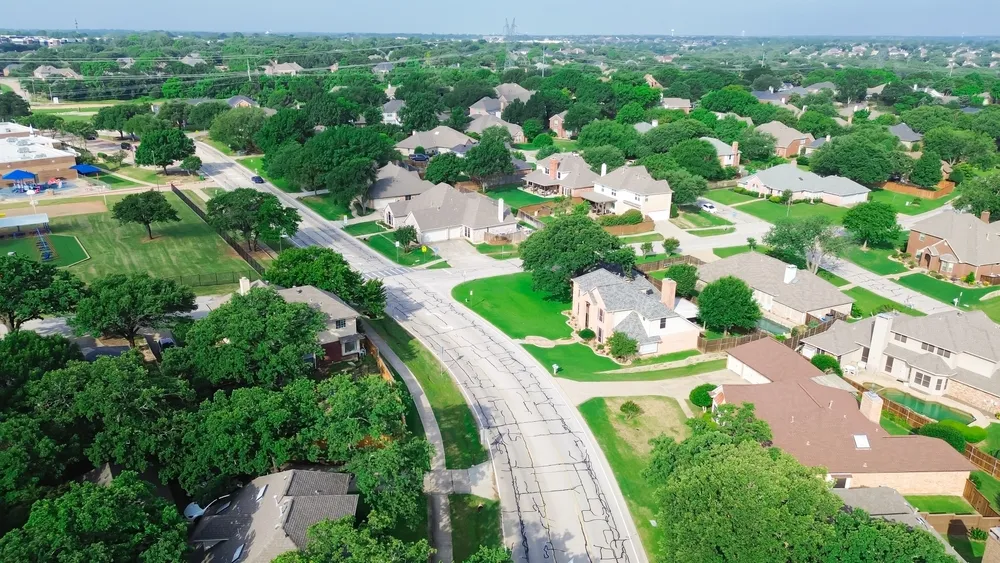
In the Dallas-Fort Worth residential market, buyers who have been priced out of new construction over the past 12 to 24 months are now shopping at lower price points, but arriving with the same expectations for quality and finish. The result, according to Cisco Gonzalez, Team Founder and Listing Agent at Maverick Real Estate Group brokered by eXp Realty, is a widening gap between what sellers of distressed or outdated properties are offering and what today’s buyers will accept.
Gonzalez works primarily with institutional clients, lenders holding foreclosed properties, equity funds selling off rental portfolios, and investors acquiring off-market opportunities. About 55 percent of his business is institutional, and roughly 95 percent is on the listing side. That positioning gives him direct visibility into how different levels of property condition perform once they hit the market.
The Condition Gap
With mortgage rates remaining elevated, buyer purchasing power has contracted. Many buyers who would have purchased new construction a year or two ago have adjusted their target price downward, but not their expectations for what the home should look like.
“Buyers are rejecting homes that are distressed, partially distressed, or even outdated because rates have remained high,” Gonzalez says. “They now have expectations for a lower price point, but that’s coming with the expectation that they don’t want a project.”
Homes requiring work are sitting on the market longer as a result. This applies not just to heavily distressed properties but to those that are simply dated, with original kitchens, worn carpet, and deferred maintenance. Buyers who already feel stretched by higher monthly payments are unwilling to layer renovation costs on top.
Why Institutional Sellers Renovate Before Listing
For institutional sellers, lenders, equity funds, and portfolio landlords, this buyer behavior is changing pre-listing strategy. Gonzalez says he advises most of his clients to invest in at least partial renovation before going to market. The scope depends on the property’s condition and the seller’s strategy: some opt for preservation-level cosmetic improvements, while others pursue a full rehab.
Two recent listings from his pipeline illustrate the spectrum. One property, formerly occupied by squatters and left incomplete by a prior investor after foreclosure, required a full gut renovation to become marketable. Another, a former rental from a larger institutional client, received a full interior paint job and carpet replacement, enough to present the home as move-in ready without a complete rebuild.
“The reason I greatly suggest all my clients choose to renovate, at least partially, is that the ones that are distressed or original or outdated are staying on market longer,” Gonzalez says.
The decision to renovate is not purely aesthetic. When buyers at a given price point can choose between an updated home and one that needs work, the updated home moves first. Gonzalez says that gap in market time is growing as rate pressure persists.
A Market That Rewards Speed and Exposure
Gonzalez also handles retail listings where speed is the primary objective, sellers facing financial hardship, divorce, probate, or sudden relocation. In those cases, the strategy leans less on renovation and more on distribution. His team pays for premium placement on major real estate search portals to push listings above the scroll, uses direct geographic buyer targeting, and markets internally within the brokerage before going on the MLS.
“We don’t want our clients’ listings to be buried among the inventory of the rest of them and hope people find them in a scroll,” Gonzalez says.
The logic is that in a market where buyer traffic has thinned, passive exposure, listing a property and waiting for it to surface in search results, is not enough. For sellers who need to move quickly, the choice between investing in broader marketing reach and hoping for organic discovery can determine whether a property sells in weeks or lingers for months.
How Properties Get Assessed
Each property Gonzalez takes on begins with a condition assessment. He evaluates the scope of work needed to bring it to market, whether personal belongings remain inside, what repairs are required, and what finish level matches current buyer demand at that price range. Based on that assessment, he presents clients with a strategy: sell as-is, invest in preservation-level work, or pursue a full rehab.
While the client reviews the valuation analysis, Gonzalez’s team handles property security and maintenance, conducting weekly or biweekly check-ins to prevent municipal violations and keep the property in presentable condition. “I treat them as if they were my own for all of my clients,” Gonzalez says.
That pre-listing maintenance matters more than it might appear. A property that accumulates code violations or visible neglect while sitting in a disposition pipeline arrives on market at a disadvantage, not just in condition, but in how buyers and their agents perceive its history.
Institutional Demand Is Expanding Geographically
Gonzalez notes that institutional demand for his services has pushed his coverage area beyond the core DFW counties. His team now handles assignments in Austin, Houston, San Antonio, Galveston, and East Texas, with team members positioned in those regions. The expansion was driven by existing clients requesting coverage in markets where they also hold inventory.
Two years into his full-time real estate career, Gonzalez has closed 29 transactions so far this year with six more under contract, surpassing last year’s total of 27. He attributes the volume in part to diversification across client types, institutional, investor, and retail, rather than dependence on a single segment. “You have to diversify,” he says. “I know there’s a lot of real estate agents out there struggling because I talk to them every day and they’re just talking about how slow it is out there.”
For sellers holding distressed or dated inventory in DFW, the takeaway from Gonzalez’s experience is specific: the buyers still exist at lower price points, but they expect a finished home. Sellers who meet that expectation, through renovation, aggressive marketing, or both, are the ones closing deals in a market where rate pressure has made buyers less willing to compromise on condition.
About the Expert: Cisco Gonzalez is Team Founder and Listing Agent at Maverick Real Estate Group brokered by eXp Realty, working primarily with institutional clients across the Dallas-Fort Worth area, with additional coverage in Austin, Houston, San Antonio, Galveston, and East Texas.
This article is based on information provided by the expert source cited above. It is intended for general informational purposes only and does not constitute legal, financial, or real estate advice. Readers should conduct their own research and consult qualified professionals before making any real estate or financial decisions.