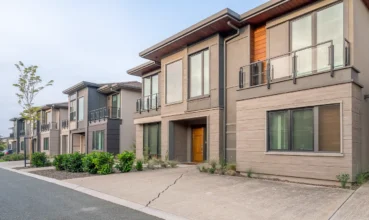
The small New Jersey borough of Metuchen offers a clear example of the housing pressures facing desirable suburbs across the country. With a fraction of the homes once available for sale, Metuchen’s market shows how scarcity, rising prices, and shifting buyer strategies are reshaping access to homeownership and, by extension, the character of entire towns.
Margaret Cook, a sales associate with Berkshire Hathaway HomeServices Fox & Roach, has worked in the Metuchen real estate market for over 20 years and witnessed its rapid changes. Her experience reveals how tight inventory and intense competition are altering both who can buy and how families approach the process.
Scarce Inventory Drives Competition
Metuchen’s draw is straightforward: top-ranked schools, direct train service to New York and Philadelphia, and a walkable downtown with diverse restaurants and shops. Its recognized status as one of America’s celebrated Main Street communities has only heightened the borough’s appeal, but the supply of homes has failed to keep up with demand.
Cook says pricing has become unpredictable. “Six years ago, I could have said to the dollar what a house would sell for,” she recalls. “Now, the only advice we can give is to list at what seems fair market value and let buyers compete.” Bidding wars have become the norm, with properties routinely selling for 105% to 120% of the asking price. Even homes that turn up problems during inspections rarely fall out of contract. Buyers are determined to secure a property, regardless of minor issues.
Interest Rates Lose Influence
While rising mortgage rates have slowed activity in many U.S. markets, Cook sees little evidence of this in Metuchen. “The mortgage rates have had very little influence on our market, much less than I would have expected,” she says. The main reason is what Cook calls the “golden handcuffs” effect: homeowners with 2–4% mortgages are reluctant to sell and take on higher rates.
However, with rates settling below 6%, some are reconsidering. “If you locked in at four or four and a half, and now need a mortgage at five and a half or six, it’s not quite as painful,” Cook explains. This has slightly loosened the market, but not enough to restore inventory to pre-pandemic levels.
Family Financing Fills the Gap
The shortage of affordable homes and the need to compete with aggressive offers are fueling new approaches to financing. Cook notes a marked increase in “the Bank of Mom and Dad,” where parents, grandparents, or siblings provide loans to buyers, often at below-market rates of 4–5%. “Since home values are going up at a tremendous rate in our area, it’s a good investment,” Cook says.
Family lending helps buyers make larger cash or down payments, giving them a critical edge in bidding wars. This trend underscores the growing role of intergenerational wealth in determining who can buy a home today.
Buyers Look Beyond Metuchen
As competition in Metuchen intensifies, buyers are broadening their searches to nearby towns with train access and slightly lower prices. Areas like South Plainfield and Dunellen, once considered second choices, are now seeing increased demand. “Towns on the train line are becoming options for people who normally would have said, ‘I only want to live in Metuchen,'” Cook says.
This spillover effect is pushing up prices and shrinking inventory across the region, making affordability a challenge not just in Metuchen but throughout central New Jersey.
Rising Prices Shut Out Buyers
Rising prices are fundamentally changing the makeup of Metuchen. Last year, 15 homes in the borough sold for more than $1 million, a threshold rarely crossed in the past. Cook is direct about the implications: “The opportunity to purchase a home right now is really only for the wealthy. I don’t feel that’s a good way to create a strong environment, a strong community.”
Cook recalls that after World War II, many families bought modest Cape Cod homes for $35,000, often with help from the GI Bill. Now, those starter homes have been expanded, renovated, or replaced, and entry-level options have all but disappeared. This trend is not unique to Metuchen. It echoes across many sought-after suburbs, where the path to homeownership for middle-income families is narrowing or closing entirely.
Barriers to New Construction
Adding more homes is not a simple solution in New Jersey, the nation’s most densely populated state. Land is scarce, and builders face escalating costs for the few remaining buildable lots. “To build, they are tearing down, but it’s hard,” Cook says. “Builders are having a hard time affording what I used to think was the maximum amount they would pay for a buildable lot.” When new homes are built, they command high prices, further limiting who can afford to buy.
Zoning restrictions, lengthy approval processes, and neighborhood resistance to denser projects add further barriers, making it unlikely that new construction will meaningfully address the shortage soon.
Multi-Generational Living Increases
With buying out of reach for many, household structures are changing. Cook sees growing interest in homes with first-floor suites or separate living areas that accommodate multiple generations, including aging parents or adult children who cannot afford their own place. “Our kids moved out and then moved back in,” she says. “We’re having multi-generational living because children can’t afford to buy a house on their own, or the rents are so high they have to save their money.”
This adaptation is becoming more common as families pool resources to weather high prices and limited options.
Technology Has Its Limits
While buyers increasingly use online tools and artificial intelligence to research interest rates, disclosures, and realtors, Cook argues that local expertise remains essential. Cook and her husband, also a realtor, aim to simplify the process for clients. “We try to be the answer,” she says. “We like to put things in simple terms and walk you through it.”
In a market defined by speed, competition, and legal complexity, having a knowledgeable guide can make the difference between winning and losing a bid.
Market Outlook
Looking ahead to the rest of 2026, Cook is watching several factors that could affect the market. Political uncertainty ahead of the fall elections may slow activity, as buyers and sellers await clarity on economic and housing policies. Meanwhile, the persistent inventory shortage continues to constrain options and push prices higher. “Housing is a major issue,” Cook emphasizes. Cook wishes more could be done to create affordable options in towns like Metuchen, but acknowledges the structural hurdles that make this difficult.
Metuchen’s experience reflects broader national tensions between desirability and accessibility. The combination of tight supply, rising prices, and increased reliance on family wealth is making it harder for middle-income buyers to enter the market. These pressures are gradually reshaping the social fabric of American suburbs. For real estate professionals, the borough’s story offers a warning about the risks of concentrated demand and a glimpse into how buyers are adapting, through alternative financing, broader searches, and changes in how families live together.
The lessons from Metuchen underscore the need for creative solutions and policy attention. Without new approaches to affordability, many communities risk becoming enclaves for the wealthy, losing the economic diversity and vibrancy that have long defined them.
About the Expert: Margaret Cook is a sales associate with Berkshire Hathaway HomeServices Fox & Roach, bringing more than 20 years of experience in the Metuchen, New Jersey real estate market. Cook specializes in helping buyers and sellers navigate one of central New Jersey’s most competitive housing markets, where scarce inventory, rising prices, and shifting financing strategies are reshaping access to homeownership.
This article is based on information provided by the expert source cited above. It is intended for general informational purposes only and does not constitute legal, financial, or real estate advice. Readers should conduct their own research and consult qualified professionals before making any real estate or financial decisions.