San Jose’s housing shortage is not a temporary market fluctuation but the result of physical constraints that prevent meaningful new development. Theresa Wellman, founder of Homeowner Experience Real Estate Inc., points to the region’s geography as the main factor: Silicon Valley is surrounded by the ocean on three sides and hemmed in by mountains, leaving little space for expansion. This fixed boundary means there is a permanent cap on how much new housing the area can add, even as demand continues to grow.
“We are geographically limited,” Wellman says. “Silicon Valley runs up the peninsula toward San Francisco, with the ocean on three sides and mountains flanking both sides of the Santa Clara valley all the way down to Morgan Hill. There is no out. We cannot build our way out of this.”
Persistent Low Inventory
San Jose consistently maintains less than one month of housing inventory — far below the four to six months that define a balanced market. This ongoing scarcity leads to intense competition, with multiple offers now standard on nearly every listing. Wellman recently sold a home that received 10 offers, and she says 3 to 5 offers per property is typical.
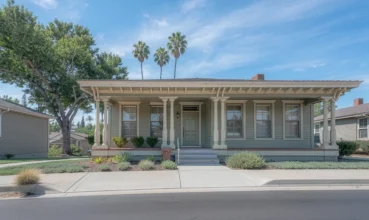
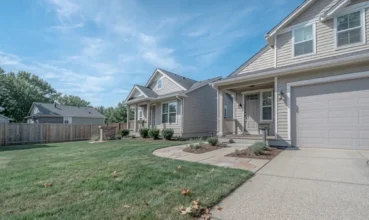
This shortage is not due to homeowners withholding properties from the market, but rather the inability to build new single-family homes. Where development does occur, it is limited to high-rise condominiums and multi-family projects rather than homes with yards. “Where new construction is happening, it’s in high rises, condominiums, and things like that, but not homes with land,” Wellman explains.
As aging single-family homes are sold and not replaced, the share of condos and multi-family units grows. For buyers seeking traditional homes with yards — especially families with school-age children — the inventory is even tighter than overall numbers suggest.
Demand Outpaces Constrained Supply
The supply pressure is compounded by steady demand growth. Silicon Valley’s economy is anchored by a growing roster of Fortune 500 companies, with newer sectors like artificial intelligence and biotech adding high-income jobs to the region. Wellman, who began her real estate career in the early 2000s, notes that the economic base has become more diverse and resilient. This diversification has kept demand strong even during periods of tech layoffs.
“I’ve been doing this for 21 years, and when I started, the economy was strong, but it was before Google. The economy then was driven by HP, Apple, Yahoo, and Cisco, plus some smaller companies.” Wellman says. “It’s only grown and flourished even more in this valley, making the economy more diverse and stronger.”
Because the supply of developable land is fixed, rising prices do not prompt new single-family construction. Instead, prices act as a rationing mechanism, limiting who can buy, but not increasing the number of homes available. The result is a permanent mismatch between supply and demand.
No Short-Term Relief on the Horizon
Wellman sees no sign that inventory levels will improve meaningfully in the near future. The only scenario that would significantly increase the number of homes for sale would be a large-scale departure of current owners, such as a wave of retirements. However, she does not see evidence of this happening. Employment remains strong, and the region continues to attract new residents.
“If, for some reason, everybody decides to retire at the same time to leave the area, and all of a sudden we have a flood of inventory that’ll make an impact as well, right?” Wellman says. “But that’s not happening.”
For buyers, this enduring shortage means facing intense competition and sustained upward price pressure. Many underestimate how few options are available, particularly those relocating from areas with more typical inventory levels. For sellers, the shortage provides ongoing pricing power. Homes in desirable areas with strong schools often sell within eight to ten days and receive offers above the asking price. The risk of price declines remains low, as demand consistently exceeds supply.
Geographic and Political Limits
Policy efforts to address the shortage — such as increasing density or speeding up permitting — can facilitate more high-rise and multi-family development, but do not add new land for single-family homes. Open space protections and rugged terrain further restrict the area available for building. These limits are unlikely to change, as preservation efforts have strong political backing and the physical landscape cannot be altered.
The effect is a market where the supply of single-family homes is essentially fixed while demand continues to expand. This imbalance keeps prices high and encourages aggressive bidding. Wellman emphasizes that anyone making long-term housing decisions in San Jose must understand these structural realities.
“We typically have less than one month of inventory because there’s just not enough housing here for the demand and the amount of people that live here, which is why we end up with multiple offers,” Wellman says.
Wider Implications
The dynamics in San Jose are not unique. Other geographically bounded markets — such as coastal California cities, parts of the Pacific Northwest, and island communities — face similar challenges. In these areas, physical limits on development keep inventories low regardless of economic cycles or policy changes, leading to persistent competition and long-term price appreciation.
For buyers and sellers alike, understanding the role of geography in driving housing shortages is critical. In markets like San Jose, the shortage is not a passing phase but a permanent feature, shaping every aspect of the real estate landscape for years to come.