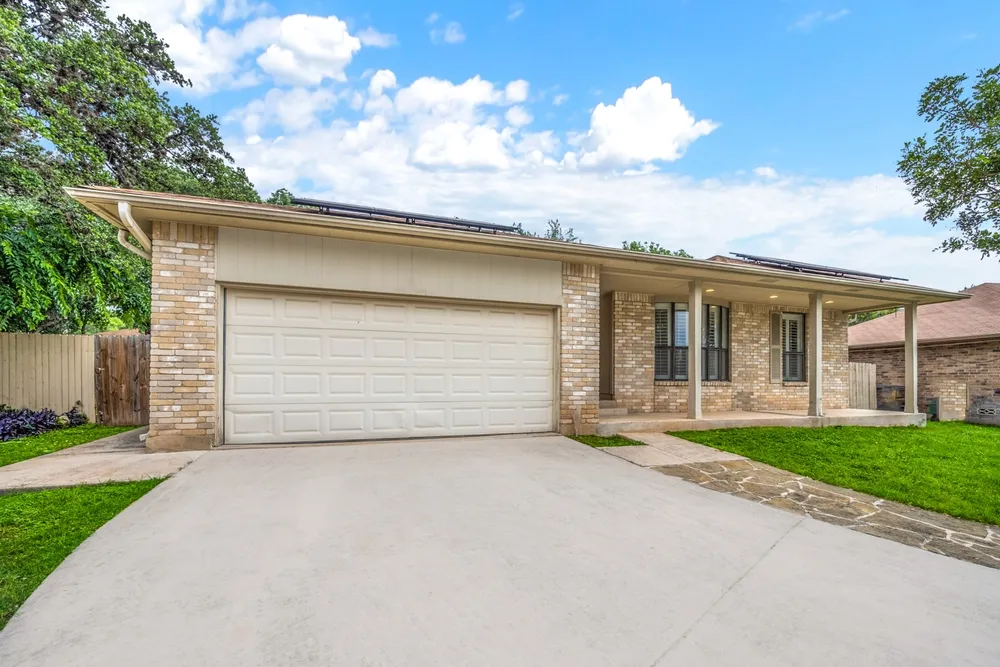
In most Texas metros, the conversation about housing affordability centers on rising prices. In San Antonio, the pressure is coming from a different direction: pre-owned homes are sitting unsold while builders undercut them on price, financing, and condition, according to Katie Powers, a team lead and broker with the Lifestyles of San Antonio team. The result is a market where new construction and resale inventory operate under different economics, and sellers of existing homes are absorbing the worst of it.
Average days on market have reached 97, values are down roughly 4% year to date, and pre-owned inventory has climbed past six months of supply, the highest level the market has seen in at least two decades, Powers says. She has spent eight years working the metro’s relocation and listing markets.
New Builds Are Setting the Terms
Builders in San Antonio are offering interest rates around 4.5%, closing cost assistance, and appliance packages that include blinds, refrigerators, washers, and dryers. A pre-owned seller with aging mechanicals and a standard listing price has little leverage against that combination.
“They’re really giving away everything to get the buyers because there are so few buyers in our market right now,” Powers says.
The imbalance is especially visible on San Antonio’s west side, which for roughly seven years had been the metro’s primary growth corridor, attractive for its lower tax rates, easier commutes, and steady new development. That narrative has shifted. Powers says taxes in the area have increased, traffic congestion has worsened due to overbuilding, and the pre-owned market there has gone “stagnant.” Values are dropping as resale inventory competes against a steady pipeline of new homes that come with incentives pre-owned sellers cannot match.
Why Price Reductions Are Backfiring
In a conventional downturn, incremental price reductions are a standard tool. In San Antonio’s current market, Powers argues they have become counterproductive. Buyers track listings daily on platforms like Zillow and interpret successive price drops not as buying signals but as reasons to wait longer.
“It’s almost causing the counter effect of, ‘Oh well, they’re dropping, let’s see how much further they’ll keep dropping,'” she says. “So you’re almost having buyers just sit on the sidelines and watch.”
Powers prices listings for where the market will be in three months, not where comparable sales have been. She calls it aggressive, but says it is the only strategy producing results in pre-owned inventory right now. Homes in San Antonio are still closing at roughly 97% of list price, she notes; the issue is that many are listed too high relative to where the market is heading, which delays offers and invites the kind of stagnation that erodes value further.
For sellers considering this approach, the preparation work starts well before listing day. Powers recommends beginning six months in advance: getting a pre-listing inspection for roughly $400 to identify repair issues before buyers do, decluttering, applying a fresh coat of paint, and updating light fixtures. None of these are major renovations, but together they determine whether a home stands out in a market with six months of competing inventory.
“You can’t just say, let’s put it on the market and see what happens,” Powers says. “It’s not 2021. It’s not a seller’s market.”
Where Demand Is Still Holding
Not every pocket of San Antonio is softening equally. School districts remain the clearest sorting mechanism. Areas like Boerne and Fair Oaks Ranch, known for top-rated schools, are holding up better than the broader metro. Powers attributes this to a buyer base, particularly relocating military families, that prioritizes education above most other factors when choosing a neighborhood.
San Antonio’s military presence is a structural feature of its housing market. With multiple bases across the metro, families rotate in and out every two to three years, creating steady baseline demand that persists regardless of broader economic uncertainty. That rotation also supports the rental market near bases, where landlords can verify income through commanding officers and count on consistent occupancy.
New Builds as an Investment Play
For investors, Powers says the current environment favors new construction for reasons beyond builder incentives. She points to one builder offering seven-year adjustable-rate mortgages to investors at 3.5%, a rate that, combined with lower insurance costs on new construction and no deferred maintenance, improves cash flow in the early years of ownership. She recently helped two investors from San Diego purchase homes in the Converse area, both of which secured tenants within 30 days.
“Tenants want brand new stuff too,” Powers says. “They don’t want to have to worry about the AC breaking in the heat of our summer.”
Powers adds that new builds command higher rents than comparable pre-owned properties, another factor shifting the investment calculus toward new construction in the current market.
A Market Watching for Relief
Powers describes the current moment as something close to a bottom for San Antonio’s pre-owned market. She notes that while six months of inventory is technically considered balanced, she would need to see it closer to four and a half months to feel genuine momentum. Her outlook for 2027 is cautiously optimistic: even a quarter-point drop in mortgage rates, she says, tends to produce a measurable increase in mortgage applications. If rates reach the upper sixes, she expects the market to respond.
“I do see the pendulum swinging and us starting to swing back up on values and sales coming into spring of 2027,” Powers says.
For sellers without an immediate need to transact, her advice is direct: use the fourth quarter to prepare, not to list. Spring remains San Antonio’s strongest selling window, and the preparation work, inspections, decluttering, minor cosmetic updates, takes time to do properly.
“If the seller needs top dollar, then fourth quarter is not a top dollar season in our market,” she says. For buyers and investors, the fourth quarter offers the opposite calculus: less competition, more negotiating leverage, and builder incentives that may not last once demand picks back up.
About the Expert: Katie Powers is a team lead and broker with the Lifestyles of San Antonio team, covering the San Antonio, Texas, metro relocation and listing markets for eight years.
This article is based on information provided by the expert source cited above. It is intended for general informational purposes only and does not constitute legal, financial, or real estate advice. Readers should conduct their own research and consult qualified professionals before making any real estate or financial decisions.