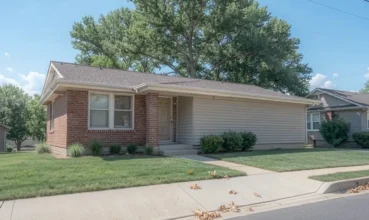
Sacramento’s new home construction boom is setting the region apart from the rest of California, with sales activity remaining steady even as other markets slow. According to Mark Patrick McDonough, team lead at Sacramento Real Estate Group, the region’s new-home pipeline is keeping buyers engaged despite rising interest rates, a stark contrast to markets like the Bay Area, which rely almost entirely on resale inventory and stall when rates rise.
“We’re building more new homes than any other area in California,” McDonough says. He estimates that about 10,000 new homes were built in the Sacramento metro area last year, a scale unmatched elsewhere in the state.
When mortgage rates rise, resale transactions slow, but new home builders ramp up buyer incentives rather than waiting for conditions to improve. Sacramento now operates as a two-tiered market: resale activity may cool, but new construction absorbs demand by making homes more financially accessible.
“Our market is different,” McDonough explains. “When interest rates go up, resale slows down, but new homes become more aggressive with their incentives. Buyers pivot to new construction.”
Builders Use Incentives to Compete
Sacramento builders are offering incentives sufficient to offset the impact of higher mortgage rates. McDonough reports that builders are buying down interest rates to as low as 4%, well below prevailing rates for resale homes, which hover around 6.3%. This makes new homes competitive with resales on a monthly payment basis, even before accounting for the advantages of new construction.
“I can get you a 4% interest rate on a brand-new home that’s competitive with the resale market, and it’s energy efficient,” McDonough says. “Everything’s new, it has solar, and I can get you that for the same price as a resale home, plus the 4% rate.”
This combination of competitive pricing, favorable financing, and the benefits of new construction, such as energy efficiency, solar panels, and warranty protection, creates a strong value proposition that resale inventory struggles to match. For buyers who higher rates would otherwise price out, builder-subsidized financing can make the difference between qualifying for a home and staying on the sidelines.
This dynamic matters most for buyers who are rate-sensitive but motivated to purchase. According to McDonough, new homes have become the main entry point for buyers who cannot qualify for resales at current interest rates. Builder incentives effectively expand the pool of qualified buyers beyond what the resale market alone can accommodate.
Geography Shapes Market Resilience
The contrast between Sacramento and other California markets is rooted in geography. The Bay Area, built on a peninsula with little available land, cannot increase supply to keep pace with shifts in demand. When rates rise or economic conditions worsen, the Bay Area market freezes because there is no new inventory to offset falling demand.
Sacramento, by contrast, has ample developable land and a robust construction industry. Builders in the region adjust quickly, competing for buyers by offering incentives rather than waiting for rates to fall or demand to recover.
“They don’t have new homes because they’re built on a peninsula,” McDonough says of the Bay Area. “If interest rates go high, demand slows down and stops. The stock market goes bad, and everyone stops buying. The Bay Area just freezes.”
This structural difference makes markets with active new construction more resilient during economic uncertainty. While the Bay Area and similar markets experience sharp boom-and-bust cycles tied to financing conditions, Sacramento’s ability to increase supply and deploy incentives produces a steadier transaction environment.
Lessons for Investors and Analysts
Sacramento’s experience challenges the conventional wisdom that higher interest rates uniformly suppress demand. The region shows that when builders have sufficient margin, incentives such as rate buydowns can keep sales moving even as rates rise.
This has implications for how analysts and investors evaluate markets during periods of rate volatility. In areas with robust construction activity, transaction volumes and price stability can remain high despite broader economic headwinds. The key is whether builders have the financial capacity and motivation to subsidize rates and offer other incentives.
McDonough’s team at Sacramento Real Estate Group has built its strategy around this dynamic, maintaining expertise in both resale and new construction markets. The firm’s YouTube channel, which McDonough describes as the largest real estate channel in Sacramento, serves as a lead generator for buyers relocating from higher-cost areas of California.
The firm closed $45 million in transactions last year. A significant share came from buyers who initially considered resale options but chose new construction due to builder incentives and product advantages. McDonough notes that guiding buyers between resale and new construction based on their financial situation has become a core skill for agents in the region.
Sacramento as a Market Model
As interest rates remain elevated and economic uncertainty lingers, Sacramento’s approach may serve as a template for other markets with available land and active builders. The main question is whether builders in other regions will adopt similar incentive structures or whether Sacramento’s experience is unique to California’s housing landscape.
Sacramento’s experience shows that supply-side solutions, particularly when backed by strong builder incentives, can maintain transaction momentum even when traditional market drivers would suggest a slowdown. This underscores the importance of local supply dynamics in shaping how real estate markets respond to broader economic pressures and suggests that the Sacramento model could influence how other growing markets navigate future cycles.