An estimated 8 million recreational vehicles are on U.S. roads today, and a growing share of their owners have nowhere to put them when they’re not in use. The mismatch between RV ownership and available storage has been building for years, driven by increasingly restrictive HOA covenants and local zoning ordinances that limit what residents can park on their own property. For real estate investors, the gap is starting to look less like a niche inconvenience and more like a structural supply shortage with durable demand behind it.
According to Phil Ingrassia, president of the National RV Dealers Association (RVDA), interest from the investment community has accelerated notably since the pandemic. “Five years ago, I didn’t hear from any of the companies that are involved in this,” he says. “I think it’s just been really since the pandemic, and we had this big bump in sales, that people are getting more interested in the RV storage space.”
The Supply Gap Persists
The demand side is straightforward: RV ownership grew sharply during the pandemic, and even though new unit sales have been flat in the years since, the installed base of vehicles has not shrunk. Used unit sales remain steady, which means the total number of RVs requiring storage continues to hold near peak levels.
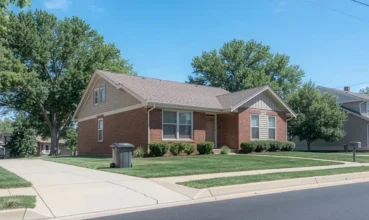
The supply constraint is regulatory rather than economic. HOA restrictions and local parking ordinances have expanded alongside new housing development. Ingrassia notes that these rules are not targeting RVs specifically; they are part of a broader push toward visual uniformity in planned communities. “It’s not necessarily new, but just the expansion of housing and things like that has led to more restrictive land use within the HOAs, and in some cases local ordinances restricting what kind of vehicles can be parked on the street or in people’s yards,” he says.
When RVDA surveys customers about barriers to ownership, storage consistently appears as a consideration. It may not top the list, but it functions as a friction point that suppresses purchasing decisions at the margin, a dynamic the association is actively trying to address by connecting dealers with storage providers.
Where Investors Are Looking
Storage demand clusters around two types of geography. The first is recreation-adjacent areas, locations near mountains, lakes, or coastal destinations where owners want to store their RV within a short drive of where they will use it. Ingrassia cites Arizona and the Myrtle Beach, South Carolina area as examples of markets seeing concentrated activity.
The logic is convenience: owners fly or drive in, pick up their unit, and head to a campground without towing it hundreds of miles from home. “People drive their car to the storage facility and then just have a few miles or under 100 miles to go to a destination,” Ingrassia explains.
The second category is climate-driven, northern states where owners need covered or indoor storage to protect units from winter weather. The Southeast, particularly Florida and the Carolinas, also shows strong demand. The top-selling states for RVs – Texas, California, New York, Pennsylvania – correlate with larger populations but do not necessarily align with where storage is most needed, since owners often store units near their destinations rather than their homes.
What the Market Expects
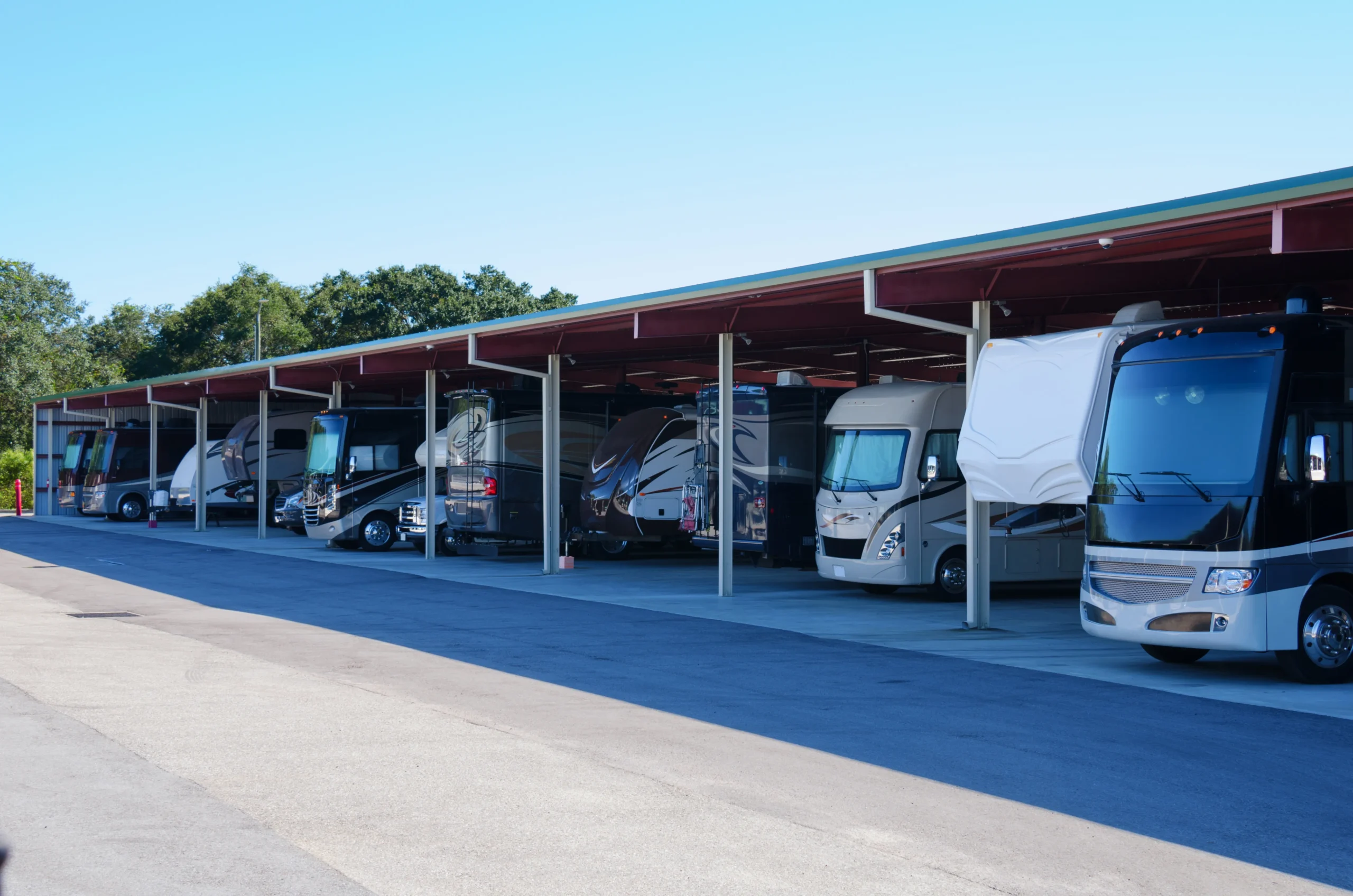
The range of what investors can build is wide, and Ingrassia describes a spectrum from basic gated lots to full-service operations. At minimum, customers expect video surveillance, secure access, and enough space between units for safe maneuvering. “These are large units, so you can’t just kind of cram them all together really tightly like some places try,” Ingrassia notes. “You need to be careful that people can get in and out without damaging their units or someone else’s.”
At the higher end, some facilities now offer electrical hookups so owners can test systems before departing, dump stations for wastewater, and concierge services, staff who will fuel the vehicle, fill water tanks, and confirm everything is operational before the owner arrives. “That takes it to the ultimate level,” Ingrassia says. “But there’s everything in between as well. It just depends on the market.”
Concierge-level service requires employees and higher capital expenditure, which not every investor wants to manage. But in markets where owners are paying to protect units worth well over $100,000, premium pricing can justify the added operational cost.
A Category Still Maturing
Municipal storage options exist in many areas but often lack the security standards owners of high-value units expect. That gap between what municipal lots offer and what owners want is precisely where private investment enters.
Dealers themselves are generally not in the storage business. “Dealers are basically set up to sell and service RVs, not necessarily store them,” Ingrassia says. Most maintain referral lists of local storage facilities but do not operate their own. That separation means the storage market is developing largely independent of the dealership network, creating space for standalone operators and real estate investors.
For those considering an entry, Ingrassia emphasizes site selection fundamentals: proximity to recreation areas without needing to be inside them, and easy highway or freeway access. “If it’s done right, it can be quite a profitable venture,” he says.
Consumer uncertainty – driven by factors like gas prices and tariffs raising the cost of new units – has kept new RV sales flat in recent years, according to Ingrassia. But because used sales remain steady and the installed base holds near its post-pandemic peak, the storage supply gap persists regardless of whether showroom traffic picks up. For investors evaluating the space, the relevant metric is not how many new RVs sell next quarter but how many already exist and have nowhere to go.
About the Expert: Phil Ingrassia is President of the National RV Dealers Association (RVDA), representing RV dealers across the United States.
This article is based on information provided by the expert source cited above. It is intended for general informational purposes only and does not constitute legal, financial, or real estate advice. Readers should conduct their own research and consult qualified professionals before making any real estate or financial decisions.