The rental market in Upstate South Carolina has been telling a more complicated story than regional growth headlines suggest. While Greenville consistently ranks among the fastest-growing cities in the country, the day-to-day realities of managing rental properties across the region reveal competing pressures: rising rents alongside rising vacancies, an influx of first-time landlords, and tenants increasingly armed with AI-generated legal advice.
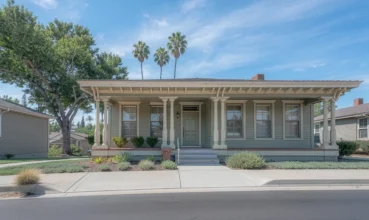
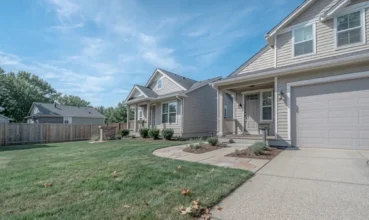
Clayton Jones, owner of Jones Assurance Property Management, operates across the three main markets of the Upstate corridor, Greenville, Spartanburg, and Anderson. His firm manages a portfolio centered on single-family residential properties, with some smaller commercial and mixed-use assets.
A Market That Doesn’t Follow the Textbook
Last year presented a dynamic that even experienced operators found puzzling. Vacancies climbed significantly across the region, yet market rents continued to rise, a contradiction that defies conventional supply-and-demand logic. “We had a significant amount of vacancies, and at the same time, rent was increasing,” Jones says.
The contradiction reflects broader national tensions between supply-side growth and affordability constraints. In markets experiencing rapid population and employment expansion, new inventory can outpace absorption even as asking rents trend upward. Operators caught in that gap face a difficult choice: hold to the asking price or adjust, risking a compression of returns.
Heading into 2026, conditions have shown some improvement. Vacancy rates have begun to stabilize, aided partly by the typical summer turnover season tied to school calendars. However, Jones notes “a light softening on the market rates themselves,” not a dramatic correction, but a flattening that operators are watching closely.
That softening is not uniform. Greenville has a different dynamic from the more rural pockets between it and Spartanburg or Anderson. The I-85 corridor connecting Atlanta and Charlotte runs through the heart of the region, bringing manufacturing investment and steady employment that underpins rental demand. Jones tracks each submarket monthly to stay ahead of diverging trends.
The Rise of the Accidental Landlord
One of the more consequential changes Jones has observed over the past two years is the composition of his client base. While the firm once worked primarily with small-portfolio investors, it now fields daily inquiries from homeowners who never planned to be in the rental business at all.
These accidental landlords typically fall into one of three categories: they inherited a property, can’t sell in the current market, or are relocating but refuse to give up a sub-4% mortgage rate. The interest rate lock-in effect, well-documented nationally, is playing out in tangible ways locally. Homeowners sitting on favorable mortgages are turning to rentals as a holding strategy rather than an investment thesis. That distinction matters because many arrive without understanding what it actually costs to operate a rental property.
Jones walks these clients through the math carefully, sometimes at the cost of the deal. A recent example involved a homeowner who believed she could net $400 per month by renting her property at $2,300 against a $1,900 mortgage. “You’re not really taking into account management fees, some vacancy, the possibility that you can’t get $2,300,” Jones explains. “Then you’ve got ongoing maintenance costs, taxes and insurance going up, and your long-term capital requirements: roofing, HVAC, water heater.”
Maintenance costs, in particular, catch first-time landlords off guard. Jones describes a case where a tenant reported a plumbing problem that the previous owner attributed to tenant misuse. The investigation revealed the owner had simply never used that bathroom during five years of living in the home. “A new tenant moves in and uses the toilet for the first time in five years. There’s going to be some issues.”
When AI Enters the Landlord-Tenant Relationship
Beyond financial miscalculations, property managers are now contending with an unexpected operational challenge: AI tools are reshaping how tenants communicate during disputes. Over the past two years, Jones has noticed a clear pattern, tenants consulting ChatGPT or similar platforms when conflicts arise, then forwarding AI-generated responses that cite legal language and assert rights, sometimes accurately, sometimes not.
The dynamic is most visible during maintenance disputes, particularly around HVAC failures in a region where summer temperatures routinely exceed 90 degrees. When a repair is delayed due to vendor availability or parts lead times, a tenant may consult an AI assistant, receive a response framed around tenant rights, and send back a message that raises the stakes considerably. “We get the text from the tenant that says, ‘That’s not going to work. Here’s the law,” Jones explains. “And it’s an actual law, but then they try to push us to do more, and in a roundabout way use somewhat threatening language.”
The core problem isn’t that tenants are asserting rights they don’t have. It’s that AI tools tend to frame situations in adversarial terms, escalating tone in ways that complicate what could be resolved through straightforward communication. “It created a lot more friction that’s always been there, but it’s a lot more visible now,” Jones says.
Process as a Competitive Advantage
Jones brings an unusual background to property management. Before entering real estate, he worked in manufacturing finance, a discipline built around process optimization and cost analysis. That orientation shapes how Jones Assurance approaches both operations and client relationships.
The firm positions itself explicitly as investor-friendly, meaning the focus extends beyond day-to-day maintenance calls to the financial performance of each asset. Jones reviews investment analyses directly, tracks submarket rental data monthly, and gets involved in individual maintenance decisions when the cost-benefit calculus warrants it. It’s a model that suits the growing segment of landlords who need both operational support and financial guidance.
The Upstate South Carolina market, for all its complexity, remains fundamentally sound. Manufacturing investment along the I-85 corridor continues to drive employment and population growth. Greenville’s national profile attracts outside capital. And the same interest-rate dynamics that are creating accidental landlords are also constraining for-sale inventory, keeping rental demand relatively stable.
For investors considering the market, the opportunity is real, but so are the operational demands. Understanding local submarket variation, building in realistic maintenance reserves, and working with management partners who track the numbers closely are what separate properties that perform from those that quietly disappoint. As more reluctant landlords enter the market and tenant expectations rise, aided by increasingly sophisticated digital tools, the gap between passive ownership and professional management will only widen.
About the Expert: Clayton Jones is the owner of Jones Assurance Property Management, operating across the Greenville, Spartanburg, and Anderson markets in Upstate South Carolina. The firm manages a portfolio centered on single-family residential properties, with some smaller commercial and mixed-use assets.
This article is intended for informational purposes only and does not constitute legal, financial, or investment advice. The views and opinions expressed herein reflect those of the individuals quoted and do not represent an endorsement of any company, product, or service mentioned. Readers should conduct their own due diligence and consult qualified professionals before making any investment decisions.