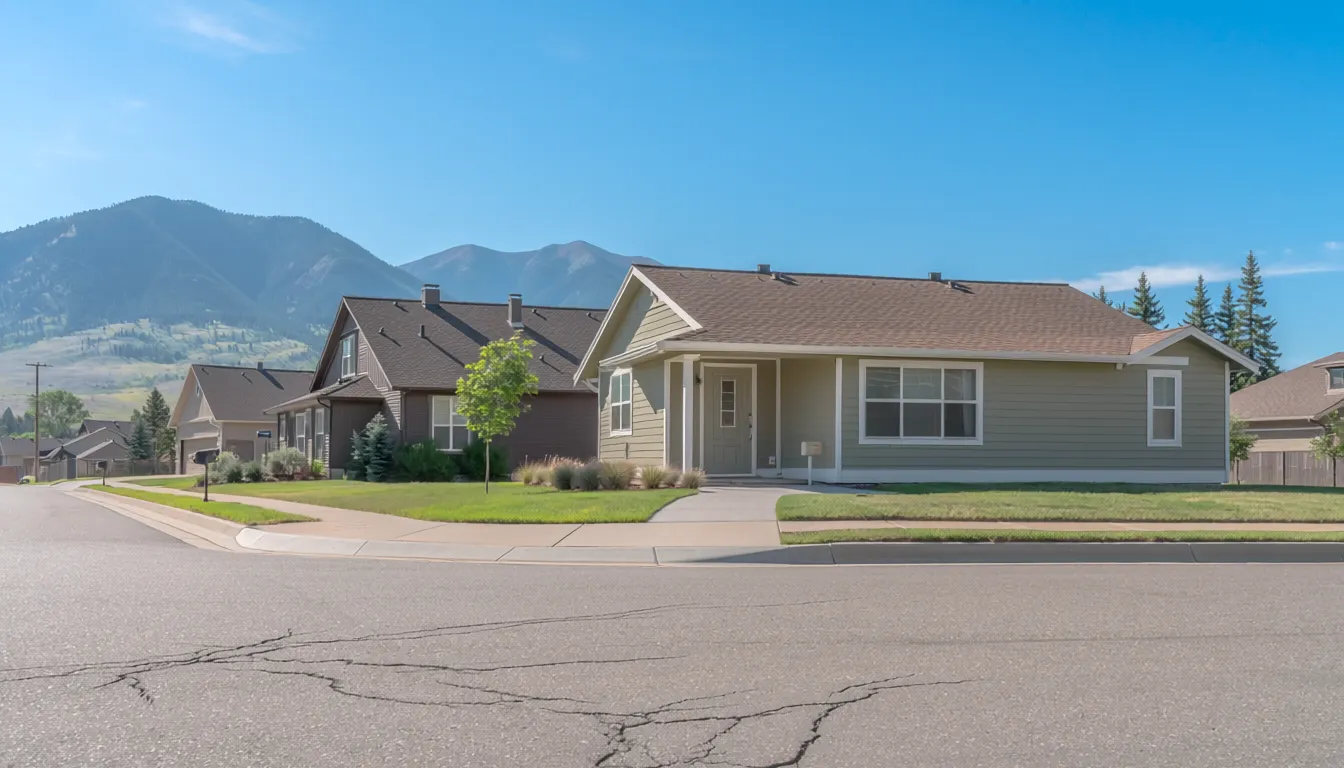
Missoula’s real estate market has more inventory than it has had in five years, yet correctly priced homes are still selling within a week, sometimes with multiple offers. The gap between those outcomes and the listings that sit for months comes down to a single variable that has nothing to do with interest rates, staging, or marketing: the initial asking price.
That dynamic is visible enough that Zach Gratton of GFG Real Estate describes it as a tale of two markets operating simultaneously within the same city. A home worth $500,000, listed at that number by an agent who knows the market, sells fast. The same home listed at $525,000 – a modest stretch – sits. After 60 days, buyers build a narrative. “They immediately think there must be something wrong with it. It has mold, a bad roof, foundation, something,” Gratton says. “That same house that was worth 500 ends up selling for 475.”
The result is a market where overpricing doesn’t just delay a sale. It costs the seller money.
Buyers Have More Information
Pricing errors are punished more severely now than during the pandemic because buyers have tools to spot them. Chris Funston, Gratton’s partner at GFG, points to platforms like Zillow and Redfin as informal appraisal engines. Buyers scroll comparable listings on their phones, notice when one house is priced $25,000 above a nearly identical one already under contract, and draw conclusions.
“They’re essentially doing a light appraisal on every house that they look at just by scrolling on their phone,” Funston says. That awareness, combined with more inventory to choose from, has shifted leverage toward buyers. GFG is seeing more negotiation during inspections, credits for flooring, painting, and other items that were routinely overlooked when money was cheap. Funston describes buyers recognizing they have “a little bit more wiggle room” without losing confidence in the market itself.
The shift is most visible in specific price bands. Anything under $600,000, the top end of a starter home in Missoula, sells quickly if priced within range. Demand from millennials trying to buy their first home keeps absorption tight in that segment. The $700,000 to $1.2 million range, where financed buyers are most exposed to interest rate sensitivity, sits noticeably longer. Luxury, commercial, and multifamily properties have the longest timelines, though Gratton calls the situation “not unmanageable.”
Geography Sets the Floor
What keeps Missoula from following markets where rising inventory leads to meaningful price declines is physical constraint. The city sits in a valley, a former glacial lake bed surrounded by mountains. There is limited land available for new development, which restricts the kind of large-scale subdivision building that can flood a market with supply.
Gratton and Funston both own rental portfolios in the area – six properties each – and frame Missoula as a long-term investment rather than a cash-flow play. Commercial financing rates near 8% make it difficult for a standard-leverage investor to cash flow a duplex immediately, and Funston is direct about that limitation. “If you’re doing a standard 20 to 25% down commercial loan, it’s going to be difficult to have that property make money,” he says.
The investment case rests instead on appreciation and stability. During the 2008 downturn, Funston notes, Missoula’s values dipped roughly 18% compared to a national average he puts at about 25%, and the recovery came faster. “If you held onto your property for another 15 years, you had about 200% equity in it from the crash,” he says. The city’s economic base, anchored by a university, a growing tech sector that received a federal grant, and a diversified employer mix, means no single industry closure can destabilize the market.
The Interest Rate Waiting Game
The most common headwind both agents hear from clients is interest rates, and the most common mistake they see is waiting for them to drop. Gratton’s concern is practical: the pool of sidelined buyers is large enough that a meaningful rate reduction could trigger a demand surge. “As soon as those rates go down, I think we’re going to see another miniature Covid boom because there are so many people sitting on the sidelines,” he says.
His advice to buyers who can afford current payments is to buy now and refinance later, capturing equity before competition returns. Funston frames it more bluntly: if you can own a home for 10 years, the data overwhelmingly supports the decision. “If you can afford it, do it. If you can’t, wait until you can.”
Both agents stress that they are not in the business of pushing transactions. Roughly 30 to 40 percent of GFG’s sales go to buyers relocating to Missoula, often people with existing ties to Montana who earned money elsewhere and are returning. Those buyers tend to land in the $800,000 to $1 million range and frequently need orientation to the area’s geography before they look at listings, understanding commute distances, school proximity, and the differences between surrounding communities like Frenchtown, Stevensville, and the Bitterroot Valley.
“A lot of the time, what they wanted from the start versus what they end up buying is pretty different,” Gratton says. For sellers, the implication cuts both ways: a property that doesn’t match what relocated buyers expected to want may still match what they actually need, but only if the price doesn’t give them a reason to scroll past it first.
About the Expert: Zach Gratton and Chris Funston are real estate agents and partners at GFG Real Estate, covering Missoula, Montana.
This article is based on information provided by the expert source cited above. It is intended for general informational purposes only and does not constitute legal, financial, or real estate advice. Readers should conduct their own research and consult qualified professionals before making any real estate or financial decisions.