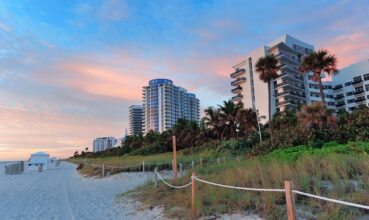

The Florida Keys real estate market is experiencing a period of recalibration as buyers and sellers adapt to shifting economic conditions and evolving market dynamics. While open water prope...

Pasco County Real Estate Navigates Market Uncertainty Amid Declining Transaction Volume

Written by:
Date:
12 Dec 2025
Share via Facebook

Share via Linkedin

Share via X

Copy to clipboard


The Tampa Bay area’s real estate market is experiencing a notable shift as transaction volumes decrease and market dynamics change. Pasco County, traditionally known as an affordable alternative to neighboring Hillsborough and Pinellas counties, is seeing monthly transactions drop from a peak of 1,500 to approximately 1,200, reflecting broader challenges facing Florida’s residential market.
Market Fundamentals Under Pressure
The numbers indicate a clear story of market contraction. Active listings in Pasco County hover around 4,500 to 4,600 properties monthly, but this figure masks significant turnover as new listings offset cancellations and expirations. “There are a lot of listings that are expiring. There’s a lot of new listings, but they’re running even between the sales and the expires or cancels,” explains Randal Jenkins, real estate broker at Florida Real Estate Partners.
The contrast with pandemic-era conditions is stark. During COVID, the market operated with around 3,000 total properties, with 2,300 under contract and only 600-700 available for purchase. “There was nothing out there. That’s when all those multiple offers and last best and final happened, people paying $50,000 over asking price,” Jenkins recalls.
Current market conditions reflect a 20% decline in transaction volume compared to recent highs, with monthly closings consistently running between 1,200-1,300 transactions rather than the 1,500-plus seen during peak periods.
Insurance Crisis Creates Additional Headwinds
Florida’s insurance challenges are adding complexity to transactions, though the impact varies significantly based on property location and buyer experience. “There’s a lot of variance in what you could be charged. If you shop around, you can find insurance that’s substantially lower than what other quotes might be,” Jenkins notes.
The flood insurance component presents particular challenges for buyers. “For buyers, it’s a big deal, especially if it’s a flood zone. The uncertainty with flood insurance – you don’t have to have it to handle that unexpected opportunity to have a giant flood insurance policy,” he explains.
Jenkins strongly advises against purchasing in flood zones unless waterfront amenities justify the additional costs and risks. “Unless you’re on the water, I don’t see why you would want to be in one. There’s no benefit to being in a flood zone if you’re living in a house across the street from the house on the water.”
Investor Activity Shifts Dramatically
The investor landscape has changed significantly from the pandemic boom. “Every time you list a house, I don’t care the price – $250,000, they come in at $150,000-$175,000. All the investors are making lowball offers,” Jenkins observes.
Out-of-state investor activity has particularly declined. Canadian buyers, traditionally a significant presence in Florida markets, have largely disappeared. “The Canadians left, they didn’t come back, and the snowbirds didn’t come down from Christmas to New Year’s because they were snowed in this last year. We missed out on a huge amount of normal demand.”
Jenkins attributes some of this decline to negative media coverage of Florida real estate, citing concerns about tornadoes, floods, and insurance costs that have deterred potential out-of-state buyers.
New Construction Challenges
A significant development in Pasco County is new construction homes beginning to compete directly with existing properties on price—a departure from historical norms where new builds commanded premiums. This shift reflects the timing mismatch between development cycles and market demand.
“The builders are so slow. All the work being done right now is really from efforts back three or four years ago. That’s when they put all these projects together,” Jenkins explains. “We needed these houses three or four years ago; we don’t need them now. They can’t pivot, they can’t turn it off. They start on that process, it takes three or four years, and there are a lot of new houses that are not selling.”
This oversupply of new construction is creating pricing pressure across the market as builders compete for a smaller pool of qualified buyers.
Regional Value Proposition Remains Strong
Despite challenges, Pasco County maintains its fundamental value proposition as an affordable alternative within the Tampa Bay region. “Pasco is like $100 or more per square foot cheaper than Hillsborough or Pinellas. Pasco is where people go who are practical,” Jenkins notes.
The price differential remains substantial: “You can buy a three-bedroom, two-bath, two-car garage house in Pasco for $350,000 and drive twenty miles into Pinellas, and that house might be $560,000.”
This affordability factor continues to attract buyers, though the pool of qualified purchasers has contracted due to affordability challenges and higher interest rates.
Market Outlook and Strategic Considerations
Looking ahead, Jenkins maintains cautious optimism while emphasizing the importance of need-based decisions over speculative purchases. “If you have to move, you’re a seller, and if you’re a renter, you should probably buy. But if you don’t have to do anything in real estate, you should probably not do anything unless you have a need.”
His approach reflects broader market uncertainty. “I do not forecast. I’m not going to tell you to buy this house because it’s going to be worth more. I don’t know what’s going to happen.”
For first-time buyers, Jenkins emphasizes the importance of preparation and down payment assistance programs. “Find the money first,” rather than searching for properties before securing financing, he advises.
The Pasco County market exemplifies broader trends affecting Florida real estate: declining transaction volumes, insurance-related complications, reduced investor activity, and new construction oversupply. While the region’s fundamental value proposition remains intact, market participants are navigating a more complex environment that requires careful analysis and strategic decision-making.
For real estate professionals and investors, the current market demands a return to fundamentals—understanding local conditions, maintaining realistic pricing expectations, and focusing on genuine housing needs rather than speculative opportunities. As Jenkins notes, success in this environment requires patience, preparation, and a deep understanding of local market dynamics rather than relying on the momentum that characterized recent boom periods.
Similar Articles
Explore similar articles from Our Team of Experts.