
Industry veteran Lucas Piper, owner of Five Star Vacation Home Rentals in Austin, identifies ongoing property maintenance, rather than acquisition strategy or financing, as the main reason m...

Short-Term Rental Condos Draw Investors to Palm Desert, California, But Success Takes More Work Than Expected

Written by:
Date:
18 Jul 2026
Share via Facebook

Share via Linkedin

Share via X

Copy to clipboard

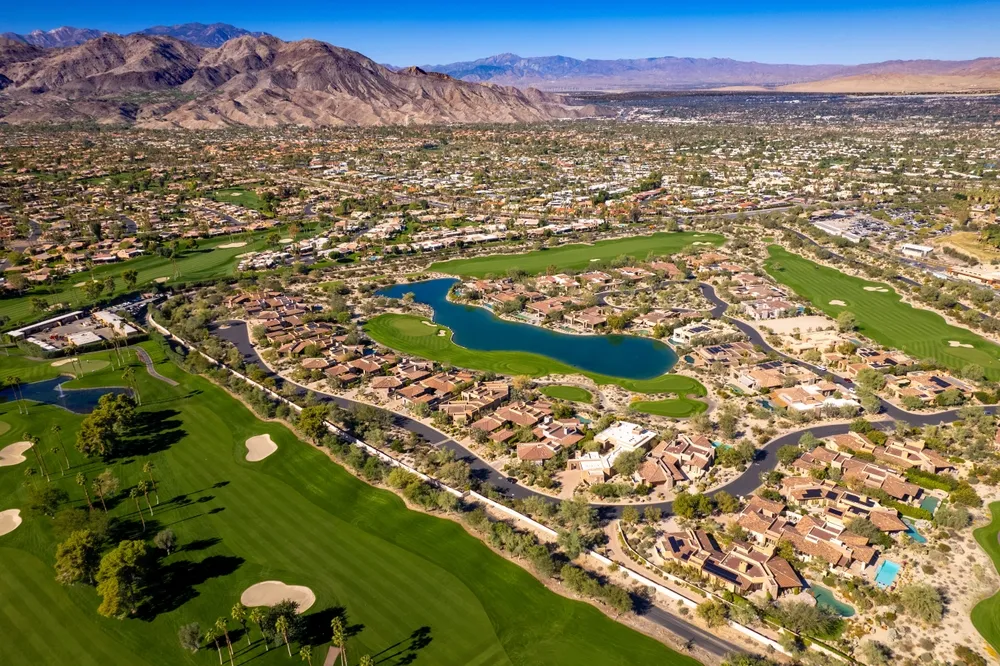
Short-term rental income sounds like a straightforward way to offset a vacation home’s carrying costs. In Palm Desert’s private golf communities, the reality is more layered, shaped by permission, timing, and upkeep in ways that aren’t obvious from a listing price alone.
One Palm Desert golf community allows short-term rentals, including Airbnb and VRBO. In a city where most HOAs ban them, that exception draws investors. But the economics depend on a five- to six-month peak season, fixed costs that continue even when tourists leave, and aging inventory that needs renovation before it can compete for bookings.
A Rare Opportunity
Peggy Mason, owner, founder, and lead broker of The Mason Group, works on-site at two golf-course communities in Palm Desert, California. One of them, Palm Desert Resort, voted to allow short-term rentals, a rarity in a city that generally prohibits them. “That community attracts investors because it allows short-term rentals, which is not typically allowed in Palm Desert,” Mason says. Some owners hold five units in the community, treating the operation as a business rather than a side investment.
The demand base is real. Palm Desert sits in the Coachella Valley, which draws visitors for major events. The Indian Wells tennis tournament alone brings roughly 450,000 visitors over two weeks, according to Mason. Hockey at the Acrisure Arena, the American Express golf tournament, and Palm Springs’ broader appeal as a national destination keep short-term rental demand steady during season.
The Calendar Problem
“During season” is the constraint investors most often underestimate. Palm Desert’s golf communities are overwhelmingly seasonal. Only about 25 to 27 percent of owners in Mason’s communities live there year-round. Tourist traffic follows a similar pattern. It peaks between November and April and thins sharply in summer, when desert temperatures make the area far less attractive. An investor underwriting a rental property based on peak-season occupancy is building projections on five or six strong months, not twelve.
The cost structure compounds the problem. HOA fees in Palm Desert’s golf communities range from $900 to $2,700 per month, depending on the club and its amenities, according to Mason. For an investor, that fee doesn’t pause during vacant summer months. A unit at the high end of that range accumulates high fixed costs through the off-season, before insurance, maintenance, or renovation expenses are even factored in.
Condition Sells
The community was built in the early 1980s. Mason says a remodeled unit with a nice view sells quickly rather than sitting on the market. Unrenovated units, particularly those with carports rather than garages, sit on the market longer and command lower prices. In the rental market, dated interiors compete poorly against remodeled units in the same complex. An investor buying an unrenovated condo at a discount still faces renovation costs before the unit can command competitive nightly rates.
The financing picture adds another layer. Mason notes that the majority of transactions in Palm Desert’s private communities are cash purchases, but that doesn’t mean buyers are liquid in the traditional sense. “Many times those people are taking out a HELOC on their primary residence so that they can pay cash,” she says. For investors, this means leveraging a primary home to fund what is essentially a seasonal business. It’s a structure that works when occupancy is strong and becomes stressful when it isn’t.
Planning the Exit
The condo market in Palm Desert is already softer than the single-family segment. Mason says houses are holding their value and selling quickly, while condominiums are on the market longer and prices are softer. For an investor planning an eventual exit, that softness means the unit needs to perform as a rental to justify the hold. Appreciation alone isn’t carrying the investment right now.
The short-term rental allowance is genuinely rare in this market, and event-driven tourism provides a demand floor that purely residential communities lack. But the investors Mason sees succeeding are the ones treating the operation as an active business: multiple units, renovated interiors, and managed operations. They are not the ones buying a single unrenovated condo and expecting rental income to cover a $900-plus monthly HOA without sustained effort.
For buyers weighing a purchase in this community, the critical questions are whether they can fund renovations before the first booking, absorb fixed costs through a full off-season, and operate at a scale that justifies the management overhead. The opportunity is real, but it rewards operators, not passive owners.
About the Expert: Peggy Mason is Owner, Founder, and Lead Broker of The Mason Group, operating out of two onsite sales offices at golf course country clubs in Palm Desert, California, specializing in the Lakes Country Club and Palm Desert Resort Country Club communities.
This article is intended for informational purposes only and does not constitute legal, financial, or investment advice. The views and opinions expressed herein reflect those of the individuals quoted and do not represent an endorsement of any company, product, or service mentioned. Readers should conduct their own due diligence and consult qualified professionals before making any investment decisions.
Similar Articles
Explore similar articles from Our Team of Experts.