For years, landowners along the I-49 corridor south of Kansas City priced their parcels using agricultural or light industrial comps from other submarkets, since no local industrial outdoor storage transactions existed to reference. A single closed transaction in Raymore is giving them a clearer, more accurate benchmark that better reflects what IOS demand can support, according to Logan Freeman, Managing Broker at Midwest CRE Advisors.
The deal closed as a development play rather than a raw land sale: seven small-bay industrial buildings totaling roughly 70,000 square feet, each designed for multiple tenant suites, with dedicated outdoor storage yards behind each unit. That development thesis supported a price well above what a pure land comp analysis would have suggested. For landowners holding legacy parcels in secondary suburban corridors, the transaction offers a concrete example of what their sites can be worth when marketed to the right buyer pool.
A Buyer Pool That Underwrites to Income, Not Acreage
The most active buyers in markets like the I-49 corridor are developers underwriting to a specific income thesis, Freeman says: ground-up construction of small-bay industrial buildings with integrated IOS yards, leased to contractors, fleet operators, HVAC and plumbing companies, and equipment-based service businesses.
The demand driver is residential growth. Submarkets like Raymore, Belton, and Harrisonville have added housing density quickly, creating strong opportunity for industrial supply to follow, Freeman says. Service businesses that maintain and improve those homes need nearby operational bases with yard space for equipment and vehicles. With purpose-built IOS inventory still emerging along the I-49 corridor south, there is significant room to meet that demand.
That supply opportunity is what separates income-based underwriting from land comp pricing. Freeman says a site leasing at $3,000 per acre per month on 10 acres generates $360,000 annually. Capitalized at 6.5%, that implies a value of roughly $5.5 million, often substantially above what raw land comps would suggest. Sellers who price to achievable rents can capture that full value, and buyers underwriting to those rents are the ones making the strongest offers.
Why the Raymore Deal Priced Above Land Comps
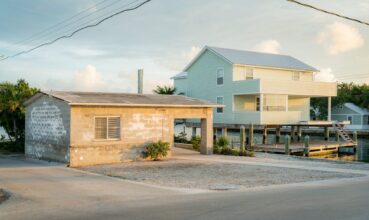
The Raymore site included a grandfathered single-family home and a barn, neither cleared. An earlier offer during the marketing process came in lower, prompting a conversation about how these structures fit into the site’s value.
The buyer who closed approached the site with a development mindset. Rather than pricing it as raw land requiring clearing, the buyer underwrote it as the foundation for the 70,000-square-foot development. Demolition and site clearing were folded into the development budget rather than treated as a pre-closing condition.
“They were not buying the site as raw land; they were buying it as the foundation for a 70,000-square-foot small-bay industrial development with dedicated IOS yards behind each unit,” Freeman says. “That thesis supported a stronger price than the pure land comp conversation was generating.”
Freeman adds that existing structures – a metal shop, a storage building, a barn – can actually enhance a site’s appeal. IOS developers often prefer something on a site over raw land because it provides immediate operational utility during development and lease-up.
What Moves a Buyer From Interested to Aggressive
Beyond the development thesis, Freeman identifies specific physical characteristics that help a site command top-of-market pricing.
Paving is the largest single variable. A fully paved site with stabilized surface and proper drainage can add 15 to 25% to what a buyer will pay compared with a gravel or native-soil site, Freeman says, because the buyer starts with leasing ready to begin rather than a $300,000 to $500,000 site improvement cost ahead.
Access configuration matters next. Two curb cuts on a major arterial, wide enough for semi or equipment movement, offer a clear advantage over one tight residential-style driveway; Freeman says that distinction alone has moved buyers on deals he has worked. Site geometry also plays a role: a square or near-square layout gives operators flexibility with yard organization and truck turning radii, while a long, narrow parcel calls for more planning.
Freeman points to a direct comparison in the Cass County market. A fully gravel site with one curb cut on a secondary road and no fencing drew solid interest at a modest price. A comparable site in the same corridor – paved, two curb cuts, eight-foot chain link installed, and direct highway visibility – traded at nearly 40% more per acre. Same zoning, same general location. Infrastructure accounted for the entire difference.
A Pricing Anchor the Corridor Now Has
Since the Raymore close, Freeman says the firm has received direct inbound inquiries from landowners in the immediate corridor referencing the sale by address. They know it closed, they want to understand what it means for their own parcels, and they are beginning to evaluate their sites within an IOS development thesis rather than defaulting to agricultural positioning.
“Sellers in that corridor were pricing off agricultural land comps or light industrial comps from different submarkets, and the IOS premium gives them a more accurate reference point,” Freeman says.
Freeman notes that a fuller picture of per-acre pricing across the corridor will emerge as another comparable site trades nearby. The acceleration in demand inquiry already suggests the comp is functioning as a pricing anchor, giving both sellers and buyers a verified reference point.
Positioning Before the First Offer
Freeman says the positioning work that determines which buyer pool a site attracts happens before offers are generated. A parcel with existing grandfathered structures is best matched with developers who have the capital structure to absorb clearing and preparation costs. Reaching those buyers requires marketing the income story and the development thesis, not just the acreage.
For landowners in the corridor, the practical first step Freeman recommends is a pre-application meeting with the local planning department before going to market. Thirty days and a few hundred dollars in municipal fees can reveal whether a site has a clean rezoning path, a conditional path, or a more involved one – and that shapes the entire pricing and buyer pool strategy. Understanding the zoning path early is one of the most valuable steps in successfully repositioning a legacy parcel, and Freeman and the team at Midwest CRE Advisors can help owners map it out.
Midwest CRE Advisors is a commercial real estate brokerage and advisory firm specializing in data center site selection, industrial outdoor storage, and traditional commercial investment across Kansas, Missouri, and the broader Midwest. Founded by managing broker Logan Freeman, the firm has carved out a specific niche identifying brownfield industrial sites and stranded power capacity for AI infrastructure deployment – a space the large national brokers are not focused on. Active in secondary markets including Kansas City, Oklahoma City, Arkansas, Iowa, and Nebraska, the firm serves AI infrastructure companies, colocation operators, and regional developers evaluating Midwest sites, as well as local and regional investors pursuing industrial, flex, land, multifamily, senior housing, and single-tenant commercial acquisitions and dispositions.
This article is based on information provided by the expert source cited above. It is intended for general informational purposes only and does not constitute legal, financial, or real estate advice. Readers should conduct their own research and consult qualified professionals before making any real estate or financial decisions.